

Mechanical watches invite a different relationship with time. They are not merely instruments that mark the day; they are small machines with heartbeat, tension, friction, and finesse. Whether your first serious piece is a Hamilton Khaki Field Mechanical, a Seiko Prospex, a Baltic MR01, or a treasured vintage Omega inherited from family, proper care is what allows a watch to mature gracefully rather than simply grow old.
For collectors, maintenance is not about fussiness. It is about stewardship. A well-cared-for watch wears more confidently, keeps better time, and often tells its story more beautifully over the years. The good news is that sound watch care is less complicated than many newcomers fear. It is mostly a matter of habit, awareness, and knowing when to leave things to a professional.
Good habits matter more than perfection
Most mechanical watch care begins on the wrist. Modern watches are robust, but they are not indestructible. Even a sporty piece with a screw-down crown and 200 meters of water resistance deserves some common sense.
The simplest rule is to avoid unnecessary shocks. That does not mean babying your watch through ordinary life. A Formex Essence, for example, or a Citizen Series 8 is built for regular wear. But repeated impact from golf, mountain biking, tennis, or using power tools can be hard on a movement’s pivots and regulating components. If you know your day involves sustained vibration or sharp impact, choose a quartz beater, a G-Shock, or simply leave the mechanical piece at home.
Equally important: be mindful of magnets. Magnetism remains one of the most common reasons a mechanical watch suddenly begins running fast. Laptop speakers, tablet covers, phone accessories, induction surfaces, and handbag clasps can all create trouble. Movements like the ETA 2824, Sellita SW200, or Miyota 90S5 are dependable workhorses, but none are immune unless specifically engineered for strong magnetic resistance. If your Farer or NEUTRA starts gaining several minutes a day, magnetism is often the first suspect—and fortunately one of the easiest fixes for a watchmaker.
Winding, setting, and respecting the crown
Collectors often ask if they can overwind a manual or automatic watch. In a manual-wind watch, you can absolutely reach full wind, and you should stop when you feel firm resistance. Do not force it. A Hamilton Khaki Field Mechanical with an H-50 movement, for instance, rewards a steady daily winding routine. It becomes part of the pleasure.
With automatics, the concern is less about overwinding and more about rough handling. Wind the crown gently, ideally with the watch off the wrist, so lateral pressure does not strain the stem. The same goes for setting the time and date.
One caution that remains important: avoid changing the date during the movement’s danger zone, typically around 8 p.m. to 4 a.m., when the date mechanism may already be engaged. This varies by caliber, but it is a wise rule across the board, whether you are handling a Seiko 6R35, a Sellita SW300, or a Soprod-powered microbrand piece from Mitch Mason or Venezianico. If you are unsure, advance the hands until you know the watch is in daytime hours before making date corrections.
Water resistance is not forever
A watch’s water resistance is best understood as a condition, not a permanent trait. Gaskets age. Crowns are left unscrewed. Casebacks loosen slightly over years of wear. Even a diver from Seiko or Citizen should not be assumed ready for the pool simply because the dial says 200 meters.
If you swim regularly with a watch, have its water resistance checked periodically—especially before summer travel. This matters just as much for an enthusiast favorite like the Baltic Aquascaphe as it does for more expensive Swiss divers. Rinse any watch exposed to saltwater with fresh water afterward, and be especially careful with leather straps, which absorb moisture and deteriorate quickly.
A practical collector’s habit is to treat water resistance conservatively. If a watch is on leather, vintage, or overdue for service, keep it dry. If the crystal fogs even slightly after exposure to moisture, get it inspected immediately. Condensation is a warning, not a quirk.
Cleaning is simple, and worth doing
A surprisingly large number of watches simply need a good cleaning. Dust, sweat, sunscreen, and skin oils accumulate around the lugs, bracelet links, bezel edges, and crown guards. Over time, grime can dull both appearance and comfort.
For a steel bracelet watch with solid water resistance, a soft toothbrush, mild soap, and lukewarm water are usually all you need. Dry thoroughly with a microfiber cloth. For watches on leather, skip the soak and wipe the case gently instead, taking care not to saturate the strap. Suede, shell cordovan, and vintage-style leather all age beautifully, but only when spared repeated moisture.
This is one reason so many collectors rotate straps. A Seiko Alpinist on leather has one personality; on textile, another. A Farer or NEUTRA can feel transformed by a well-chosen strap change. Regular rotation also gives straps time to dry and recover, extending their life.
Service intervals: less mystique, more judgment
Few topics generate more confusion than servicing. The old advice—service every three to five years—was not wrong, but modern lubricants and improved manufacturing have changed the picture. Today, many brands recommend longer intervals, often five to seven years, sometimes more.
The better approach is condition-based ownership informed by common sense. If your watch is keeping stable time, winding smoothly, and showing no signs of moisture intrusion or rotor noise, it may not need immediate intervention. On the other hand, if amplitude drops noticeably, power reserve shortens, or the crown action feels gritty, do not wait for a serious issue.
Choose your watchmaker carefully. For a straightforward Sellita, ETA, or Miyota movement, a skilled independent watchmaker is often an excellent option. For in-house calibers, vintage references, or watches under warranty, brand-authorized service may make more sense. Ask what is included, whether pressure testing is performed, and whether original finishing will be preserved. Collectors of vintage pieces know this well: over-polishing can erase as much value as neglect.
Storage, rotation, and the realities of collecting
Not every watch needs to live on a winder. In fact, many enthusiasts prefer to let automatics rest between wears and simply reset them when the mood strikes. Watch winders are useful for perpetual calendars or pieces you wear often, but they are not mandatory for a modest collection.
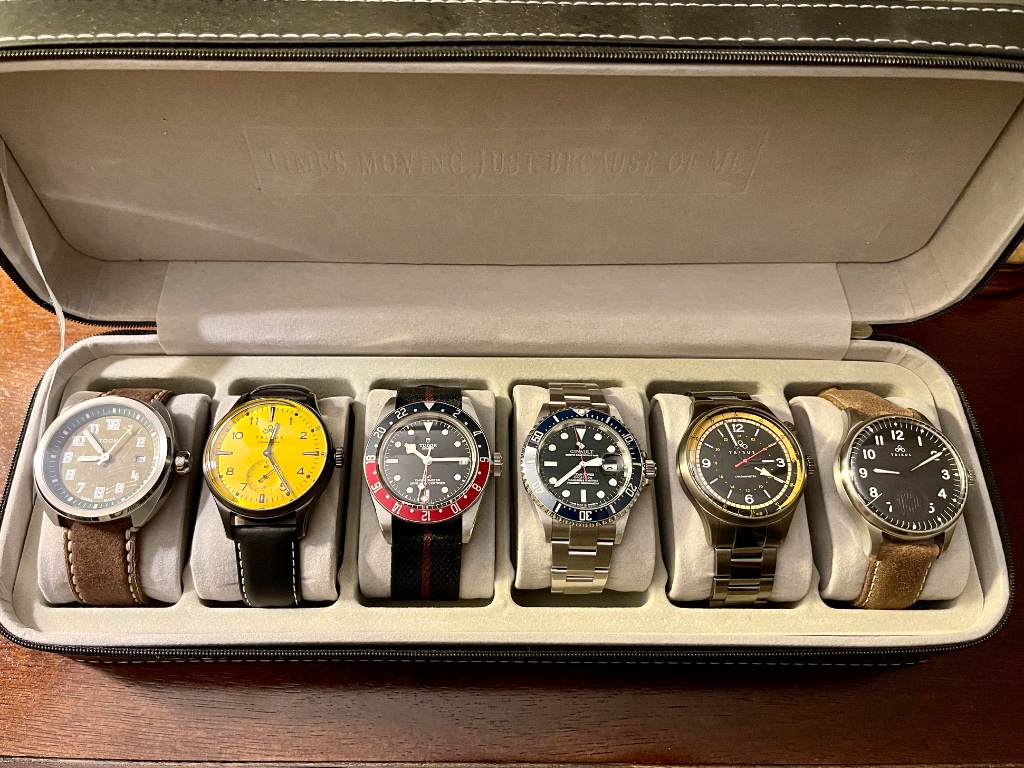
What matters more is safe, clean storage. Keep watches away from prolonged humidity, direct sunlight, and loose contact with hard objects. A proper watch box prevents bracelet rash, crystal scratches, and unnecessary dust. If you own several pieces—from a rugged Seiko diver to a refined dress watch from a rising microbrand—organization is part of care.
There is also a quieter truth collectors learn with time: watches benefit from being worn. Oils distribute, seals remain exercised, and you become more attuned to subtle changes in performance. A collection should not feel like a vault. It should feel alive.
The long view
The best watch care is not obsessive. It is attentive. It means screwing down the crown before the beach, removing a dress watch before chopping wood, noticing when a once-accurate movement starts acting strangely, and understanding that every scratch has to earn its place.
A mechanical watch is one of the few luxury objects that genuinely rewards long-term companionship. Give a well-made piece sensible care, and it can outlast trends, ownership cycles, and perhaps even its first custodian. That is part of horology’s enduring appeal: these machines remain useful, intimate, and deeply human.
And if collecting becomes richer when care turns into conversation, all the better. Few pleasures are more satisfying than comparing notes with fellow enthusiasts—on service experiences, strap pairings, or the surprising resilience of a favorite daily wearer—among people who understand why these details matter.