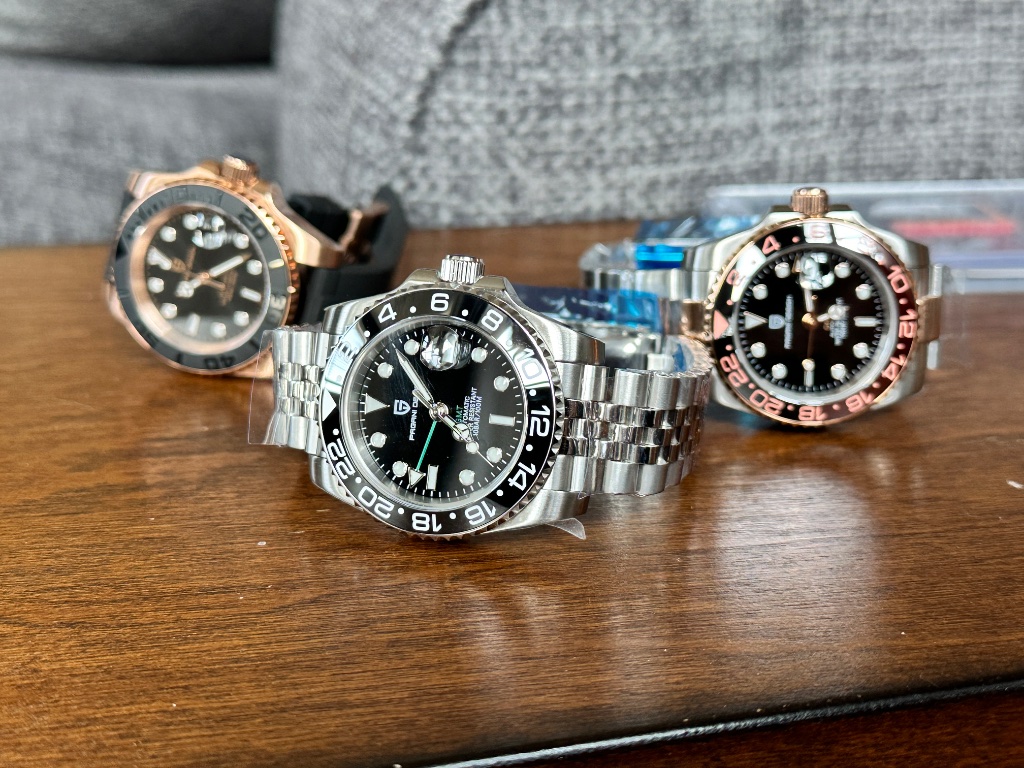

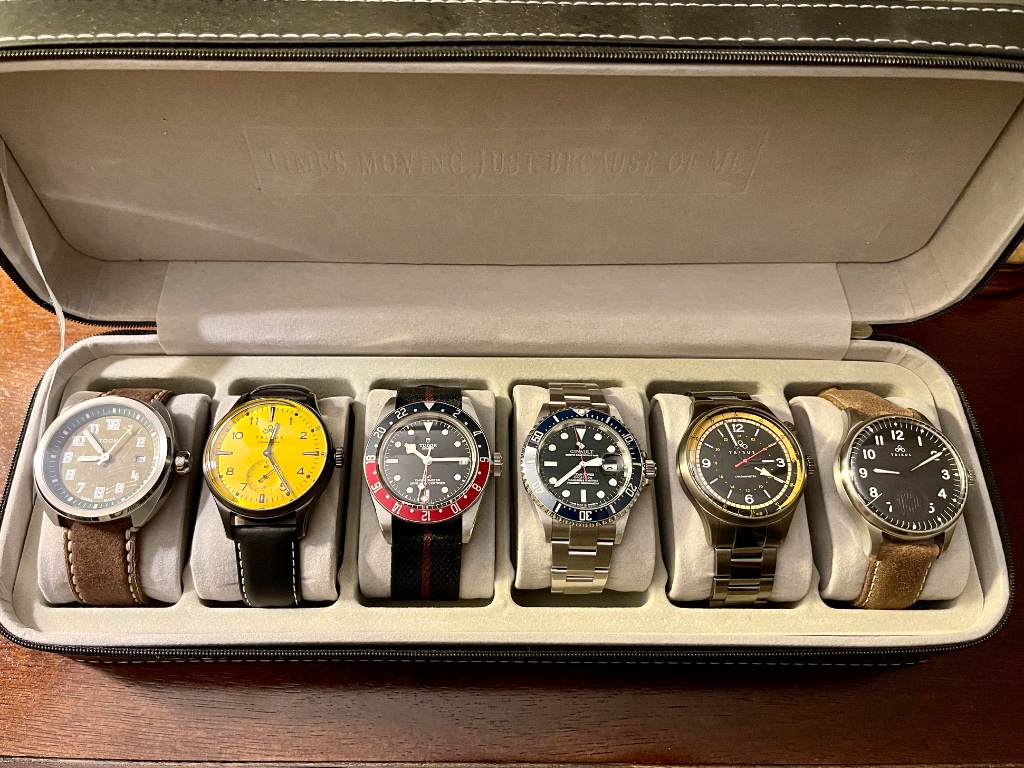

A great collection is not simply a row of watches arranged by price, brand prestige, or complication count. The most stylish collections feel lived-in. They reflect the rhythms of real life: weekdays and weekends, tailoring and denim, travel and quiet dinners, summer heat and winter layers. In that sense, building a watch wardrobe is less about accumulation and more about curation.
For many collectors, this realization marks a turning point. The question stops being, “What watch should I buy next?” and becomes, “What role will this watch play?” That shift tends to produce collections with more character, more versatility, and, ultimately, more satisfaction.
Style begins with context
A watch never exists in isolation. It sits against a cuff, catches light beside a jacket sleeve, and says something subtle about the person wearing it. The most compelling watch style comes from understanding context rather than chasing trends.
A compact field watch like the Hamilton Khaki Field Mechanical, for example, brings a different energy than a polished dress piece such as a Nomos Orion. One speaks in a practical, understated voice; the other is all restraint and refinement. Neither is objectively better dressed. Each is simply right in the proper setting.
That is the foundation of a watch wardrobe: range. Not endless range, but intentional range. You do not need ten divers or six similar integrated-bracelet sports watches to feel complete. More often, you need a few watches that each solve a distinct aesthetic and practical problem.
The core pillars of a versatile collection
Most stylish collections are built around a handful of archetypes. A daily sports watch is often the anchor: something robust, comfortable, and adaptable enough to move from office to weekend without ceremony. The Seiko Prospex line, the Formex Essence, or even a well-proportioned Citizen Series 8 can fill that role beautifully depending on your taste.
Then there is the watch that sharpens up when your clothing does. This does not have to mean a formal dress watch in the old-fashioned sense. It may be a slim Baltic MR01 under a knit polo and blazer, a Farer tonneau-shaped piece with a bit of color and sophistication, or a vintage-inspired NEUTRA chronograph that adds texture without shouting. Elegance today is often more relaxed, but it still benefits from intention.
A third pillar is character: the watch you wear because it delights you. Collectors sometimes underestimate this category, yet it is often the piece that keeps the hobby emotionally alive. Perhaps it is a Venezianico with rich dial finishing, a Mitch Mason diver with playful design choices, or a quirky Japanese reference powered by a dependable Miyota or Seiko automatic movement. These are the watches that may not be universal solutions, but they often become personal favorites.
Proportion is the secret language of style
Enthusiasts love discussing movements, finishing, and heritage, and rightly so. But when it comes to style, proportion is often the deciding factor.
A beautifully made watch that sits awkwardly on the wrist will never feel truly elegant. Diameter matters, of course, but lug-to-lug distance, thickness, and dial opening matter just as much. A 38mm watch with a long lug span can wear larger than expected; a 40mm piece with a compact profile can feel wonderfully balanced.
This is one reason many collectors eventually gravitate toward moderation. The industry has broadly returned to more wearable dimensions, and the result is a golden age of choice. Brands across the spectrum now understand that a 36mm to 39mm case often delivers the most versatility. Consider how effortlessly a 36mm Rolex Datejust, 38mm Hamilton Murph, or 39mm Baltic Aquascaphe can move across outfits and occasions.
If there is one piece of collector wisdom worth remembering, it is this: the right size usually looks quieter than you expect. Good style rarely begs to be noticed.
Texture, color, and the mood of a watch
A stylish watch wardrobe is not built by silhouette alone. Much of a watch’s personality comes from texture and color. Sunburst dials feel different from matte ones. Beads-of-rice bracelets evoke a different era than sharp three-link steel. A cream dial under warm light can be more transformative than an extra complication.
This is where modern independents and microbrands have become so interesting. They are often more willing to experiment with sector layouts, sandwich dials, interesting handset designs, and nuanced color palettes than larger mainstream brands. Farer, in particular, has built a following by understanding that color, when applied intelligently, can make a watch feel sophisticated rather than loud.
The key is balance. If your wardrobe leans neutral, a watch with a petrol blue, burgundy, or salmon dial can become a focal point without overwhelming your style. If you already dress boldly, a restrained black, silver, or white dial may offer a welcome counterweight. A collection gains depth when not every watch tries to make the same statement.
Straps change everything
Few style upgrades in horology are as affordable or as effective as a thoughtful strap change. A watch on steel can feel architectural and assertive; the same watch on suede becomes softer, more casual, and more intimate. Shell cordovan adds polish. Canvas adds ease. Rubber can make even a refined diver feel ready for travel.
Seasoned collectors know that straps are not accessories after the fact; they are part of the watch’s wardrobe potential. A Seiko Alpinist, for instance, can move from adventurous to elegant depending on whether it sits on a bracelet, leather strap, or textured fabric. The same is true of countless pieces from Hamilton, Baltic, and Citizen.
If you want to build style with restraint, start by exploring three or four high-quality strap options before buying another watch. It is often the smartest way to rediscover what you already own.
Buy for the life you actually lead
One of the easiest mistakes in collecting is buying watches for imagined versions of ourselves. We purchase the ultra-formal dress watch for galas we never attend, or the oversized professional dive watch for waters we rarely enter. There is nothing wrong with aspiration, but style becomes more convincing when it aligns with lived experience.
Look at your week honestly. Do you wear tailoring often, or mostly smart casual clothing? Are you at a desk, in transit, outdoors, or moving between all three? Do you prefer one watch for everything, or do you enjoy changing watches with your outfit and mood?
The answers should shape your wardrobe more than online hype ever will. A collector in New York may find endless use in a versatile steel sports watch and one elegant piece for evenings out. Someone in Southern California may lean into lighter dials, casual straps, and easy-wearing field or dive watches. Style is personal because life is personal.
A collection that feels like you
The best watch wardrobes do not merely signal knowledge. They reveal discernment. They suggest that the owner understands not only watches, but also themselves.
That might mean a collection anchored by familiar names like Seiko and Hamilton, enriched by contemporary voices like Formex or Farer, and made more individual through emerging makers such as Mitch Mason, NEUTRA, or Venezianico. It might mean vintage, modern, Swiss, Japanese, and microbrand pieces living side by side in harmony. What matters is not uniformity, but coherence.
Over time, every collector learns that style in watches is not about looking expensive or proving seriousness. It is about wearing pieces with ease, choosing them with purpose, and allowing them to accompany a well-observed life.
And perhaps that is why the watch wardrobe remains such a satisfying idea. It keeps collecting grounded in daily pleasure rather than abstract acquisition. Each watch earns its place. Each one tells part of the story. And in a community of people who notice these things, that kind of thoughtful collecting always stands out.