
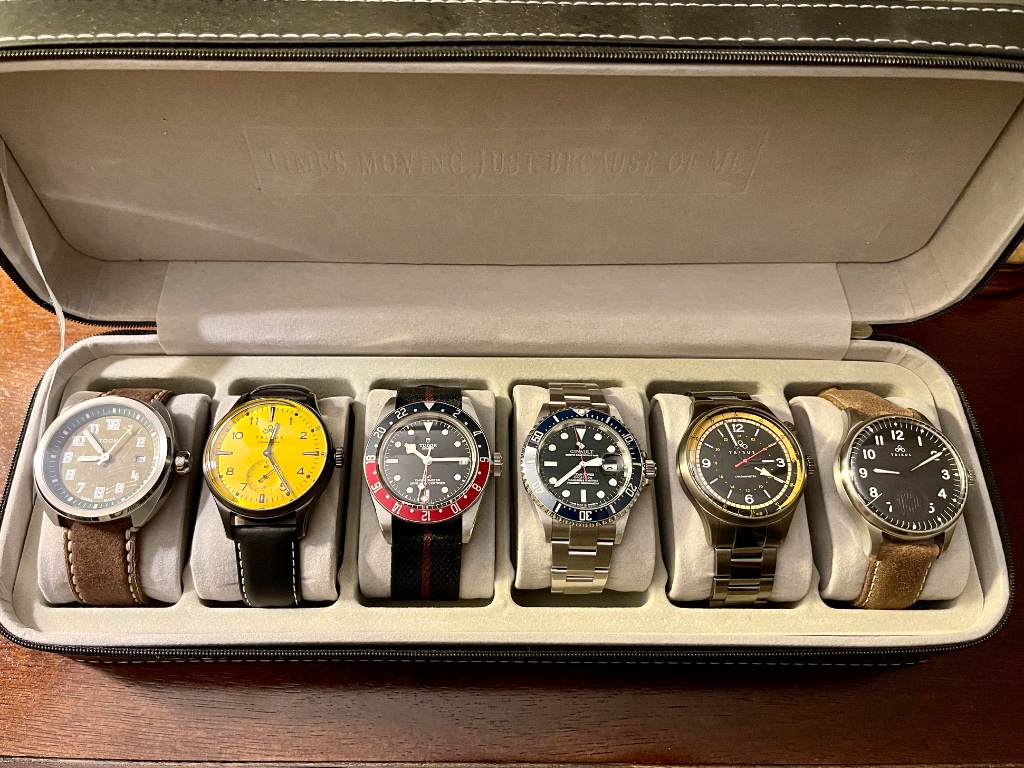

Built for a Purpose, Collected for a Story
Long before watches became shorthand for personal style, they were instruments. They were built to solve problems: to coordinate troop movements, time decompression stops, navigate cockpit calculations, or survive magnetic fields in industrial settings. What we now call the “tool watch” was never originally a genre in the romantic sense. It was simply a watch made to do a job.
That practical origin is precisely why tool watches continue to resonate so deeply with collectors. In an age when a phone or a satellite-connected wearable can outperform almost any mechanical wristwatch on pure utility, we still return to pieces like the Rolex Submariner, Omega Speedmaster, Blancpain Fifty Fathoms, Hamilton Khaki Field, and Seiko’s many generations of professional divers. We do so not because they are necessary, but because they carry a rare kind of honesty. A good tool watch reveals its reason for being at a glance.
For collectors, that clarity is irresistible.
From the Pocket to the Front Line
The roots of the tool watch lie in necessity rather than luxury. The transition from pocket watches to wristwatches accelerated in the late 19th and early 20th centuries, particularly in military settings where ease of access mattered. Soldiers could not fumble for a pocket watch under pressure; they needed time on the wrist.
This shift gave rise to some of the earliest field and military watches, defined by legibility, robust cases, and restrained design. Decades later, those principles would echo in modern pieces like the Hamilton Khaki Field Mechanical, a watch that feels convincing not because it imitates age, but because it preserves the design language of usefulness. Clear Arabic numerals, matte surfaces, compact dimensions, and hand-wound simplicity all speak the original dialect of military horology.
For newer collectors, military watches offer one of the best entry points into watch history. They teach an essential lesson: great design often begins with constraints. The same logic that made a watch readable in a trench or durable in rough weather still makes it satisfying to wear today.
The Dive Watch and the Myth of Readiness
If the field watch established the tool watch in military life, the dive watch transformed it into a cultural icon. In the 1950s, recreational and professional diving expanded rapidly, and watchmakers answered with purpose-built underwater instruments. Blancpain’s Fifty Fathoms of 1953 and Rolex’s early Submariner references helped define the category: rotating timing bezels, luminous markers, screw-down crowns, and meaningful water resistance.
By the time Omega, Doxa, and later Seiko entered the picture, the dive watch was no longer just equipment. It had become a symbol of competence, adventure, and self-reliance.
Seiko, in particular, deserves special attention in any serious history of tool watches. From the 62MAS to the “Turtle,” “Samurai,” and “Tuna,” Seiko built some of the most democratic and durable dive watches ever made. These were not merely alternatives to Swiss icons; they were original expressions of industrial watchmaking, often technically ambitious and unusually honest in value.
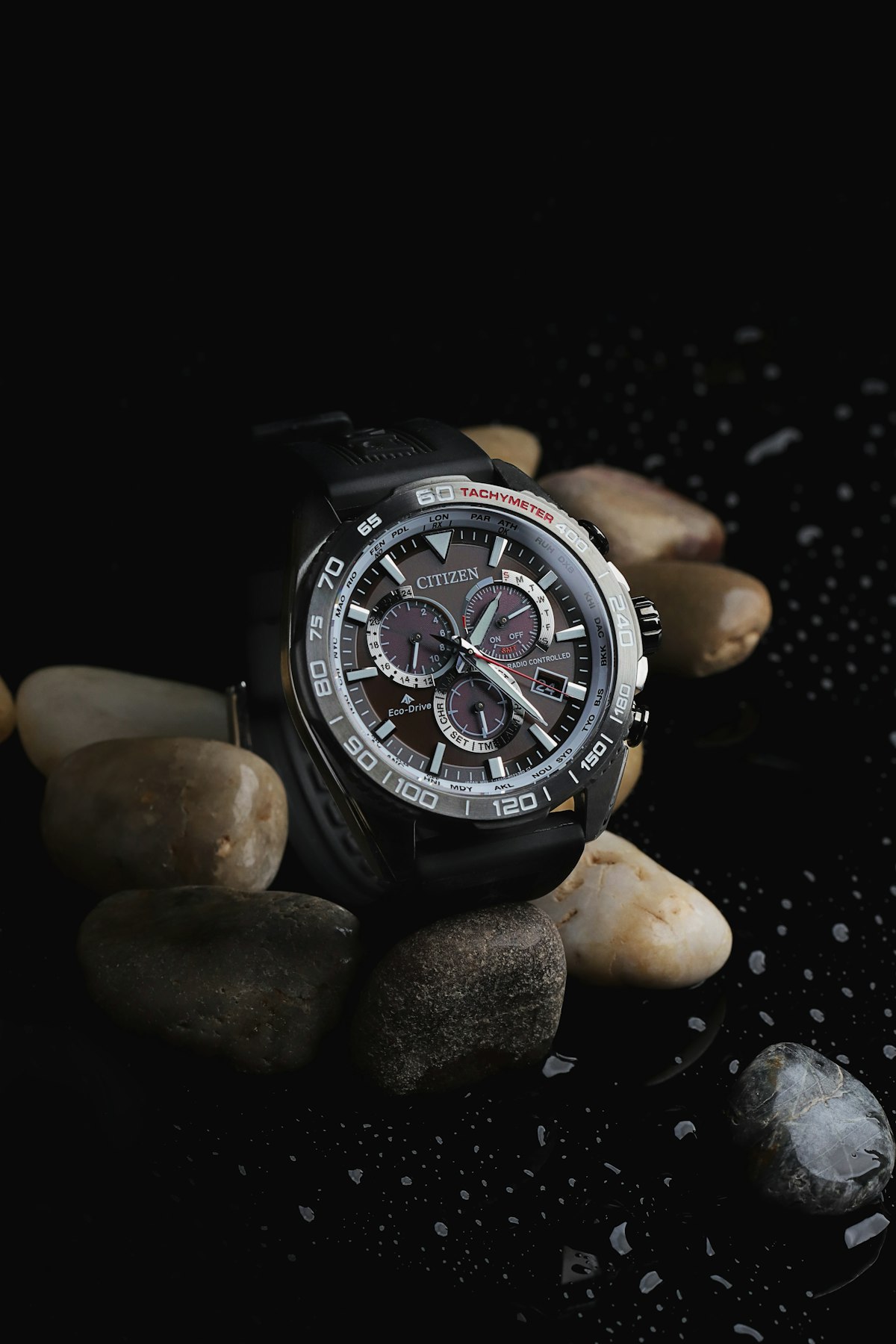
Part of the dive watch’s enduring appeal is aspirational. Most owners will never use a 200-meter diver for actual decompression timing. But that misses the point. Collectors are often drawn to the idea of readiness—the reassuring sense that a watch is overbuilt for whatever the day may bring. A Citizen Promaster or a Formex Reef may spend more time under a shirt cuff than a wetsuit, yet its appeal remains rooted in capability.
In the Air and Beyond the Atmosphere
Pilot’s watches tell a parallel story. Early aviation demanded oversized crowns, high-contrast dials, and quick readability under stress. Brands like IWC, Zenith, and Breitling built watches around navigation needs, while chronographs became essential timing instruments for flight.
That tradition eventually produced one of the most studied watches in collecting: the Omega Speedmaster. Though born as a racing chronograph in 1957, its history was transformed by NASA qualification and the moon landings. The Speedmaster’s journey from trackside timer to spacefaring legend shows how tool watches often gain their aura not through marketing alone, but through real-world adoption in extreme conditions.
What makes the Speedmaster so enduring is not only its résumé. It is also a beautifully coherent object: the tachymeter bezel, the tri-compax dial, the hand-wound caliber lineage descending from the Lemania-based movements. Collectors sense when a watch’s form and history align, and the Speedmaster is one of the purest examples.
Anti-Magnetism, Railways, and Everyday Utility
Not every tool watch was built for combat, diving, or flight. Some were designed for the quieter demands of modern industry. Think of the Rolex Milgauss, created for scientists exposed to magnetic fields, or antimagnetic references from IWC and Omega made for engineers and technicians. Railway watches, too, had a distinct role, where precision and legibility were matters of safety rather than taste.
These categories remind us that tool watch history is broader than the most famous icons. Even today, the spirit survives in understated pieces from independent and enthusiast-led brands. Farer’s crisp dial design, Baltic’s vintage-informed chronographs, NEUTRA’s purposeful Italian restraint, and Mitch Mason’s adventure-ready GMTs all draw from historical templates without feeling derivative when done well.
This is where modern collecting becomes especially interesting. A watch need not be issued to a navy unit or strapped over a flight suit to deserve respect. What matters is whether it understands the design grammar of the tool watch: clarity, proportion, tactile usefulness, and engineering integrity.
Why Tool Watches Still Matter in a Digital World
Mechanical tool watches are technologically obsolete in the strictest sense. A quartz Citizen, a radio-controlled Seiko, or a GPS-enabled wearable is more accurate and often more practical. And yet the tool watch remains emotionally current.
Why? Because it gives utility a human face.
A mechanical bezel that clicks with intent, a hand-wound movement that rewards daily attention, a dial laid out for immediate understanding—these are forms of interaction that create attachment. Tool watches invite use, and use creates memory. A scratch on a dive bezel or a worn canvas strap often says more to a collector than pristine condition alone.
For seasoned enthusiasts, this is old wisdom. For beginners, it is worth learning early: buy the watch whose purpose you can feel. Specifications matter, certainly. So do movements, case finishing, and historical significance. But the watches that stay with us are usually the ones that make sense on the wrist.
That might be a Seiko SPB diver, a Hamilton field watch, a Farer GMT, a Baltic Aquascaphe, or even a thoughtfully made microbrand using a dependable Miyota or Sellita caliber. The logo matters less than the coherence.