

The field watch occupies a special place in watch history because it was never designed to impress. It was designed to work. In an era when modern collecting can drift toward polished bezels, exotic materials, and theoretical waiting lists, the field watch still speaks a simpler language: legibility, reliability, and restraint.
That simplicity is precisely why enthusiasts return to it. For a beginner, a field watch is often the first mechanical watch that truly makes sense. For a seasoned collector, it can feel like a return to first principles. To understand its appeal today, it helps to look back at where the category came from and how necessity shaped one of horology’s purest forms.
From Pocket Watches to the Trenches
The field watch did not emerge fully formed. Its roots lie in the late 19th and early 20th centuries, when soldiers began adapting pocket watches for wrist use. Before World War I, many men still viewed wristwatches as delicate or even decorative. The trench changed that. Reading time quickly, with one hand free and under poor conditions, was no luxury. It was practical survival.
These early "trench watches" established the visual language that still defines the field watch: bold Arabic numerals, luminous hands, compact cases, and clear minute tracks. They were often cased in silver or base metal, with wire lugs soldered on and large onion crowns for use with gloves. Some even featured protective shrapnel guards over the crystal.
What mattered most was instant readability. That idea remains central today. When you look at a modern Hamilton Khaki Field Mechanical, you are seeing a descendant of those wartime priorities. The aesthetic feels timeless because it was born from function, not fashion.
The A-11 and the Grammar of Utility
If World War I created the need, World War II standardized the field watch. In the United States, the A-11 became one of the defining military wristwatches of the era, produced by makers such as Elgin, Bulova, and Waltham. It is often called "the watch that won the war," and while that phrase is romantic, the historical point is sound: accuracy, hacking seconds, and dependable legibility mattered enormously in coordinated operations.
Across the Atlantic, Britain issued the famous WWW watches, now known to collectors as the Dirty Dozen, from brands including Omega, Longines, IWC, Jaeger-LeCoultre, and Vertex. These pieces varied in detail, but together they codified the military watch formula: matte black dials, luminous numerals, railroad minute tracks, robust cases, and an emphasis on durability over decoration.
This was the moment the field watch found its grammar. A good field watch should disappear on the wrist and assert itself only when needed. It should tell the time instantly, without reflection or ambiguity. Even today, when brands reinterpret the format with textured dials or colorful accents, the best examples respect that old discipline.
From Service Issue to Civilian Staple
After the war, military design moved into civilian life. The field watch became an everyday object for workers, students, travelers, and outdoorsmen. This transition is one reason the category feels so democratic: it was never locked inside formal dress codes or elite social rituals.
Hamilton’s modern Khaki line is perhaps the clearest bridge between military inspiration and civilian collecting. The Khaki Field Mechanical, with its hand-wound H-50 movement and pared-back case proportions, channels the genre’s roots without feeling like a museum reissue. Seiko took a broader approach, creating rugged and affordable watches that delivered tool-watch honesty to a much wider audience. A Seiko 5 Sports field model may not pretend to military provenance, but it captures the spirit beautifully.
As military procurement evolved, quartz also entered the story. For armed forces, quartz made perfect sense: it was accurate, cheap to maintain, and less vulnerable to neglect. Collectors sometimes forget that utility and romance are not always the same thing. A mechanical field watch stirs the soul, but a quartz service watch often made better logistical sense.
That tension between practical truth and emotional appeal has always been part of the field watch’s history.
Why the Field Watch Still Matters
The field watch endures because it offers a kind of honesty that many modern watches only imitate. It does not need rotating bezels, helium valves, or polished center links to justify itself. It succeeds through proportion, clarity, and comfort.
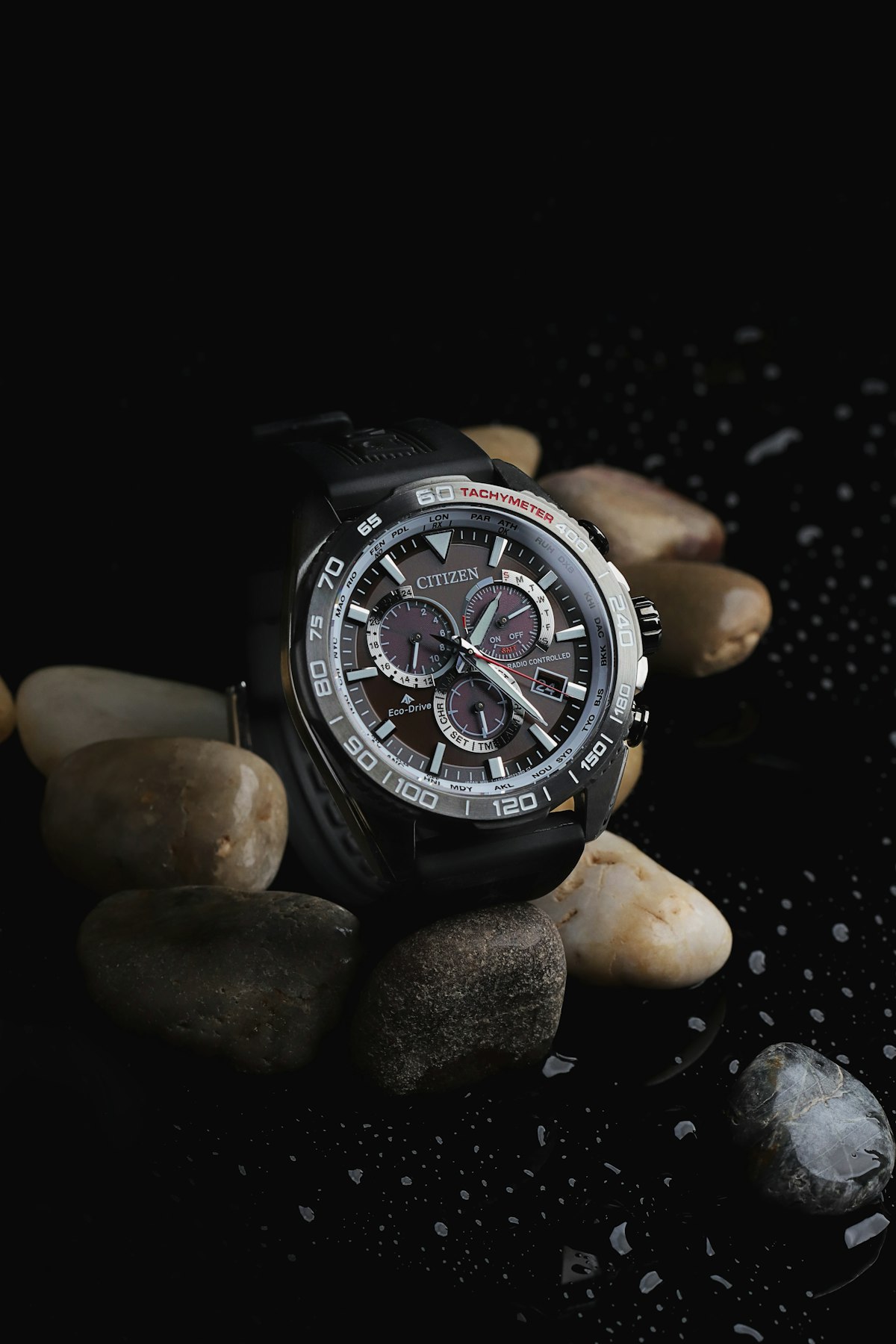
That is why the category remains so rich today. Hamilton continues to own an important part of the conversation, but it is far from alone. The Seiko Alpinist, especially in its modern 6R35-powered forms, shows how field-watch DNA can evolve into something slightly more refined and adventurous. Citizen’s Promaster Tough brings near-ideal everyday practicality, especially with Eco-Drive, a technology that quietly solves many real-world ownership headaches.
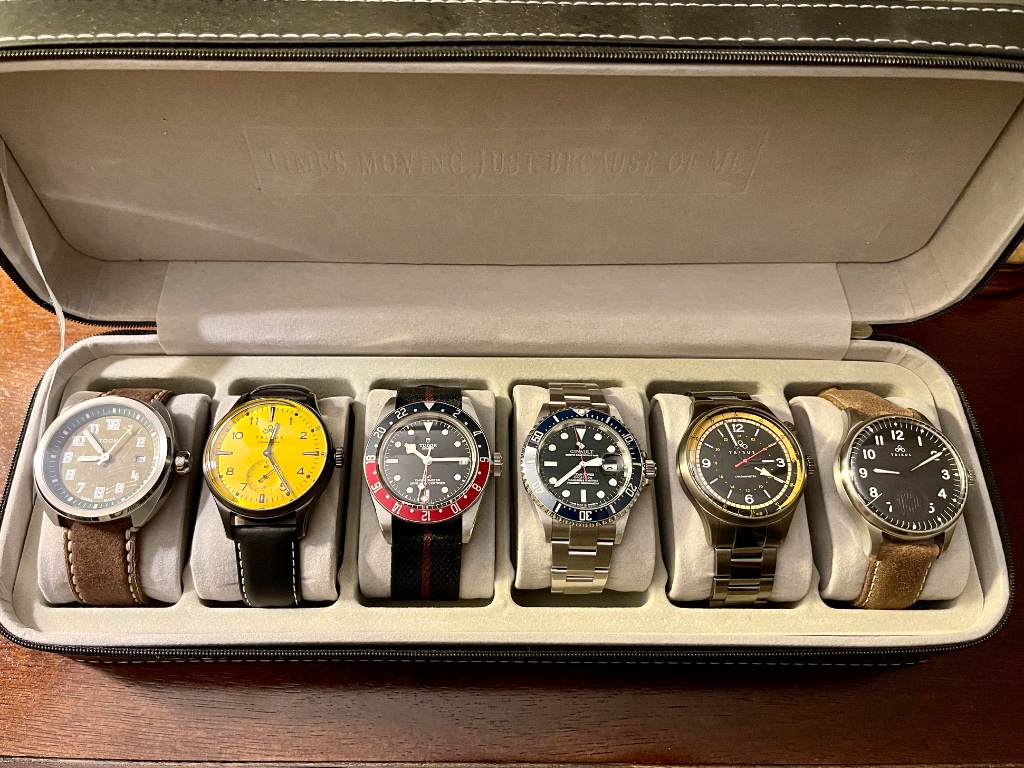
Then there are the independents and microbrands, which have done a remarkable job reinterpreting the genre without empty nostalgia. Baltic’s Hermétique Tourer leans into compact proportions and everyday versatility. Farer has shown how British design playfulness can coexist with tool-watch restraint. Smaller names such as NEUTRA and Mitch Mason, even when working outside strict military templates, often borrow the field watch’s clean hierarchy and purpose-driven ethos.
For collectors, that matters. The field watch is not frozen in 1944. It is a living design language.
What Collectors Should Look For
Buying a field watch well means knowing what you value. If you want historical authenticity, vintage military pieces can be immensely rewarding, but they demand caution. Original lume, honest dial condition, correct hands, and unpolished cases matter far more than a seller’s story. Redials are common. Radium requires informed handling. Fixed bars, while historically correct on some pieces, can also limit your strap options.
If you want the spirit of the category without the anxiety, modern watches are often the smarter buy. In this segment, proportions deserve close attention. Many of the best field watches wear between 36mm and 38mm, sizes that preserve the category’s discreet charm. Larger cases can work, but once a field watch becomes too broad or too thick, it loses the very quality that makes it compelling.
Movement choice also shapes the ownership experience. A hand-wound watch like the Hamilton Khaki Field Mechanical deepens the daily ritual; you engage with it each morning, as generations once did. An automatic or a solar quartz Citizen may be less romantic, but it may also be the watch you reach for more often. Collector wisdom sometimes means being honest about your habits.
And perhaps most of all, pay attention to the dial. On a field watch, the dial is everything. If the numerals, minute track, and handset do not feel clear at a glance, the watch has missed the point.
The Most Human Tool Watch
There are more technically capable watches than the field watch, and certainly more luxurious ones. But few categories capture the emotional core of watchmaking so well. The field watch reminds us that a wristwatch first earned its place not as jewelry, but as a companion under pressure.
That history gives even modern examples a quiet gravity. Whether your taste runs to a vintage Dirty Dozen, a Hamilton Khaki, a Seiko, a Citizen, or a thoughtfully made microbrand, the best field watches carry the same message: good design serves the wearer.
And perhaps that is why they remain such satisfying pieces to discuss, compare, and pass around among fellow enthusiasts. In a good watch club, as in a good collection, the simplest watches often spark the richest conversations.