
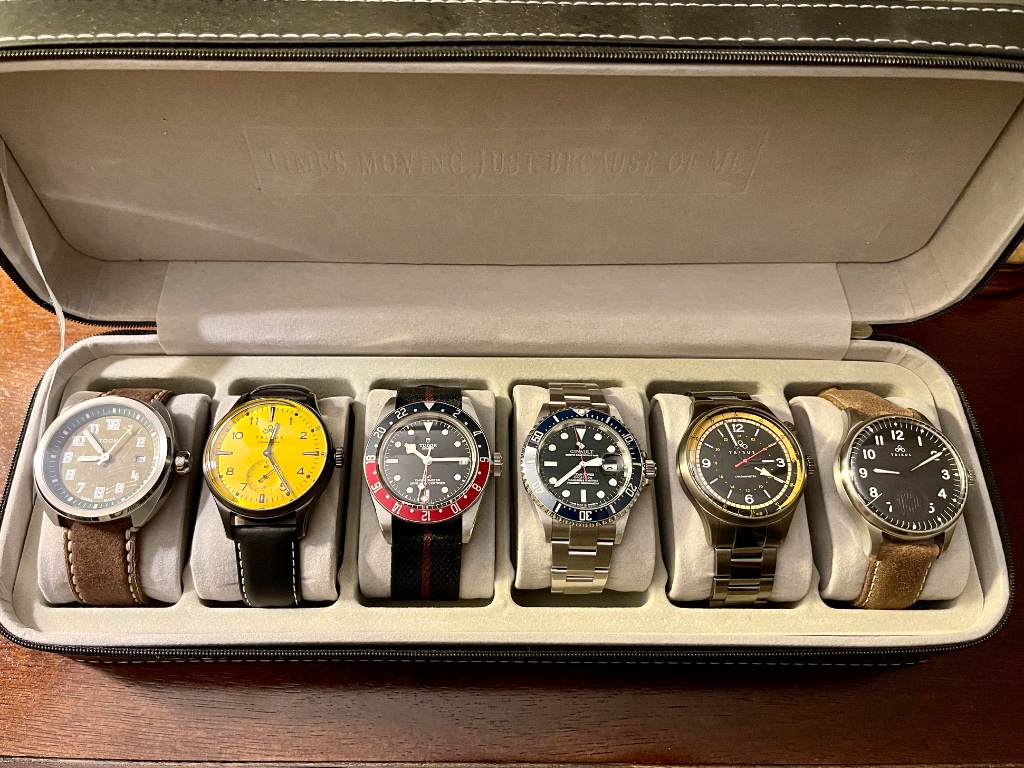

Few watch genres feel as honest as the field watch. It is not flashy, and it was never meant to be. Its appeal lies in clarity, utility, and a kind of quiet confidence that watch collectors tend to admire more deeply over time. For beginners, the field watch is often a gateway into mechanical horology because it is approachable, wearable, and usually legible at a glance. For seasoned collectors, it is a category rich with military history, design nuance, and some of the purest examples of tool-watch thinking.
The field watch did not emerge from a marketing department. It was shaped by necessity, first in war and then in civilian life, where its practical virtues proved timeless.
From Pocket Watches to the Front Lines
Before the 20th century, most men carried pocket watches. Wristwatches existed, but they were not yet standard equipment for soldiers or civilians. That changed dramatically during the First World War. In the trenches, a pocket watch was simply too slow and too awkward. Officers and enlisted men alike needed something they could read instantly while coordinating movements, artillery timing, and communication.
Early military wristwatches were often adapted pocket watches fitted with wire lugs and leather straps. These so-called trench watches introduced many of the features we still associate with field watches today: bold Arabic numerals, luminous hands, black dials or high-contrast surfaces, and compact cases designed for function over ornament.
This was the pivotal cultural shift. The wristwatch stopped being a novelty and became a serious instrument. Military need accelerated the acceptance of wristwatches in everyday life, and by the end of the war, men returned home having learned that a watch on the wrist was simply more useful.
Standardization and the Military Ideal
If World War I made the wristwatch practical, World War II refined the field watch into a recognizable type. Governments issued detailed specifications, and manufacturers responded with watches built for durability, legibility, and repairability.
In the United States, the A-11 became one of the most important military watches ever made. Produced by brands including Bulova, Elgin, and Waltham, it earned the nickname "the watch that won the war." The A-11 emphasized hacking seconds for synchronization, clean dials, and robust reliability. It was a watch made to disappear into the task at hand.
Britain's contribution came through the famous WWW watches, better known today as the Dirty Dozen. Built by twelve manufacturers including Omega, Longines, IWC, Jaeger-LeCoultre, and Vertex, these watches established a design language that still echoes through modern field watches: matte dials, railroad minute tracks, luminous cathedral or pencil hands, and sturdy cases often around 35 to 38mm.
This period matters because it established the field watch as a true instrument. Its beauty was never decorative in the traditional sense. It was the beauty of proportion, restraint, and purpose.
The Postwar Civilian Field Watch
After the war, military design moved into civilian life. Men who had worn practical watches in service often preferred similar watches at home, especially as outdoor recreation, travel, and casual sportswear became part of modern life.
Hamilton is central to this story for American collectors. The modern Hamilton Khaki Field, particularly the Khaki Field Mechanical, captures the spirit of U.S. military issue watches with its matte dial, 24-hour inner track, hand-wound movement, and no-nonsense case profile. It feels historic without becoming costume.
Other brands followed similar paths. Benrus military watches from the Vietnam era, especially the DTU-2A/P, gave collectors another iconic reference point. In Britain, CWC continued the military tradition with issue watches like the G10 and re-creations such as the Mellor-72. Marathon, still closely tied to military procurement, offers the General Purpose Mechanical as one of the few contemporary watches that feels like a direct continuation of the original brief.
Japanese watchmaking also played a major role in democratizing the field-watch spirit. Seiko and Citizen turned utilitarian design into something dependable and widely accessible. A modern Seiko 5 Sports Field or Citizen Garrison may not be strict military reissues, but they carry the same ideals: strong legibility, robust everyday performance, and a price point that invites actual wear.
Why the Design Still Works
The field watch has endured because it solves real problems elegantly. Good examples are easy to read, easy to wear, and easy to live with. They slide under a cuff, sit comfortably on a fabric strap, and rarely feel out of place. In an era of oversized cases and feature overload, that restraint can feel refreshingly confident.
Collectors also appreciate the category because small changes mean a great deal. A broad-arrow handset tells a different story than syringe hands. A fully lumed dial feels more wartime, while a crisp white minute track can make a modern reissue feel almost clinical. Even the movement choice shapes the experience. A hand-wound watch powered by an ETA 2801 or Sellita SW210 feels closer to historical military practice, while an automatic using a Seiko NH35 or Miyota 9039 offers convenience with similar visual charm.
This is one reason contemporary independent and smaller brands continue to revisit the field watch so effectively. Farer's Exmoor brings British design flair to a classic format. Baltic's Hermétique Tourer leans slightly more adventurous, but its compact sizing and practical dial architecture capture much of the same appeal. The best modern interpretations do not simply copy old military watches; they translate their logic for contemporary wear.
Collector Wisdom: Vintage Romance, Modern Reality
For collectors, field watches offer one of horology's most satisfying crossroads between history and usability. But the category rewards discernment.
If you are shopping vintage, originality matters more than polish. On military watches, sharp engravings, correct hands, original fixed bars, and an honest dial are often more important than a shiny case. Be especially careful with redials and heavily assembled "Frankenwatches," which can look convincing in photographs but lose much of their historical value up close.
Lume is another area where romance meets reality. Many older military watches used radium, later tritium, and both should be approached with care and context. That does not mean avoiding vintage altogether, but it does mean buying from knowledgeable sellers and understanding what you are wearing.
For newer collectors, a modern field watch is often the wiser first step. A Hamilton Khaki Field Mechanical, Marathon GP Mechanical, or a well-chosen Seiko or Citizen can teach you exactly what makes the genre compelling without the anxieties of vintage maintenance. Then, if the bug bites, you can move deeper into Dirty Dozen references, Vietnam-era issue pieces, or niche reissues with confidence.
A Watch of Character, Not Pretense
What makes the field watch special is not scarcity alone, nor military nostalgia on its own. It is the way history remains visible in the object. Every matte dial, every high-contrast numeral, every compact case is a reminder that good watch design often begins with a simple question: what does the wearer truly need?
That question still resonates today. In a collection filled with divers, chronographs, and modern luxury sports watches, a field watch often becomes the piece you reach for when you want clarity, comfort, and substance without ceremony. It is humble, but never boring.
Perhaps that is why field watches tend to start such good conversations among collectors. They invite us to talk not only about references and movements, but also about purpose, heritage, and what we value in the watches we keep close. In a community like Keeper Box, that kind of watch often says the most with the fewest words.