

Few categories in horology feel as honest as the field watch. It does not rely on polished ceremony or engineering spectacle. Its appeal is more elemental: clarity, durability, proportion, and a quiet sense of purpose. For many collectors, that simplicity is exactly the point.
Yet the field watch did not begin as a design exercise. It was shaped by necessity, by mud and timing orders, by the practical demands of soldiers who needed a wrist-borne instrument they could read at a glance. To understand why watches like the Hamilton Khaki Field, Seiko’s military-inspired references, or the Citizen Promaster Tough resonate so strongly today, it helps to look back at how this unpretentious genre earned its place.
Before the Field Watch Had a Name
The story starts in the late 19th and early 20th centuries, when pocket watches still dominated civilian life. Wristwatches existed, but they were often seen as delicate or jewelry-like. That perception changed quickly in wartime.
During the Boer War and, more decisively, in World War I, soldiers discovered that pulling a pocket watch from a tunic while under pressure was inefficient at best and dangerous at worst. So-called trench watches emerged as a practical response. These were often small converted pocket-watch movements housed in wristwatch cases with soldered wire lugs, luminous numerals, and oversized crowns that could be operated with gloves.
They were not yet field watches in the modern sense, but they established the essential formula: legibility first, robustness second, decoration a distant third. In horological terms, that was a profound shift. The wristwatch was no longer merely acceptable; it had become useful.
War, Standardization, and the Military Blueprint
If World War I legitimized the wristwatch, World War II standardized the tool watch. Military contracts demanded consistency, and watchmakers responded with some of the clearest design languages in the hobby.
In the United States, the A-11 is often called the watch that won the war. Produced by companies including Bulova, Elgin, and Waltham, it featured a black dial, Arabic numerals, central seconds, and hacking capability for synchronized operations. Across the Atlantic, Britain commissioned the famous Dirty Dozen watches from makers such as Omega, IWC, Jaeger-LeCoultre, and Longines. These pieces shared the now-familiar ingredients of the military watch: matte dials, bold luminous markers, railroad minute tracks, and restrained case sizes typically in the mid-30mm range.
This was the real birth of the field-watch aesthetic. Not every military-issued watch was a field watch, strictly speaking, but the genre inherited its visual grammar directly from these specifications. By the Vietnam era, references such as the Benrus field watches and later mil-spec designs further defined the category: black dial, no-nonsense case, dependable movement, and a strap system that prioritized utility over flair.
For collectors, that historical lineage matters. The field watch is one of the clearest examples of form following function in all of horology.
Hamilton and the American Field Watch Tradition
No brand is more closely associated with the modern field watch than Hamilton, and for good reason. The company’s military heritage is substantial, even beyond wristwatches. Hamilton supplied timing instruments to the U.S. military and later became synonymous with rugged, serviceable tool watches.
The contemporary Hamilton Khaki Field Mechanical is arguably the reference point for the whole genre. Its design draws on mid-century military cues, yet it feels neither costume-like nor overly nostalgic. The hand-wound movement, now Hamilton’s H-50 in many versions, gives it a ritual that suits the category. Winding it each morning feels appropriate, almost like participating in the history it represents.
That is part of the field watch’s charm: it rewards attention without demanding ceremony. A dive watch often asks you to admire its engineering. A field watch asks you to wear it.
From Issued Equipment to Civilian Essential
After the wars, military style did what military style often does: it filtered into civilian life. Veterans were already comfortable with wristwatches, and the public had learned to appreciate practical design. As dress codes relaxed over the decades, the restrained military watch became an everyday companion.
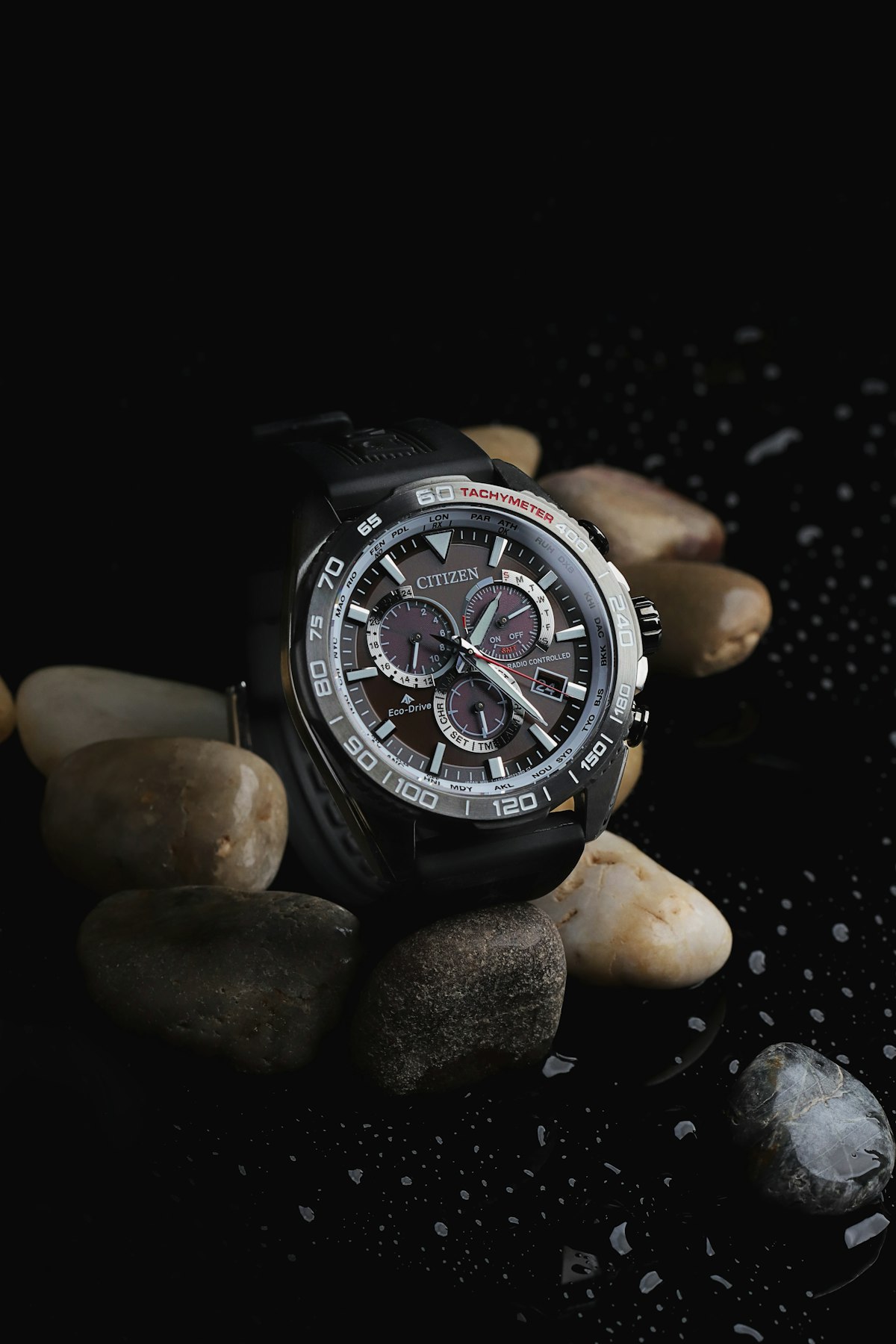
This transition helps explain why the field watch remains one of the best entry points for new collectors. It is historically grounded, easy to wear, and remarkably versatile. A Hamilton Khaki Field can move from denim to a sport coat without strain. A Seiko 5 Sports field-style reference, often powered by the reliable 4R36, offers the same spirit at a more accessible price. Citizen’s Promaster Tough and Garrison models carry the genre into modern quartz and Eco-Drive territory, proving that utility did not end with hand-wound calibers.
Even the British CWC G10 deserves mention here. Though quartz and later than the classic World War II archetypes, it shows how the military watch continued to evolve as a practical instrument rather than a nostalgic object.
Why Modern Collectors Still Love Them
In an era of ceramic bezels, integrated bracelets, and ever-larger case dimensions, the field watch offers relief. It reminds collectors that the fundamentals still matter most.
That is why contemporary enthusiasts keep returning to the category, whether through established names or thoughtful independents. Baltic’s Hermétique channels compact utility with modern finishing and a Miyota 9039 under the hood. Farer has brought color and nuance to utilitarian design without sacrificing legibility. Smaller brands such as NEUTRA and Mitch Mason have shown that the field-watch template remains fertile ground for creative interpretation, especially when kept in wearable proportions.
The best of these watches understand a simple truth: a field watch should feel resolved. The dial should be readable in poor light. The case should sit low and balanced. The crown should be usable. The strap should be easy to swap. Nothing should look added for effect.
For seasoned collectors, that restraint can be more impressive than complexity. It is harder to design a simple watch well than many brands would like to admit.
Collector Wisdom: What to Look For
If you are buying a vintage field watch, condition and originality matter enormously. Redials can erase the very crispness that gives military watches their charm. Replaced hands, polished cases, and missing fixed bars can alter both value and character. And, of course, older luminous material may contain radium, which calls for informed handling and careful storage.
For modern buyers, the questions are more personal than archival. Do you want the tactile pleasure of a hand-wound watch, like the Hamilton Khaki Field Mechanical, or the convenience of an automatic? Are you drawn to the authenticity of 36 to 38mm sizing, or do you prefer a more contemporary 39 to 40mm presence? Do you want sapphire crystal durability, or the warmer charm of acrylic on a more vintage-leaning piece?
One practical tip collectors often learn late: a good field watch lives and dies by its strap options. NATO, canvas, suede, leather, even beads-of-rice on some modern interpretations—the watch should adapt easily. A versatile field watch becomes a favorite because it never feels precious.
The Enduring Appeal of Honest Design
The field watch survives because it speaks a language collectors instinctively trust. It was not invented in a marketing meeting. It was refined by use. Every clear numeral, every matte surface, every modest case dimension is there for a reason.
That history gives the genre unusual emotional weight. When you wear a good field watch, whether it is a wartime original, a Hamilton Khaki, a sturdy Seiko, or a modern microbrand interpretation, you are wearing one of horology’s purest ideas: the watch as dependable companion.
And perhaps that is why field watches always seem to spark such good conversations among collectors. They invite stories about use, taste, and values rather than status alone. In that sense, they fit beautifully into the spirit of The Keeper Box community, where the watches that endure are often the ones with the clearest purpose.