


Born in the trenches
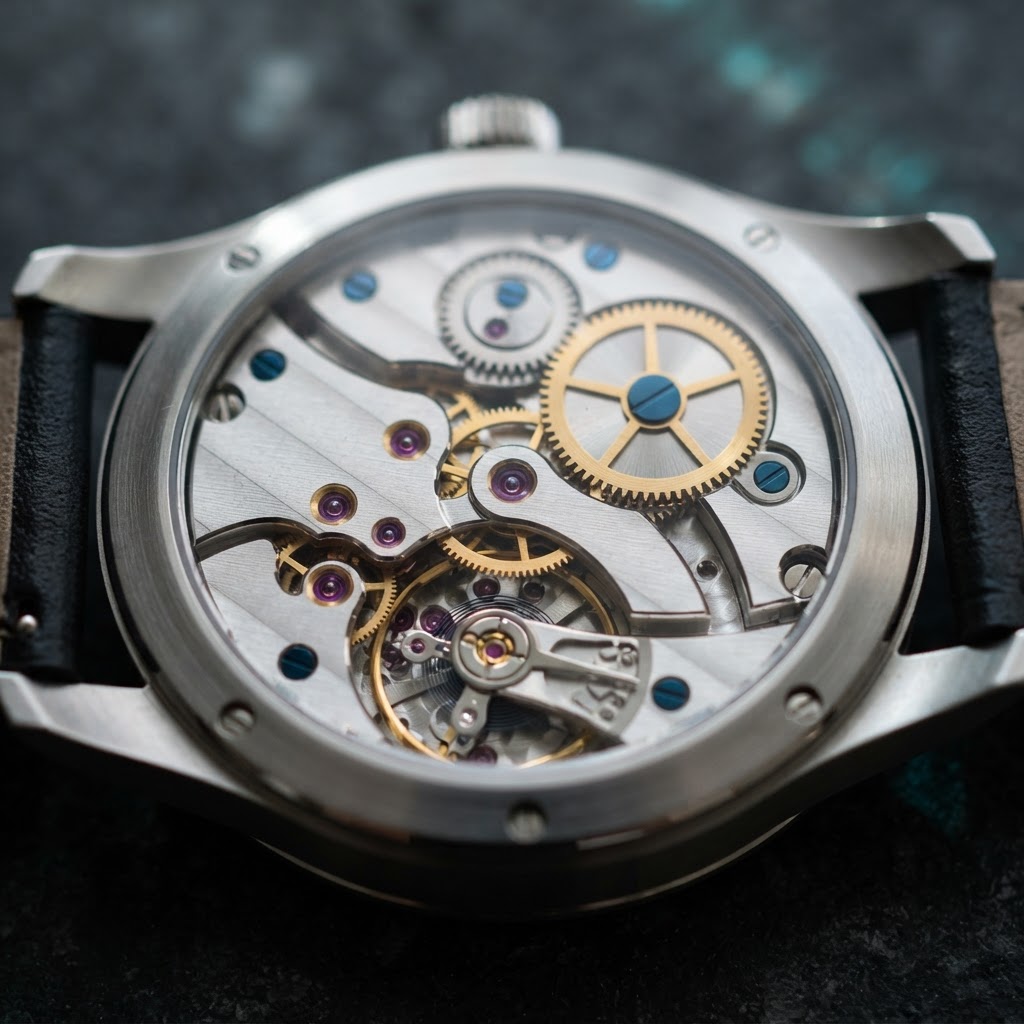
If the dive watch belongs to the sea and the pilot's watch to the cockpit, the field watch belongs to the ground beneath our feet. It is one of the purest expressions of tool-watch design: readable, compact, durable, and stripped of vanity. For many collectors, it is also one of the easiest entry points into serious horology, because its appeal is immediate. You do not need to know escapement geometry or Geneva finishing to understand the beauty of a watch built to be depended on.
The roots of the field watch reach back to the First World War, when soldiers needed something more practical than a pocket watch. Early trench watches were often small pocket-watch movements adapted for the wrist with wire lugs, luminous numerals, and protective grilles. They were not yet standardized in the way later military watches would be, but the essential idea had arrived: a wristwatch should be legible at a glance, secure on the arm, and resilient enough for active service.
That need changed watch design permanently. The military did not care for ornament. It cared for clarity, reliability, and the ability to coordinate time under pressure. In that sense, the field watch was one of the first categories to prove that function itself could become a kind of beauty.
The military writes the rules
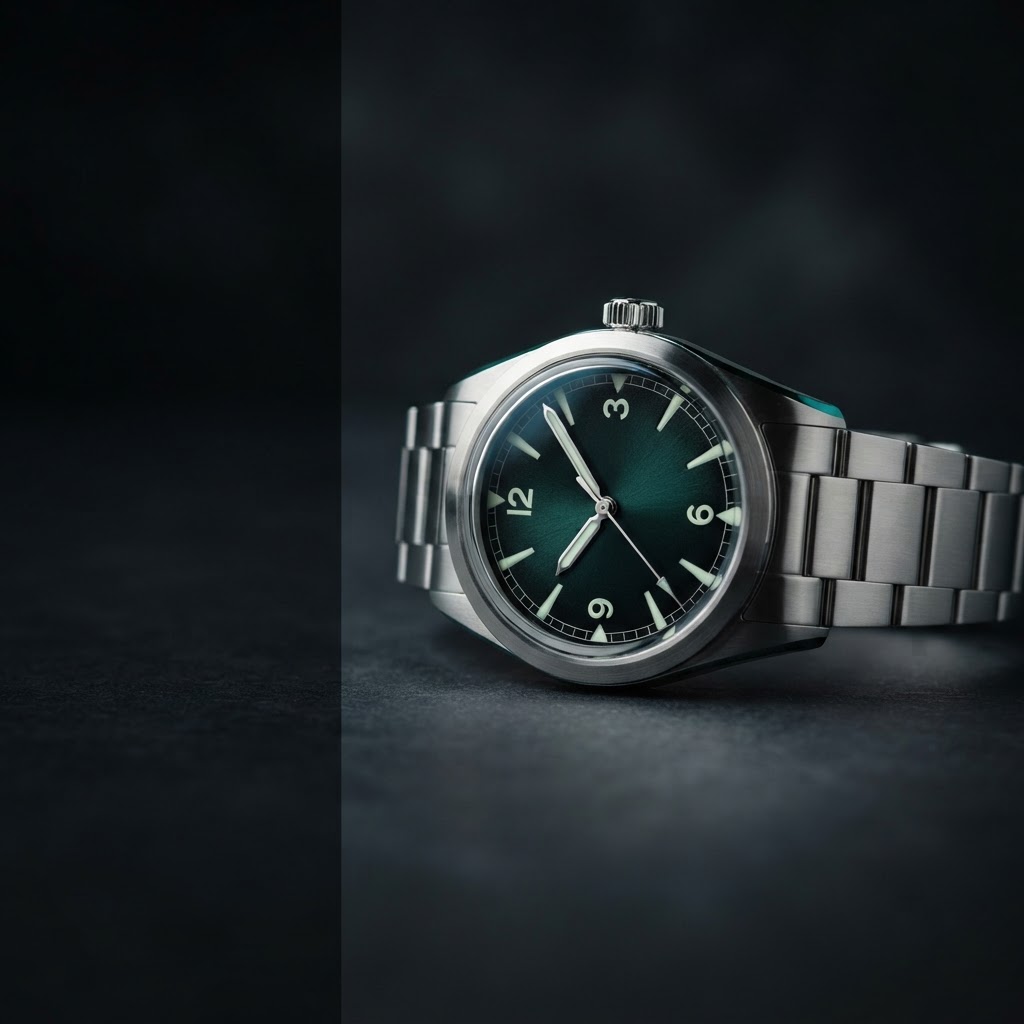
By the Second World War, the vocabulary of the field watch had become far more disciplined. The American A-11, produced by companies such as Bulova, Elgin, and Waltham, remains one of the great military timepieces of the era. Often called "the watch that won the war," it distilled the formula into something unmistakable: black dial, bold Arabic numerals, railroad minute track, and hacking seconds for synchronization.
Across the Atlantic, Britain's so-called Dirty Dozen watches, commissioned from twelve manufacturers including Omega, Longines, IWC, and Jaeger-LeCoultre, offered another important chapter in the story. These were purpose-built military instruments, not lifestyle accessories with faux patina and heroic marketing copy. Their proportions were modest, their dials sober, and their priorities entirely practical.
This is the historical point that still matters to collectors today. The field watch was never about complication or extravagance. Its greatness lies in discipline. Good examples make every design choice justify itself.
That DNA also explains why so many modern field watches feel immediately familiar. Matte dials, strong lume, high-contrast hands, compact cases, and manually or automatically wound movements all descend from requirements set by war offices rather than watch fairs.
From issued gear to civilian icon
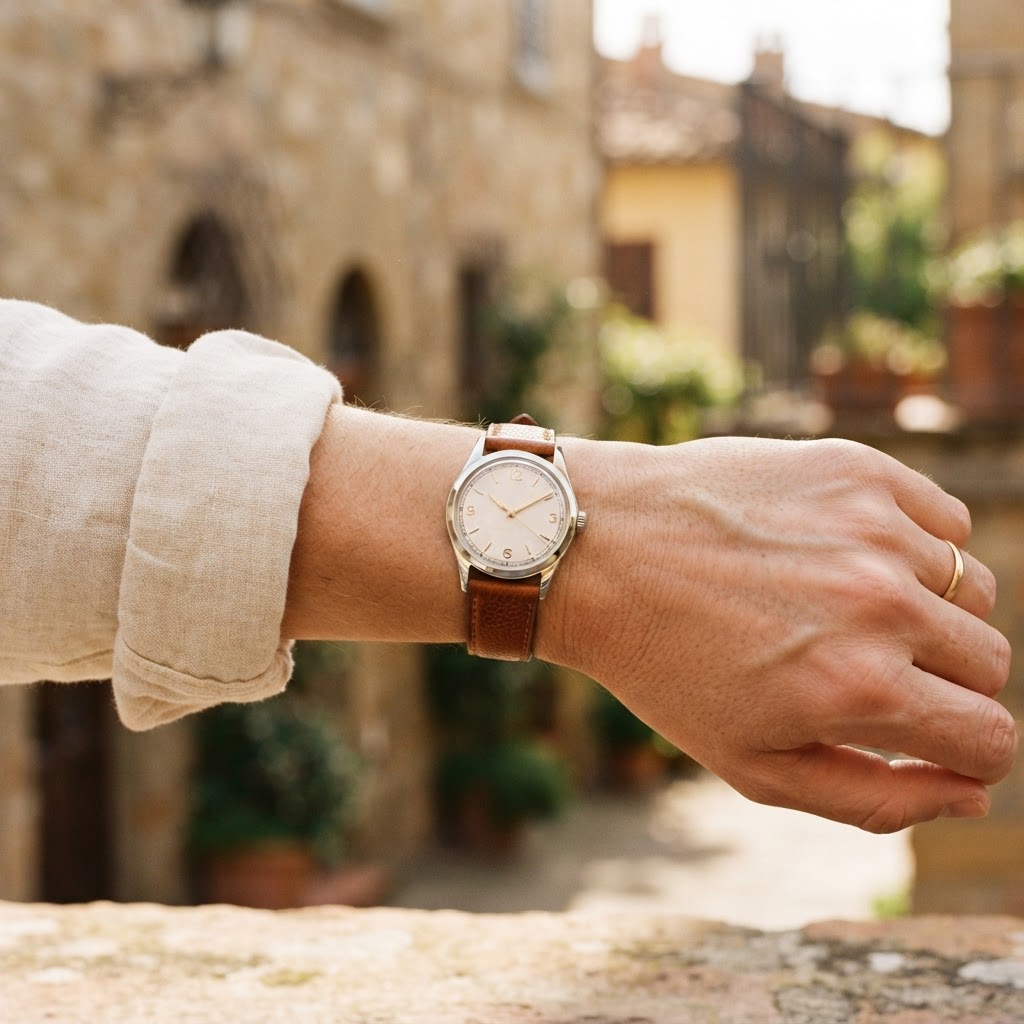
After the war, the field watch moved from barracks to everyday life. Returning servicemen were already accustomed to wearing wristwatches, and civilian brands recognized the opportunity. Rugged, military-influenced watches became symbols of competence and understated masculinity, but they also served a broader audience: hikers, engineers, students, travelers, and anyone who wanted a reliable daily watch.
Few modern references capture this continuity better than the Hamilton Khaki Field Mechanical. Hamilton's American military heritage gives the watch genuine historical weight, and the current hand-wound model retains the straightforward spirit that made the category enduring in the first place. Its H-50 movement, long power reserve, and no-nonsense dial show how a contemporary watch can honor history without becoming trapped by nostalgia.
Seiko approached the category from a different angle, democratizing practical watchmaking for generations of enthusiasts. Models in the Seiko 5 Sports family, often powered by the workhorse 4R36, have introduced countless collectors to the pleasures of an affordable, wearable field-style watch. Citizen, too, has long understood the value of utility, with pieces like the Garrison and the Promaster Tough offering a distinctly modern interpretation of the genre, sometimes backed by the pragmatic brilliance of Eco-Drive.
More recently, independent and microbrand makers have given the field watch a fresh life. Baltic's Hermétique Tourer carries vintage restraint with modern finishing. Farer's field-oriented models, such as the Exmoor, bring a touch of color and design confidence without losing the category's core identity. Formex has shown that even a brand known for technical innovation can approach the field watch with seriousness. In the broader microbrand world, reliable movements like the Sellita SW200, Miyota 9039, and Seiko NH35 have made the format accessible without sacrificing serviceability.
Why the field watch still matters
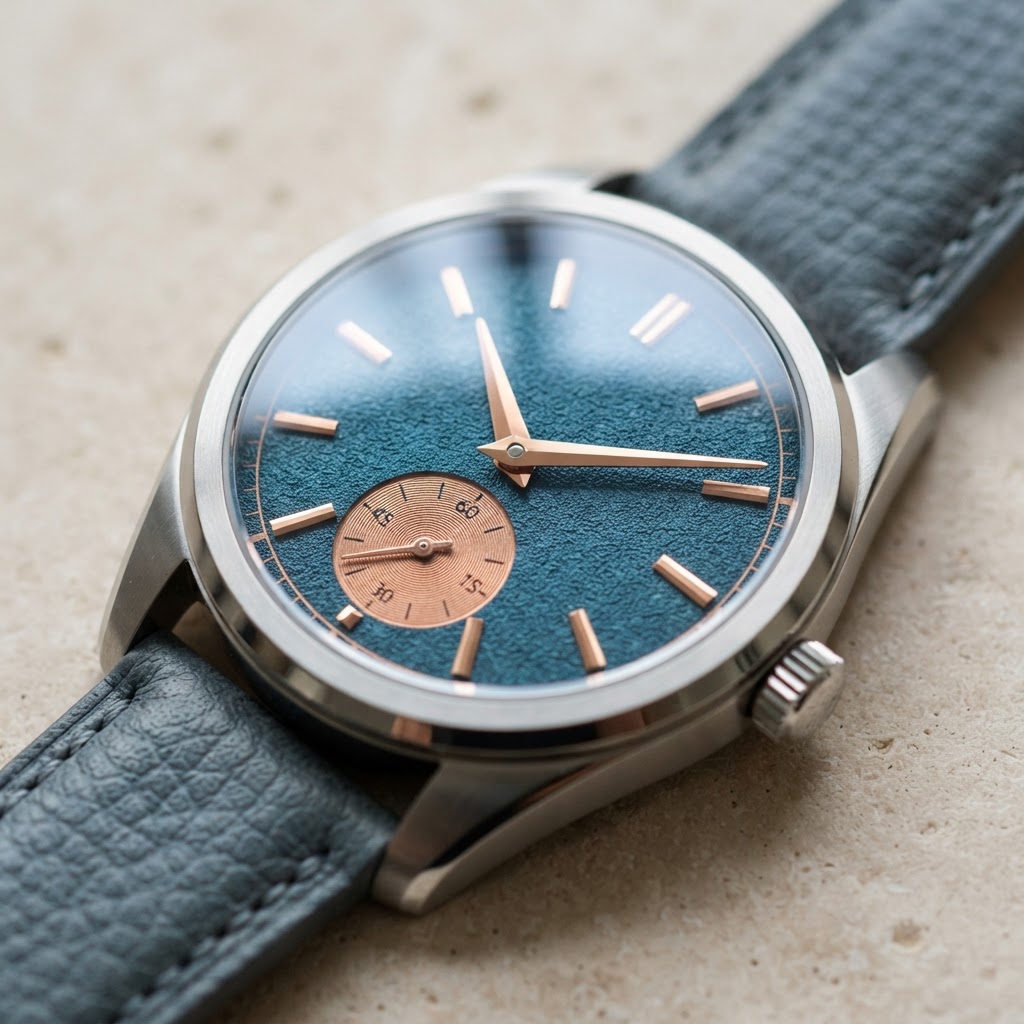
In a collecting landscape filled with ceramic bezels, integrated bracelets, and increasingly theatrical case architecture, the field watch can feel almost radical in its restraint. It asks a useful question: what do you actually need from a watch?
For some collectors, the answer is emotional rather than technical. A field watch feels honest. It does not try to impress from across the room. It reveals itself over time, in proportions that sit just right, in a dial that remains readable at dawn or in low light, in a crown that can be gripped with cold fingers, in a case that picks up scratches without losing dignity.
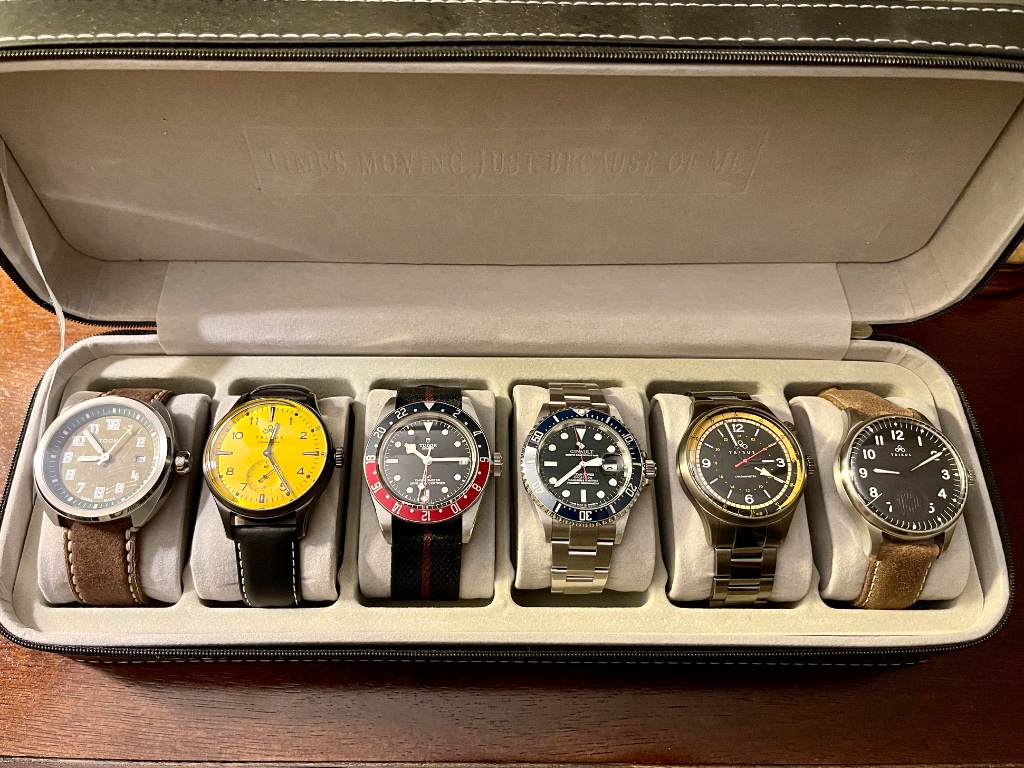
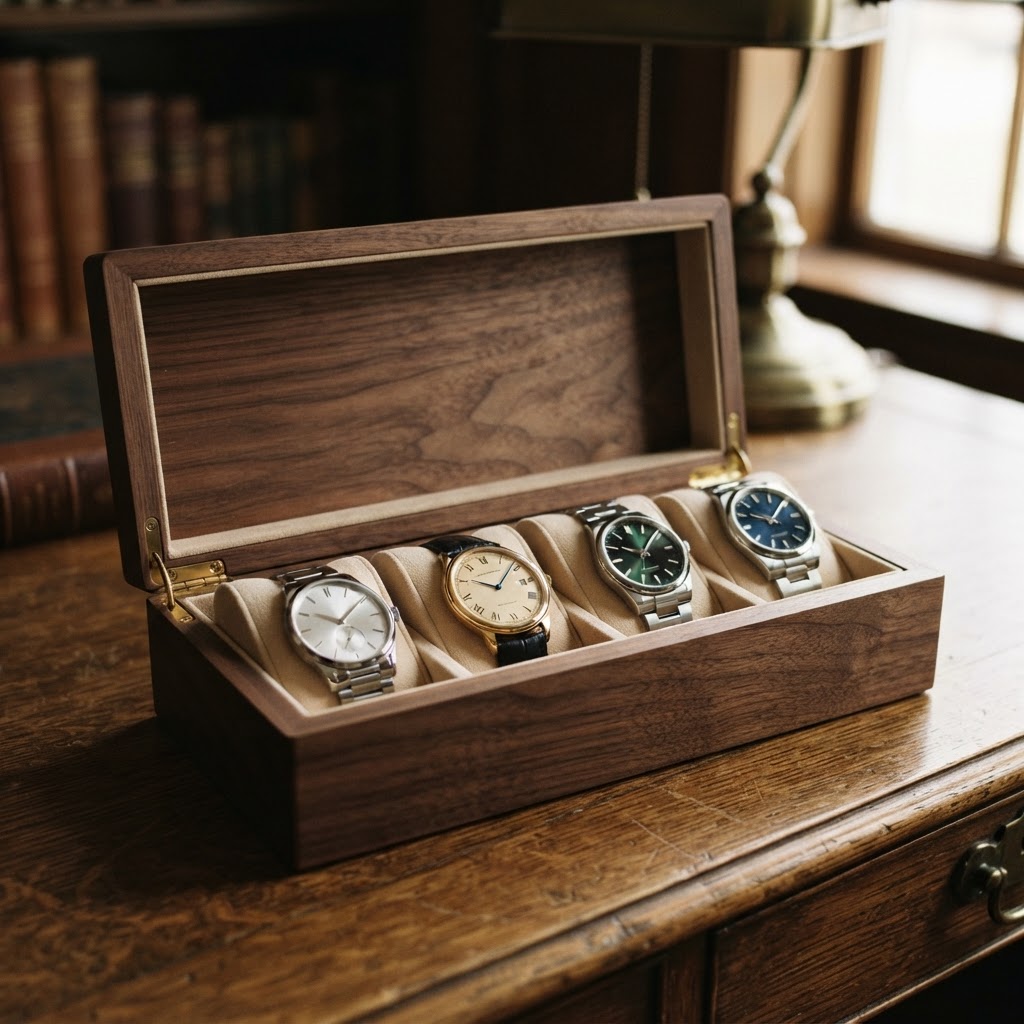
That honesty is also why seasoned enthusiasts often return to the category after years of collecting. A watch box may contain chronographs, GMTs, and divers, but the field watch is often the piece chosen for an ordinary Tuesday. It is easy to live with, easy to trust, and surprisingly hard to outgrow.
How to collect the category wisely
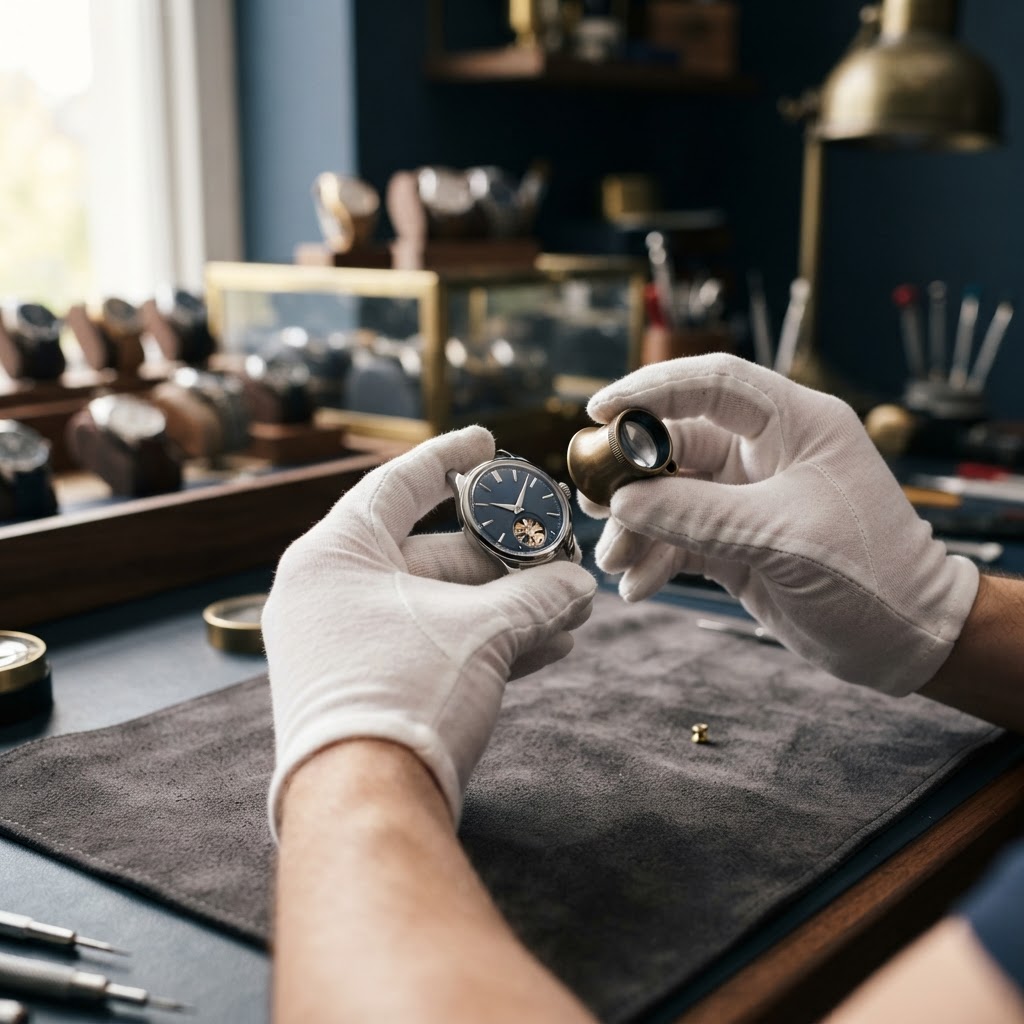
The first thing to understand is that true military provenance and military style are not the same thing. A vintage watch with genuine issued history can be deeply compelling, but it also demands caution. Original dials, matching hands, correct casebacks, and documented markings matter enormously. Patina can be charming; moisture damage, relume work, and replacement parts are another matter.
If you are considering vintage military pieces, pay special attention to lume. Many older watches used radium, which is historically important but should be handled with respect. That does not mean avoiding such watches entirely, but it does mean buying from knowledgeable sellers and servicing them with professionals who understand vintage safety.
For most collectors, a modern field watch is the wiser place to start. Focus on the fundamentals. Case size is crucial: field watches often wear best between 36mm and 38mm, though 40mm can work well if the lugs are short. Dial layout should be clean, not crowded. Water resistance matters more than many people think, especially if the watch is meant to be a true everyday companion. And movement choice should be guided less by marketing romance than by ownership reality. A beautiful hand-wound Hamilton may deepen your connection to the ritual of wearing a watch, while a robust Seiko automatic or a solar-powered Citizen may better suit a lower-maintenance lifestyle.
Strap versatility is another small but meaningful point. A good field watch should look equally convincing on canvas, leather, or a simple steel bracelet. If it only works in one mood, it may not be as versatile as the category promises.
A small watch with a long shadow
The field watch occupies a special place in watch history because it reflects a moment when necessity refined design to its essence. It began as equipment, passed through military standardization, and emerged as one of the most enduring forms in modern horology. Along the way, it taught the industry a lesson that still resonates: when every detail serves a purpose, the result often becomes timeless.
That is why a collector can admire a wartime A-11, wear a Hamilton Khaki Field Mechanical, recommend a Seiko 5 to a newcomer, and still be curious about what Baltic, Farer, or the next great microbrand will do with the formula. The field watch is not frozen in the past. It is a living tradition.
And perhaps that is its greatest charm. In a hobby full of grand complications and louder statements, the field watch reminds us that utility, proportion, and character can create their own quiet kind of prestige. Around any good watch table, those are the pieces that tend to spark the best conversations.