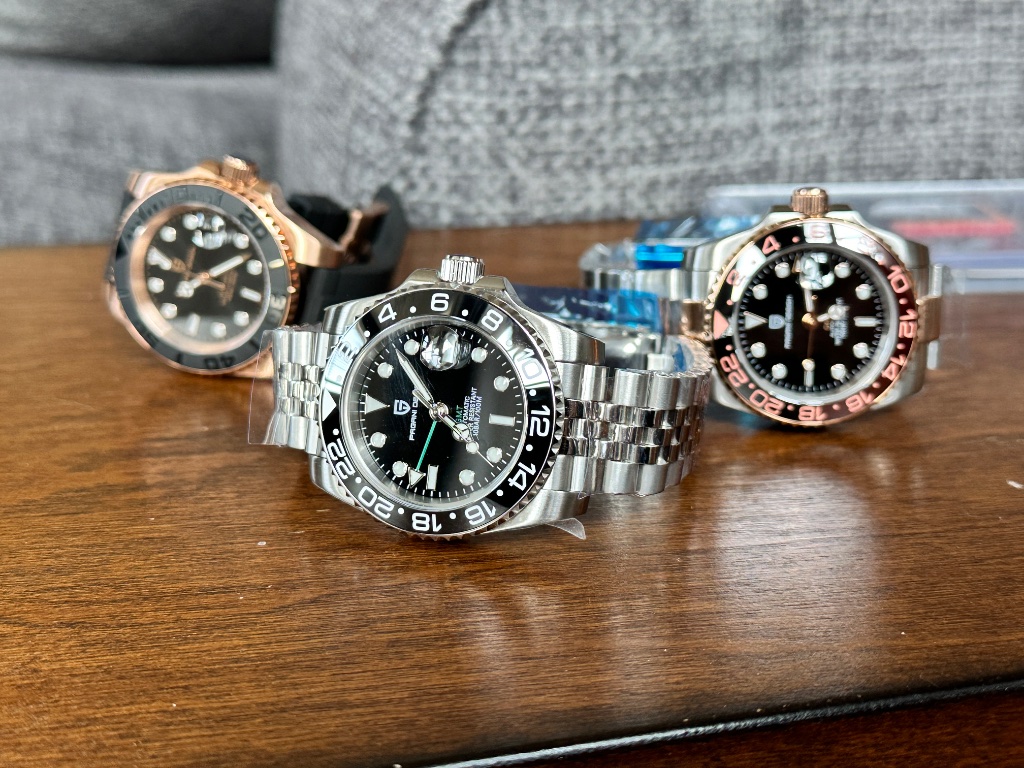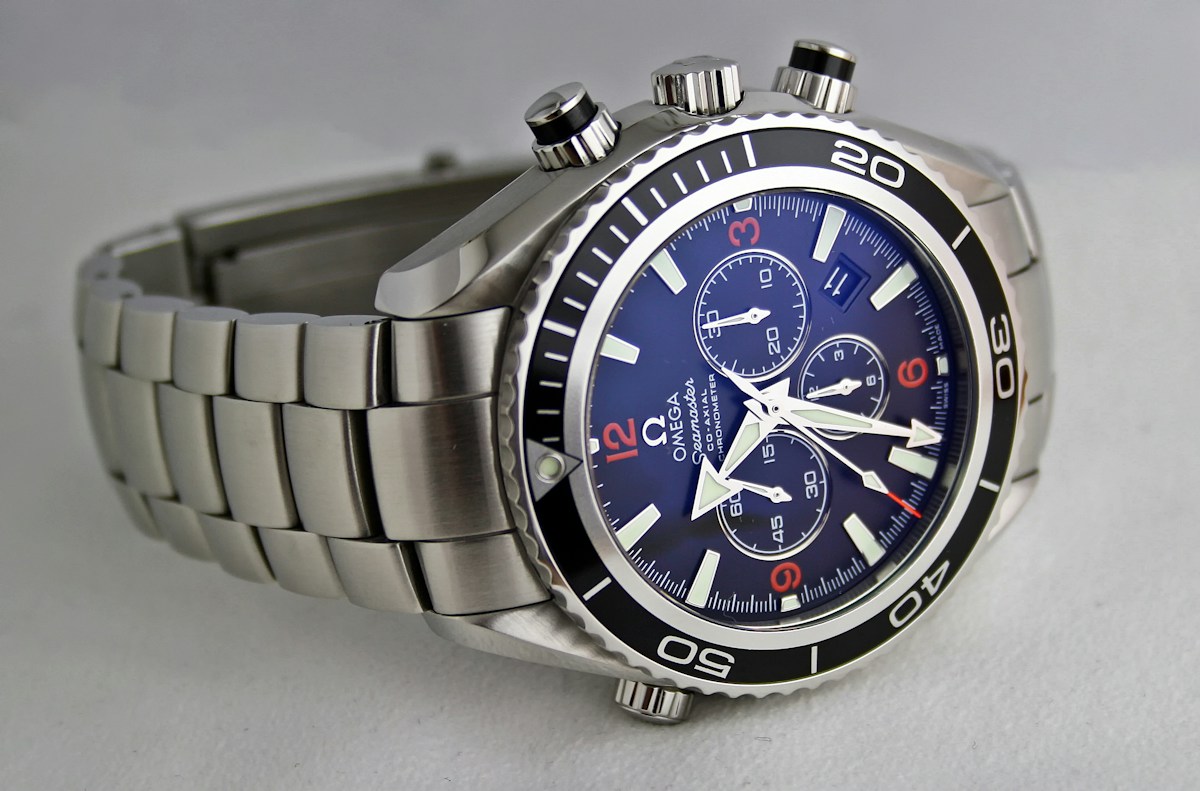

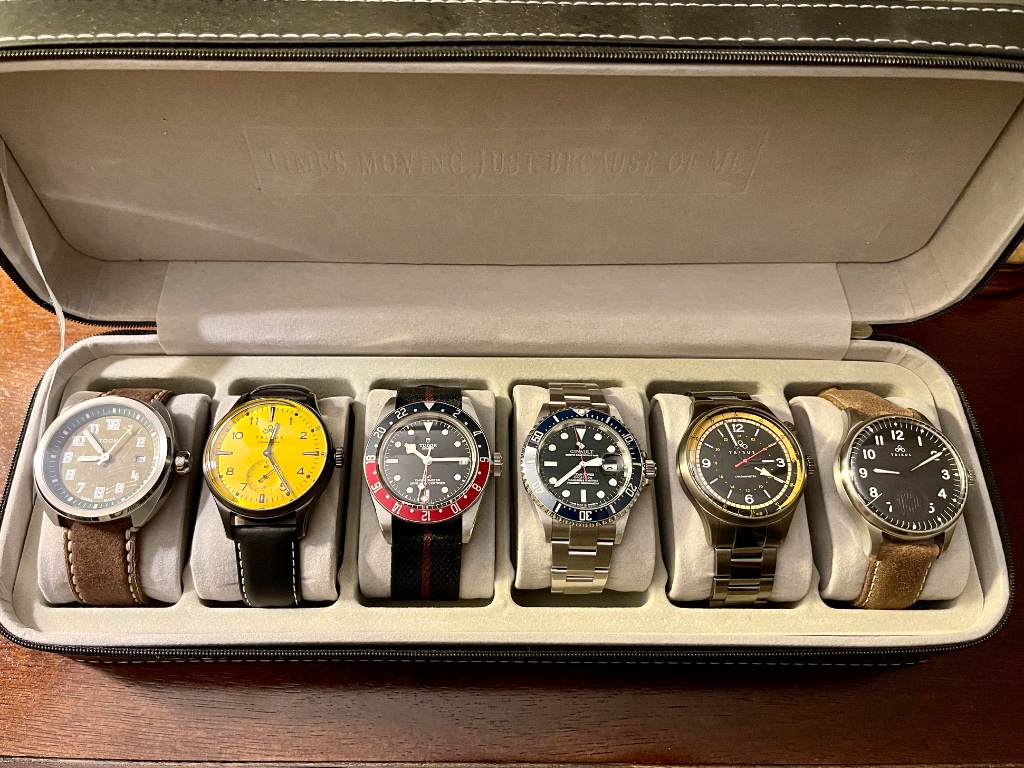
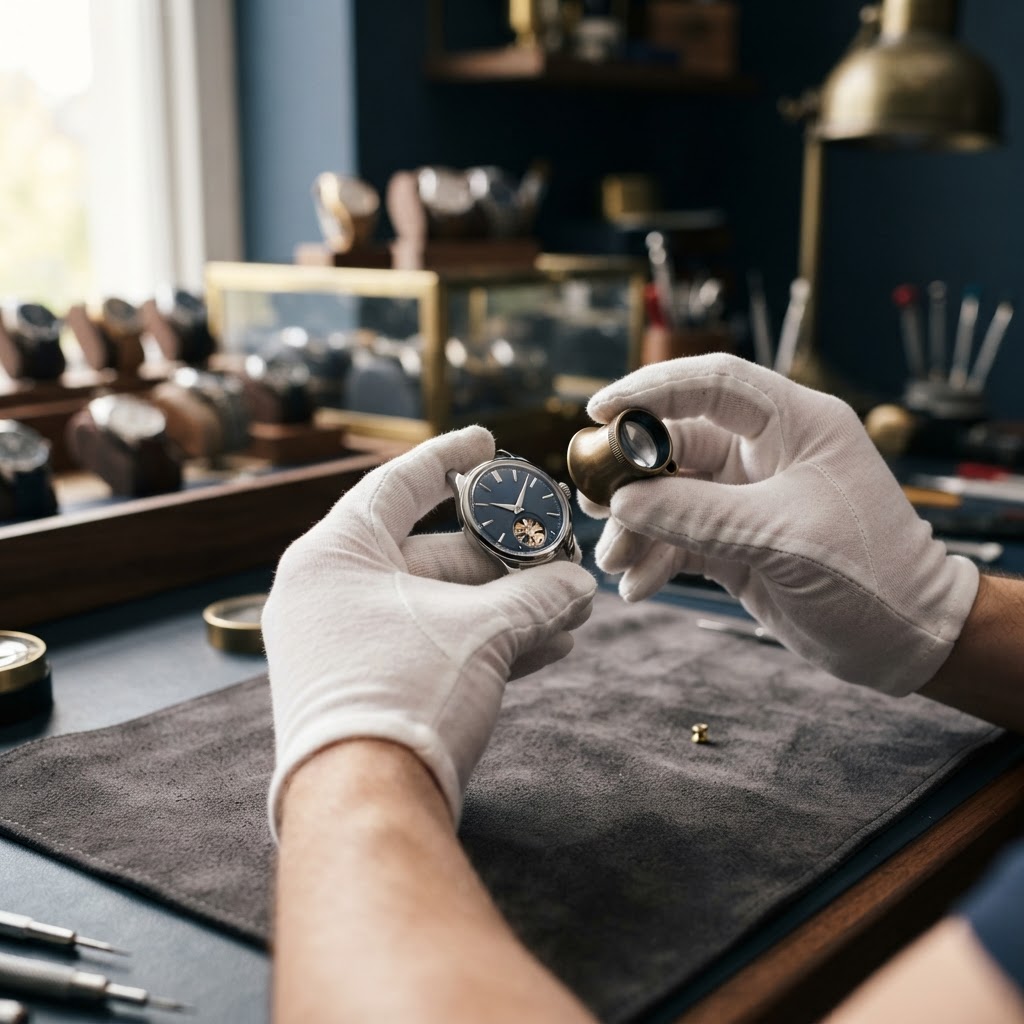
A good watch is built to be worn, not babied. But there is a meaningful difference between enjoying a watch confidently and wearing it carelessly. Whether your collection starts with a Hamilton Khaki Field, a Seiko Prospex, or a Baltic powered by a dependable Miyota caliber, the watches that age best usually belong to owners with steady habits rather than elaborate routines.
For collectors, care and maintenance are not chores so much as part of the relationship. A watch records time, but it also records the way it has been lived with. The small decisions you make after a humid summer walk, after a swim, or before placing a piece back in the box will have more impact over a decade than most people realize.
The habits that matter between wrist time
The simplest advice is still the most valuable: keep your watch clean, dry, and correctly handled. That sounds obvious, yet many long-term issues begin with neglect at this basic level.
After a day’s wear, a quick wipe with a soft microfiber cloth removes skin oils, dust, and moisture from the crystal, case, and bracelet. On steel sports watches like a Citizen Promaster or Seiko SPB143, that tiny ritual helps preserve the finish and reduces buildup around links and the caseback. On polished watches, it also keeps the metal looking sharper for longer.
Mechanical watches benefit from thoughtful setting habits too. If your piece uses a common movement such as a Sellita SW200-1, ETA 2824, or Seiko NH35, avoid changing the date during the so-called danger zone, usually around 9 p.m. to 3 a.m., when the date mechanism may already be engaged. It is a small point, but one watchmakers repeat for good reason.
Likewise, if a manual-wind watch feels resistant, stop winding. With automatics, a few turns of the crown before wearing can help the movement settle into stable amplitude, especially if the watch has been sitting for several days. A Farer three-hander or a Formex Essence will not demand ceremony, but it will reward gentle, consistent handling.
Water resistance is not forever
One of the most persistent myths in collecting is that water resistance, once printed on the dial or caseback, remains permanently reliable. It does not. Gaskets age, seals compress, crowns take knocks, and casebacks loosen ever so slightly over time.
If you swim regularly with a watch, have its water resistance checked periodically, especially before summer or travel. A Seiko diver or a Citizen Eco-Drive Promaster is built for real use, but even robust watches deserve testing if they are a few years old. Screw-down crowns should always be fully secured before exposure to water, and chronograph pushers should never be pressed underwater unless the model is specifically designed for it.
Saltwater deserves extra respect. After swimming in the ocean, rinse the watch under fresh water and dry it thoroughly. The same goes for chlorinated pools. This matters just as much for a tool watch as it does for a microbrand diver from Mitch Mason, NEUTRA, or Venezianico. Corrosion is slow, subtle, and expensive when ignored.
And one collector’s rule is worth remembering: water resistance is a capability, not a lifestyle. Just because a watch can survive something does not mean it should face it unnecessarily.
Storage is part of ownership
A watch box is not merely furniture for the enthusiast’s desk. Proper storage actively reduces wear. The best environment is stable: moderate temperature, low humidity, no direct sunlight, and minimal dust.
Leather straps suffer the most from bad storage. Heat dries them, humidity weakens them, and sunlight fades them. If you rotate frequently, give leather-strapped watches a little recovery time between wears. That is especially wise with dressier pieces like a Baltic MR01 or a Hamilton Intra-Matic. A strap that never fully dries from daily perspiration will age far faster than one allowed to rest.
For the watches themselves, avoid piling pieces together in a drawer where bracelets and buckles can scratch polished flanks. Individual compartments, soft pouches, or a well-lined case make an enormous difference over time.
Watch winders are often treated as essential collector equipment, but most collections do not truly need them. For a standard automatic with a simple date, letting it stop is perfectly fine. Winders make more sense for perpetual calendars or highly complicated watches that are inconvenient to reset. Otherwise, continuous motion just adds wear to components that do not need to be moving.
Magnetism is another storage issue that sneaks up on modern owners. Speakers, tablets, phone accessories, and laptop clasps can magnetize a mechanical watch and send its rate wildly off. If a watch suddenly starts running very fast, demagnetization may solve the problem in minutes.
Service intervals are guidance, not commandments
Collectors love neat service rules, but real life is more nuanced than “every five years” or “every ten.” A movement’s service needs depend on design, use, and environment.
A modern automatic using a Sellita, Miyota 9000 series, or Soprod caliber may run happily for years without issue, especially if it is worn in normal conditions and remains accurate. On the other hand, a watch that sees heavy shocks, moisture, or constant winding and setting may show fatigue sooner.
The signs are usually clear if you know how to look: falling power reserve, erratic timekeeping, a rotor that sounds unusually rough, difficulty winding, moisture under the crystal, or a crown that no longer feels crisp in operation. Those symptoms matter more than the calendar alone.
For many everyday mechanical watches, a broad interval of five to seven years is sensible, with flexibility based on performance. One advantage of brands like Hamilton, Seiko, and many thoughtful microbrands is that they often use widely known calibers. That generally means easier access to parts and more watchmakers familiar with the movement. A Formex with a chronometer-grade Sellita or a Farer with a Swiss automatic is not necessarily cheap to service, but it is usually straightforward. That is reassuring ownership.
What you should not do is wait for a problem to become dramatic. A movement running dry can wear components that would otherwise have lasted much longer with timely lubrication and adjustment.
Bracelets, straps, and the parts we forget
Collectors naturally focus on movements, but a surprising amount of wear happens outside the case. Bracelets stretch gradually if never cleaned. Clasps loosen. Spring bars fatigue. Leather cracks at the lugs. Rubber picks up grime in warm weather.
An occasional gentle clean with warm water, mild soap, and a soft brush works wonders on steel bracelets, provided the watch is water-resistant and the crown is secured. Spring bars should be checked periodically, especially on heavier watches. Losing a watch to a failed spring bar is one of the most preventable mishaps in the hobby.
If you swap straps often, use quality tools and work slowly. Many lug scratches are the result of impatience, not inexperience.
Quartz and solar watches deserve good care too
Mechanical romance can sometimes overshadow quartz, but quartz watches deserve the same thoughtful ownership. A Citizen Eco-Drive should receive regular light exposure so the rechargeable cell remains healthy. A standard battery-powered quartz watch should not be left with a dead battery indefinitely, as leakage can damage the movement.
In some ways, quartz is the ideal collector’s companion: accurate, low-maintenance, and ready to go. That practicality is part of horological appreciation too.
In the end, caring for a watch is less about perfection than attentiveness. The best collections are rarely the ones treated like museum objects. They are the ones worn, cleaned, checked, and understood. Over time, those habits turn ownership into stewardship.
And if there is one pleasure in a community of enthusiasts, it is discovering that these rituals are often shared: the post-swim rinse, the careful crown check, the quiet satisfaction of returning a watch to its place, ready for the next wrist day. That, in its own way, is part of what makes collecting worth keeping.