
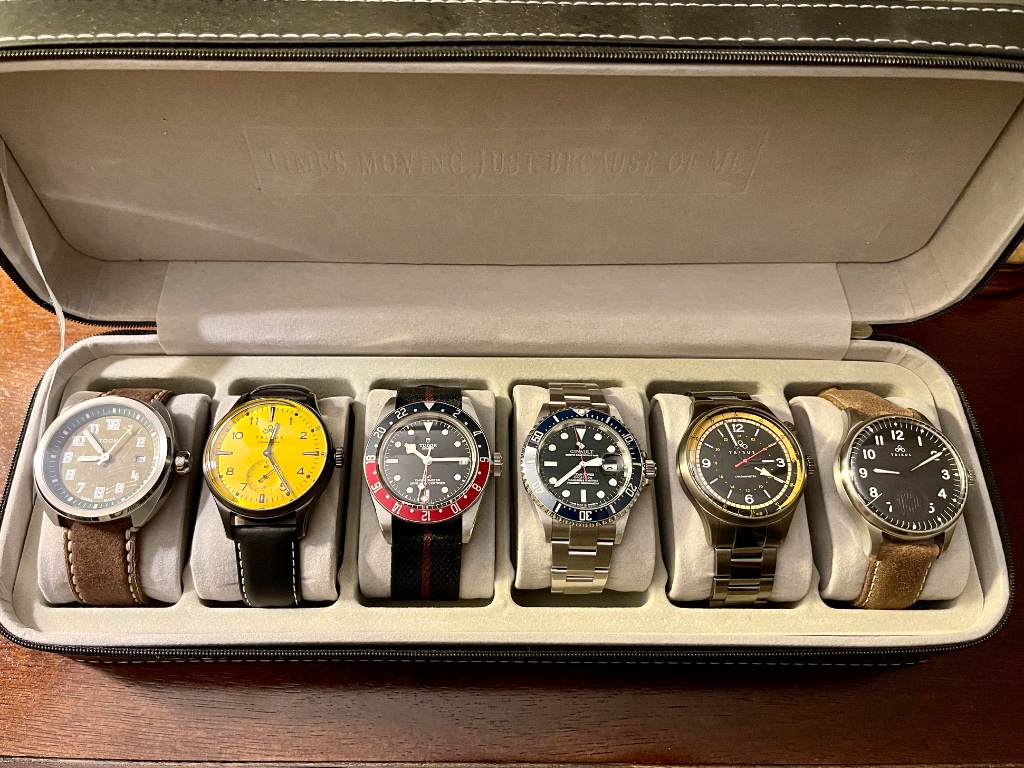

The best watch investments rarely look like speculation
Talk to enough collectors and you learn a useful truth: the watches that bring the deepest satisfaction are not always the ones that dominate headlines. In horology, investment is a real consideration, but it is often misunderstood. Too many newcomers imagine the market as a fast-moving ladder of hot releases, sell-outs, and dramatic resale premiums. Seasoned enthusiasts know better. The healthier way to think about watch investment is not as a chase for instant gain, but as a long-term practice of buying well, understanding value, and collecting with taste.
That does not mean ignoring the financial side. Watches are luxury objects, and for most of us, meaningful money is involved. But the most durable returns usually come from patience rather than adrenaline. A collector who buys a Hamilton Khaki Field Mechanical, a Seiko SPB143, or a Formex Essence ThirtyNine for the right reasons may not double their money overnight, yet they often end up with something far more valuable: a watch they love, a piece that remains liquid, and a decision they do not regret.
Value begins where hype ends
Only a small corner of the watch world behaves like a pure speculative market. Yes, there are famous exceptions. Certain Rolex sport references, a handful of Patek Philippe models, and select Audemars Piguet pieces have trained people to think every steel watch is a financial instrument. That has never been true.
For most collectors, a better goal is value retention rather than explosive appreciation. A watch that holds a strong percentage of its purchase price over five or ten years, while being worn and enjoyed, is already doing meaningful work. In that light, the conversation changes. We stop asking, will this flip, and start asking, will this still be desirable later.
The answers usually come from fundamentals. Strong design identity matters. Brand credibility matters. Serviceability matters. A watch must also feel coherent in its era without being trapped by it. The Hamilton Murph, for example, works because it balances cinematic appeal with classical field-watch proportions. The Baltic Aquascaphe continues to attract collectors because it captures vintage dive-watch language without feeling derivative. These are not random successes; they are examples of watches with a clear point of view.
What tends to hold up over time
When collectors talk about investment quality below the obvious blue-chip tier, several patterns emerge. First, the watch should be easy to understand at a glance. The best enduring pieces have instant legibility in both design and purpose. A Seiko Alpinist, a Citizen Promaster Diver, or a Farer GMT usually tells you exactly what it is within seconds. That clarity helps a watch age well.
Second, reliable movements support long-term value. This does not mean every investment-worthy watch needs a high-end in-house caliber. In fact, many collectors prefer proven workhorses because they are easier to maintain and easier to trust. Sellita SW200-1, ETA-based calibers, Miyota 9039, and even well-regulated Seiko 6R movements have an advantage in the real world: independent watchmakers know them, parts are accessible, and future ownership feels less risky.
This is one reason brands like Formex and Farer have earned respect beyond their price points. They combine thoughtful design with solid Swiss mechanical foundations. Even in the microbrand space, discipline matters. Venezianico, Mitch Mason, and NEUTRA have each produced watches that resonate because the product feels intentional rather than opportunistic. A microbrand can absolutely become collectible, but only if it offers more than scarcity. Good proportions, quality finishing, and a serviceable movement will outlast marketing excitement.
The buy matters as much as the watch
Collectors sometimes fixate on the right model and forget the right entry point. Yet investment performance often begins with how you buy, not just what you buy. Paying full retail on a popular release can be perfectly reasonable if you intend to keep it. But if value is part of the equation, buying lightly pre-owned often makes more sense. The first owner typically absorbs the steepest depreciation.
This is especially true in the mid-market. A Seiko SPB143 purchased carefully on the secondary market has a much different value profile than one bought impulsively at launch. The same goes for many Hamiltons, Citizens, and microbrands. Limited editions deserve particular caution. Some become cult favorites; many simply become old releases with an extra line of text on the caseback.
Condition, of course, is everything. A sharp case, original dial, clean handset, and unpolished edges will always attract stronger interest. Box and papers are not mandatory for every purchase, but they help liquidity, especially with younger brands whose history is still being written. Service records matter too. A bargain watch that immediately needs regulation, a crystal replacement, and a pressure test is not much of a bargain.
The practical collector studies sold listings rather than asking prices, learns the difference between market chatter and actual transactions, and remembers that selling involves friction. Dealer spreads, platform fees, taxes, shipping, and insurance all eat into any theoretical gain. Watches are not index funds. They are beautiful, inefficient assets. You should proceed accordingly.
Why serviceability is an investment principle
One of the least glamorous, and most important, aspects of watch investing is future maintenance. A watch with a handsome dial but an obscure movement can become difficult to place later. Buyers worry, often correctly, about parts availability and long-term support.
This is where collector pragmatism pays off. A watch powered by a common and respected caliber often has better long-term prospects than a more fashionable piece with uncertain service pathways. There is comfort in knowing your Formex with a Sellita movement, your Baltic with a Miyota 9039, or your Hamilton with the H-50 can be maintained without heroic effort.
Quartz should not be dismissed either. Citizen Eco-Drive models, especially in the Promaster family, can be remarkably rational buys. They may not trigger the same romance as a hand-wound field watch, but their usability and durability make them underrated collection anchors. Investment in watches is not always about chasing what is most talked about. Sometimes it is about recognizing what owners will still want to wear ten years from now.
Build a collection with character, not just potential
The most sophisticated collectors I know rarely assemble portfolios. They build narratives. A thoughtful collection, even a modest one, often performs better over time because it reflects judgment. A well-bought Hamilton for everyday wear, a Baltic or Farer that expresses independent design, a Seiko that connects you to tool-watch history, perhaps a standout microbrand from Mitch Mason or NEUTRA that shows where modern enthusiasm is heading, these choices create depth.
And depth has value. It makes you less vulnerable to trend-chasing, less likely to panic sell, and more likely to recognize quality when the market gets noisy. It also sharpens your eye. Once you begin paying attention to case finishing, handset execution, movement architecture, and brand consistency, you make better buying decisions almost automatically.
In the end, the best watch investment strategy is deceptively simple: buy fewer, buy better, buy with conviction. Choose watches that would still please you if the market went quiet tomorrow. If they hold value, appreciate modestly, or become future cult favorites, that is a welcome bonus. If they also give you years of tactile pleasure every time you glance at your wrist, that may be the strongest return of all.
And as any good collector eventually discovers, one of the smartest investments is not merely in the watch itself, but in the conversations, comparisons, and shared wisdom that help you choose it well. That is where a true collecting community earns its place.