
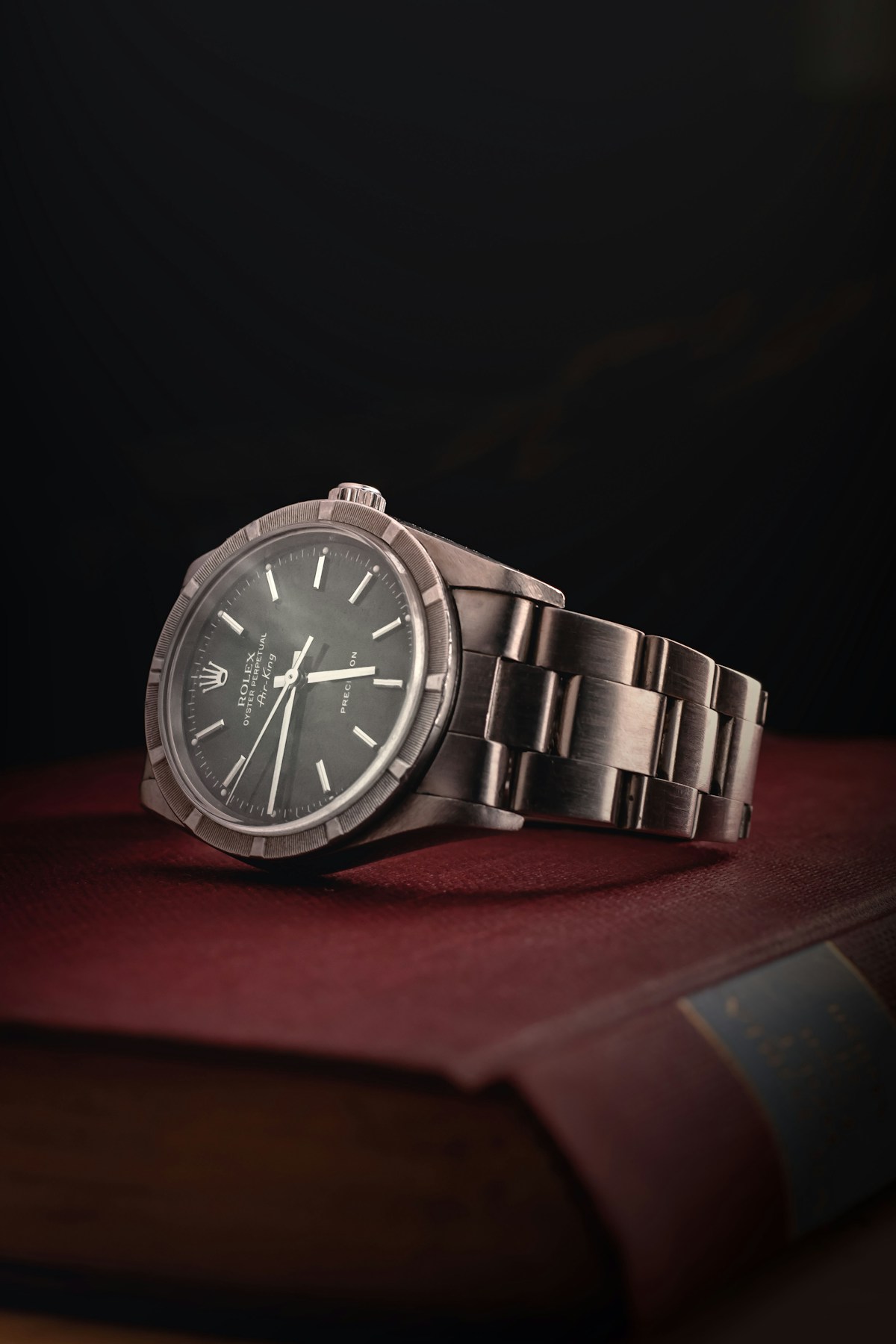
There is a certain romance in telling ourselves that every watch purchase is purely about passion. In truth, most collectors live in the space between emotion and economics. We buy because a dial moves us, because a case shape feels right on the wrist, because a brand’s history speaks to something deeper. But we also wonder, quietly and reasonably, whether the watch will hold its value.
That is not cynicism. It is collector maturity.
A watch is not a stock certificate, and treating it like one usually leads to disappointment. Yet some pieces do retain value remarkably well, and a few appreciate over time. The difference often has less to do with hype than with judgment: buying the right watch, at the right price, for the right reasons.
Value retention starts with taste, not trends
The first principle of buying watches with investment potential is deceptively simple: choose watches you would be happy to own even if the market never rewards you. Trends change quickly. Tastes that are rooted in design, history, and honest quality tend to age better.
Consider the enduring appeal of a Hamilton Khaki Field Mechanical. It is not rare, and it is unlikely to become a speculative rocket. But it has clear military design language, strong brand recognition, a dependable hand-wound movement, and a price point that keeps it liquid on the secondary market. The same can be said for a well-bought Seiko Prospex or a Citizen Series 8. These are watches with real enthusiast communities behind them, and that matters more than many beginners realize.
Collectors often lose money chasing what is merely loud. The safer path is to buy what is legible, wearable, and culturally anchored. Watches that make sense tend to keep making sense.
Heritage still matters, but it is not everything
Established names retain an advantage. Seiko, Hamilton, Longines, Omega, Tudor, and Cartier enjoy the sort of broad recognition that supports resale value across market cycles. Buyers know what they are looking at. Parts, servicing, and historical references are easier to navigate. That confidence helps prices stay resilient.
But we are living in a golden era for independent makers and microbrands, and dismissing them outright would be a mistake. Baltic has built a loyal following through coherent design and careful execution. Farer combines bold color with serious attention to detail. Formex has earned respect for case engineering and wearability that often exceed its price class. Venezianico, Mitch Mason, and NEUTRA represent a newer generation of brands that understand what collectors want: focused identity, honest specifications, and designs that do not feel derivative.
The investment lesson here is nuance. Heritage brands usually offer broader market stability. Microbrands can offer sharper upside within enthusiast circles, but only when the brand has a distinct point of view and consistent quality. In other words, buy the microbrand because it deserves collecting, not because it is small.
Movements influence value more than many buyers expect
Collectors love to debate in-house versus outsourced calibers, but the practical question is simpler: is the movement respected, serviceable, and appropriate for the watch?
A Sellita SW200, ETA 2824, Miyota 9000-series, or Seiko NH35 will not thrill movement snobs, but these calibers are known quantities. They are robust, familiar to watchmakers, and relatively cost-effective to maintain. That matters for long-term ownership and resale. A beautiful watch with an obscure movement that is difficult to service may become a burden rather than an asset.
At the same time, there are moments when movement pedigree truly elevates collectibility. A manually wound chronograph with a thoughtfully finished caliber, or a high-accuracy quartz movement with genuine technical merit, can distinguish a model from its peers. Even humble examples benefit from clarity. A Baltic powered by a proven caliber or a Farer with a dependable Swiss automatic can inspire more confidence than a more expensive watch built around marketing language.
Value is not only about mechanical romance. It is also about future stewardship.
Buy condition, completeness, and proportion
If there is one piece of collector wisdom that never gets old, it is this: condition is king. A watch with sharp edges, an untouched dial, clean crystal, and documented service history will almost always outperform a compromised example.
Completeness matters too. Original box, papers, warranty card, hang tags, spare links, and even receipts can strengthen resale appeal, especially for modern watches. For brands with active enthusiast followings, this can make a meaningful difference. A full-set Formex Essence or a complete Seiko limited edition simply gives the next buyer more confidence.
Then there is proportion, the less obvious driver of enduring value. Watches that wear well on a broad range of wrists usually have wider and more durable demand. A 38 mm to 40 mm case, moderate thickness, and sensible lug-to-lug measurement often age better than oversized designs that feel tied to a particular moment. This is one reason so many collectors circle back to balanced pieces from brands like Hamilton, Baltic, and Tudor. Good proportions are never out of style.
The best collections are edited, not accumulated
A value-conscious collection is rarely the largest collection in the room. It is the most considered.
Seasoned enthusiasts know that too many watches acquired too quickly usually result in churn. Churn is costly. Shipping, taxes, servicing, strap experiments, and resale spreads quietly erode capital. A smaller group of watches bought with patience often performs better financially and feels more satisfying emotionally.
This does not mean every purchase must be conservative. Sometimes the smartest collecting move is the one that deepens your taste. Perhaps that is a salmon-dial Farer, a compressor-style Baltic, or a field watch from a promising young microbrand. If it sharpens your understanding of what you love, it may save you from bigger mistakes later.
In the end, watches that hold value tend to share a few qualities: authenticity, usability, recognizability, and honest pricing. They have a reason to exist beyond the sales pitch. They connect to a lineage, a design language, or a community of enthusiasts who care.
That last part is easy to overlook. Watches retain cultural value before they retain market value. The references people keep talking about, trading, photographing, servicing, and passing along are the ones that endure.
Collect with your head, certainly. But leave room for the heart. The sweet spot is not buying what everyone else wants. It is learning to recognize the watch that is both genuinely good and genuinely you. Over time, that kind of discernment becomes its own return on investment — and it is exactly the sort of conversation that makes a collector community worth being part of.