

There is a moment nearly every collector remembers: the instant a watch stops being a way to tell time and becomes an object worth studying. It might be the smooth sweep of a seconds hand on a Seiko automatic, the click of a bezel on a dive watch, or the realization that a humble Hamilton field watch can carry decades of design history on the wrist. From there, collecting often begins quickly. The challenge is not finding watches to buy. It is learning how to build a collection that still feels coherent, personal, and satisfying years later.
A good watch collection is not necessarily expensive, large, or full of hard-to-find references. More often, it reflects discernment. It shows that the owner has learned what matters to them, whether that is movement architecture, case proportions, design lineage, finishing, or simply the emotional pull of a certain dial color under afternoon light.
Collecting begins with curiosity, not categories
Beginners are often told to assemble a neat rotation: a diver, a dress watch, a field watch, perhaps a GMT. That framework can be useful, but it can also become a trap. The best collections rarely start with categories alone. They start with fascination.
Perhaps you are drawn to military-inspired watches and find yourself comparing a Hamilton Khaki Field Mechanical to a NEUTRA Sterile or a well-executed microbrand interpretation. Maybe your eye keeps returning to compressor-style cases, beads-of-rice bracelets, or sector dials like those seen from Baltic and Farer. These repeated attractions are worth paying attention to. They reveal your taste before you have the language to describe it.
Early on, it helps to spend more time looking than buying. Read brand histories. Study old catalogues. Handle watches in person when possible. You begin to notice that a 38mm case can wear more elegantly than a 42mm one, or that the difference between a printed dial and a textured lacquer dial can completely change a watch’s character. In collecting, observation compounds just like experience.
Learn the difference between value and price
One of the most useful lessons in horology is that price and value are related, but they are not the same. Plenty of collectors discover this through brands that deliver substance without theatrical marketing.
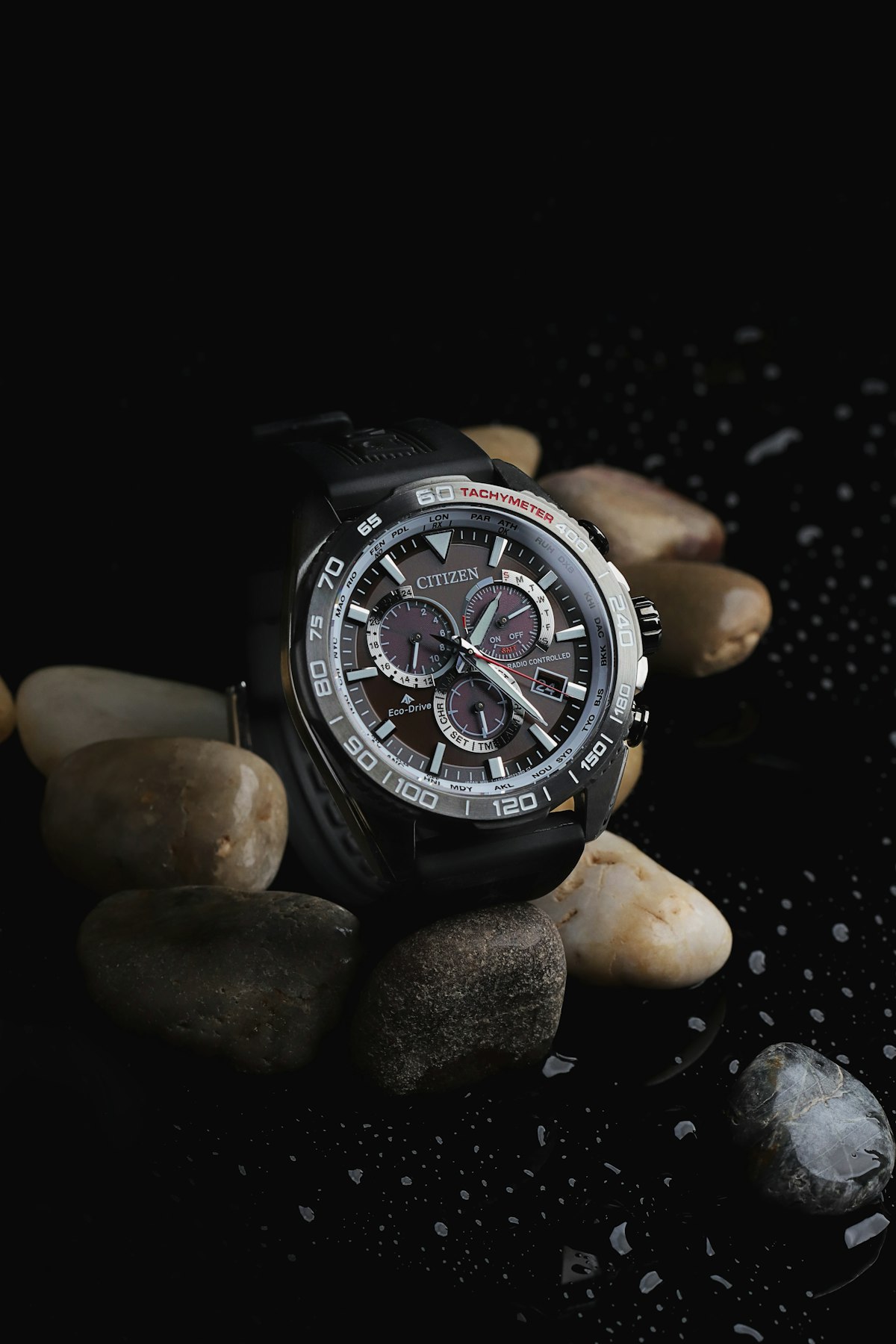
Take Citizen, for example. A Promaster diver with Eco-Drive technology offers reliability, usability, and genuine technical credibility at a price that often undercuts mechanical alternatives. Seiko has long occupied a similar place, whether in an approachable Prospex diver or an enthusiast favorite built around the dependable 4R or 6R family of movements. At the same time, independent names and microbrands have made the landscape far richer. Formex has earned admiration for case engineering and comfort, Venezianico has developed a strong design identity, and Mitch Mason has shown how thoughtful details can make a watch feel far more mature than its price suggests.
Value can mean movement quality, certainly, but it can also mean originality, wearability, serviceability, bracelet construction, or after-sales support. A watch that costs less but rarely leaves the box is not necessarily better value than one that costs more and becomes part of your daily life.
Movements matter, but not always in the way people think
Collectors often become movement-conscious very early, and that is a good instinct. The mechanism inside the case is central to watchmaking’s appeal. Still, movement literacy should deepen taste rather than narrow it.
An ETA 2824, Sellita SW200, Miyota 9000-series, or Seiko NH35 may not inspire the same romance as an elaborate in-house caliber, but these movements have earned respect for good reason. They are proven, serviceable, and practical. For a first or second mechanical watch, those qualities are often more important than exclusivity.
As your collecting matures, you may start appreciating other dimensions: a hand-wound movement that creates ritual, a slim manual caliber that allows for elegant proportions, or the tactile pleasure of setting a GMT independently when traveling. The point is not to chase specification sheets. It is to understand how a movement contributes to ownership.
A seasoned collector can admire a beautifully decorated caliber and still have deep affection for a rugged workhorse movement that simply never misses a beat.
The wrist is the final judge
Photography has transformed watch enthusiasm, but it has also misled many collectors. A watch can look perfect online and feel entirely wrong in person. Lug length, case thickness, dial opening, crown shape, and bracelet articulation all determine whether a piece comes alive on the wrist.
This is where many brands separate themselves. Baltic has built a reputation not just on vintage-inflected charm but on proportion. Farer understands color in a way that feels playful yet controlled. Formex often surprises collectors with how well its watches wear relative to their specifications. Even among more accessible brands, a Hamilton or Seiko that seems straightforward in photos can reveal a completely different character in hand.
If there is one practical rule worth following, it is this: buy for the wrist you have, not the image you want to project. Watches become more compelling when they suit their wearer naturally.
Build slowly enough to hear your own taste
The modern watch world encourages acceleration. New releases arrive every week, limited editions vanish quickly, and social media creates the impression that everyone else is moving faster, buying smarter, and discovering the next great thing first.
Resist that pressure. A collection built in haste often becomes a stack of short-lived enthusiasms. A collection built slowly acquires narrative. You remember why each watch entered your life, what it taught you, and why it stayed.
This is also how discernment develops. After living with several watches, you begin to understand your own patterns. Maybe you admire dive watches but mostly wear simple three-handers. Maybe polished center links irritate you. Maybe you discover that date windows matter less than dial symmetry, or that you strongly prefer no-fuss tool watches with solid lume and easy servicing.
Those realizations are not minor. They are the foundation of a lasting collection.
Character matters more than perfection
A common mistake among newer collectors is assuming that the ideal watch is the one with the fewest compromises. In reality, many beloved watches are imperfect in memorable ways. A crystal may distort at the edge. A crown may be a touch small. A movement may be ordinary. Yet the watch has personality, coherence, and charm.
That is why so many collectors speak warmly about pieces that are not objectively their most advanced or expensive. A Seiko with irresistible case lines, a Hamilton with honest military roots, a Baltic that channels vintage design without becoming derivative, or a small-production microbrand watch that simply feels like someone cared deeply while making it.
Perfection can impress. Character endures.
The best collections reflect a point of view
Over time, the goal is not to own every type of watch. It is to develop a point of view. That might mean a collection centered on robust everyday wearers, on independent design, on historically informed reissues, or on watches that offer strong horological value below a certain threshold. The theme does not need to be declared. It simply emerges.
When that happens, buying becomes easier and more meaningful. You stop asking whether a watch is popular and start asking whether it belongs with the rest of your story. That is a more sophisticated question, and a far more rewarding one.
For some, collecting will always include the thrill of the hunt. For others, it becomes a quieter practice of refinement. Both are valid. What matters is that the watches continue to reward attention.
In the end, a lasting collection is built less by acquisition than by understanding: of design, of mechanics, of history, and of oneself. That is part of what makes horology such a generous pursuit. There is always more to learn, and always another conversation waiting around the next wrist check. The finest collections do not exist in isolation. They grow in the company of fellow enthusiasts who know that every watch worth keeping also carries a story worth sharing.