

The difference between owning watches and collecting them
Every watch enthusiast remembers the moment the hobby changed shape. At first, it might be a simple appreciation for design, a gift from a family member, or the satisfaction of buying a dependable daily wearer. Then, almost without warning, curiosity deepens. You begin comparing case profiles, reading about movements, learning why one dial feels balanced and another does not. That is usually the point where owning watches becomes collecting them.
A good collection is not defined by price, rarity, or social media approval. It is defined by coherence. The most compelling collections have a point of view, even if that point of view is still evolving. Some collectors are drawn to military history and end up with field watches from Hamilton, CWC, and Seiko. Others become fascinated by independent and microbrand design, rotating between Baltic, Farer, Formex, NEUTRA, Mitch Mason, or Venezianico. Many collectors begin with a versatile Seiko or Citizen and only later realize they are building a broader story about taste, utility, and mechanical appreciation.
That story matters more than people think.
Start with use, not status
One of the easiest mistakes in modern collecting is buying toward prestige before buying toward experience. It is natural to be aware of iconic names and aspirational references, but a satisfying collection usually starts with honest questions: What do you actually wear? What kind of watch makes you look down at your wrist and smile? What fits your life?
For some, that answer is a robust sports watch. A Seiko Prospex diver, a Citizen Promaster, or a Formex Essence can teach you more about everyday wrist time than months of online research. For others, the revelation might be a compact dressier piece, perhaps a Baltic MR01, a Hamilton Intra-Matic, or a Farer with enough color and character to break the monotony of safer choices.
Buying a watch that suits your habits is not “playing it safe.” It is how your eye develops. Once a watch lives on your wrist, you begin to understand dimensions, lug-to-lug comfort, hand legibility, dial texture, bracelet quality, and whether a movement’s charm outweighs its quirks. Experience refines taste far faster than aspiration alone.
Learn to recognize what you respond to
Collectors often speak about watches in technical terms, but most long-term preferences start emotionally. Perhaps you are drawn to the crisp instrument aesthetic of a Hamilton Khaki Field Mechanical. Perhaps you prefer the softer, vintage-inflected proportions of a Baltic Aquascaphe. Perhaps a solar-powered Citizen appeals because you admire engineering that disappears into daily life.
Pay attention to recurring themes in your choices. Do you consistently like brushed steel cases over polished ones? Do sector dials catch your attention? Are you more interested in a well-executed Sellita SW200 than in chasing novelty for its own sake? Does a meca-quartz chronograph from a thoughtful microbrand excite you more than a theoretically “better” watch that leaves you cold?
These patterns are the foundation of a mature collection. They help you distinguish between admiration and desire, which are not the same thing. There are many watches worth respecting. Fewer are worth owning.
Mechanical romance, quartz realism
No educational conversation about collecting is complete without addressing the movement question. Mechanical watches deserve their romance. A hand-wound movement like the H-50 in certain Hamilton models offers ritual and intimacy. An automatic caliber such as Seiko’s 6R series or Miyota’s 9000 family can anchor a collection with reliability and accessible serviceability. For many collectors, the movement is not just a power source but part of the watch’s personality.
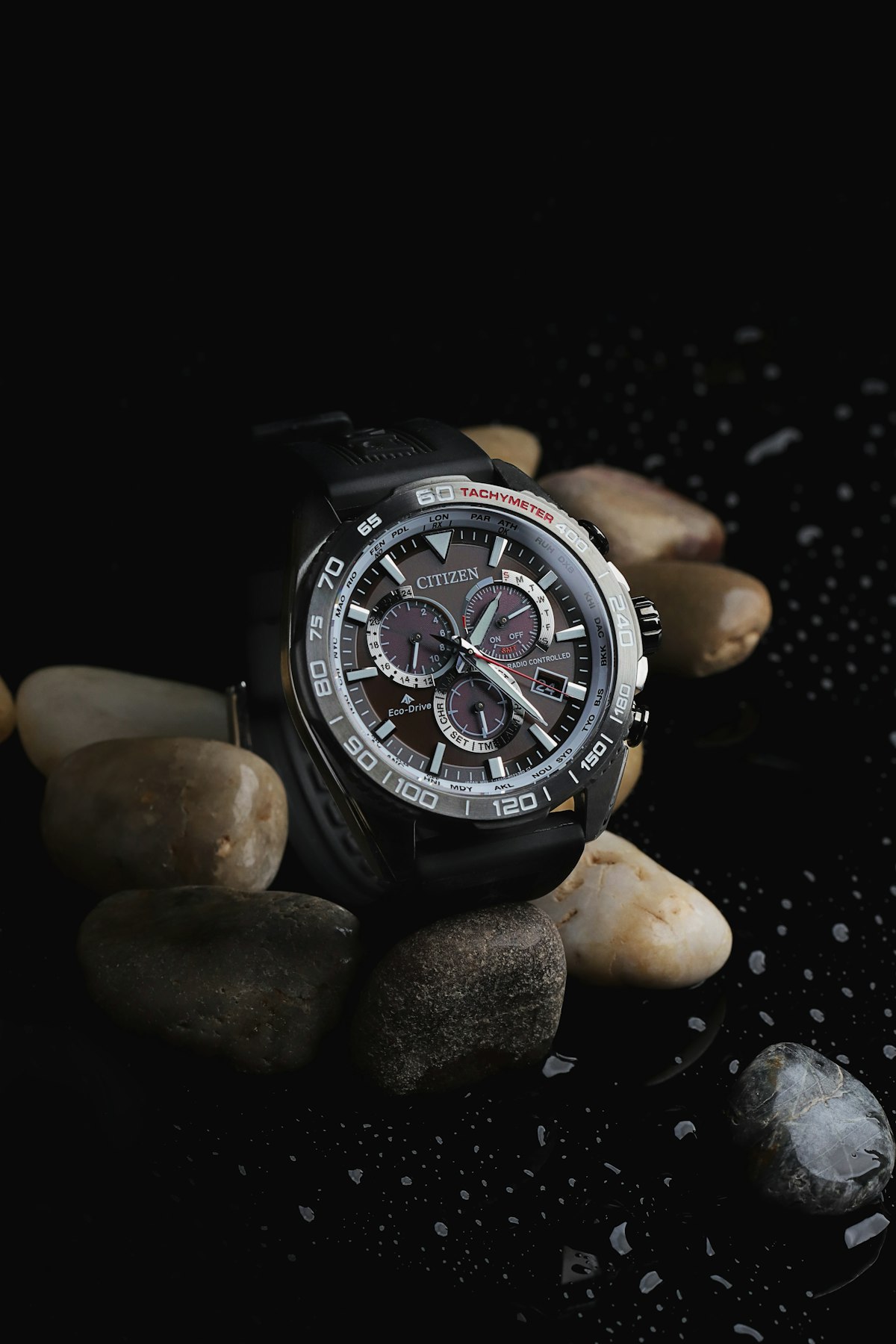
But quartz should never be dismissed by serious enthusiasts. High-quality quartz, solar technology, and meca-quartz chronographs all have an honorable place in collecting. Citizen has built decades of trust on this principle, and many microbrands have used quartz intelligently to deliver thin cases, strong accuracy, and attractive pricing.
The wisest collectors avoid ideological purity. A collection benefits from variety of experience. Mechanical watches invite appreciation of craft, while quartz often offers grab-and-go freedom. Owning both is not inconsistency; it is perspective.
Budget discipline is part of connoisseurship
One of the least glamorous truths in horology is that restraint is a collector’s skill. Buying too quickly can flatten the learning process. Many enthusiasts discover, usually after a few impulsive purchases, that a collection becomes more meaningful when each addition has been considered against the whole.
That does not mean every purchase must be monumental. In fact, some of the healthiest collections are built in the space between affordability and discernment. A Seiko 5 Sports, a Citizen Tsuyosa, a Venezianico dive watch, or a NEUTRA chronograph can all earn their place if they bring something distinctive to the wrist and to the collection’s narrative.
Before buying, ask a few quiet questions. Does this watch duplicate something you already own? Are you buying the watch itself, or just reacting to hype, scarcity, or a temporary discount? Will you still want it after the excitement of the chase fades?
Patience often improves both the collection and the collector.
Depth beats breadth
There is a temptation, especially early on, to cover every category at once: diver, chronograph, field watch, GMT, dress watch, integrated bracelet sports watch, and perhaps a splash of vintage. There is nothing wrong with exploring broadly, but depth often brings more lasting satisfaction than checklist collecting.
A collector who spends time understanding one lane develops sharper taste. Someone who explores Japanese watchmaking through Seiko, Citizen, and independent-adjacent microbrands may end up with a richer perspective than someone who buys five unrelated watches simply to fill slots. Likewise, a collector focused on contemporary independents and microbrands may learn more from comparing case finishing, handset design, and movement choices across Farer, Formex, Baltic, and Mitch Mason than from pursuing variety for its own sake.
Depth teaches context. Context teaches judgment.
Condition, service, and the long view
As collections mature, practical stewardship becomes part of the pleasure. A watch is not only an object of desire; it is an object of care. Learn what normal accuracy looks like for your movement. Keep records of service history. Store straps properly. If you buy pre-owned, study condition with sobriety, not wishful thinking.
This is especially important when moving beyond entry-level collecting. A polished case cannot be unpolished. Moisture damage inside a movement can become an expensive lesson. Even with robust brands and proven calibers, due diligence matters.
There is also wisdom in thinking ahead. How easy will this movement be to service in five or ten years? Is the brand established enough to support parts and warranty work? One reason watches with familiar calibers from Sellita, ETA, Miyota, or Seiko remain attractive is that practicality supports passion.
Let your collection sound like you
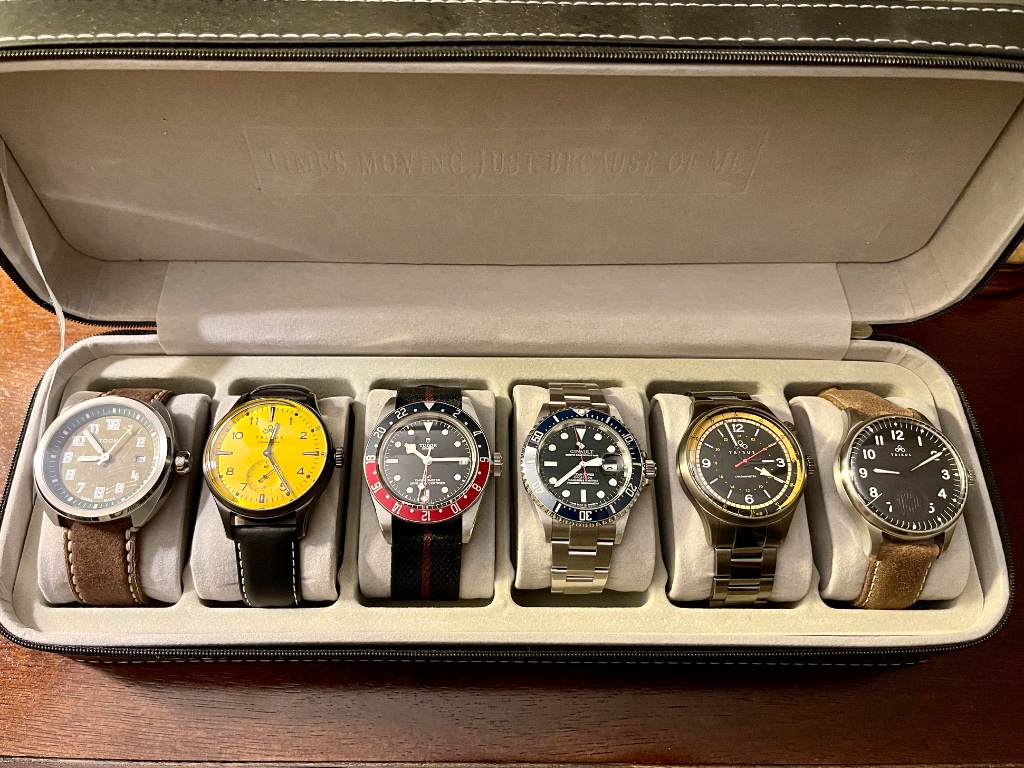
The best watch collections are recognizable not because they are expensive, but because they feel personal. They reveal what the collector values: design restraint, historical continuity, technical curiosity, playful color, or sheer daily utility. A watch box with a Hamilton field watch, a Baltic dress piece, a Citizen solar everyday watch, and a sharply executed microbrand diver may say more about genuine enthusiasm than a row of status purchases chosen by consensus.
That is the deeper reward of collecting with intention. Over time, your watches become more than references and specifications. They become markers of changing taste, remembered milestones, and lessons learned at the wrist.
In the end, building a collection with purpose is less about arriving at a final lineup than about developing a more discerning eye. The finest collections remain open-ended, shaped by conversation, curiosity, and the pleasure of discovering what truly belongs. And if that journey happens alongside other people who understand why a lug shape, a handset, or a movement architecture can start a half-hour discussion, all the better. That is where collecting begins to feel less like accumulation and more like belonging.