

The question every collector asks
At some point, nearly every watch enthusiast asks the same question: is this a good investment? Sometimes it comes before the purchase, sometimes after, and often it arrives the moment a hobby starts becoming a collection.
The honest answer is more nuanced than the headlines suggest. Yes, certain watches have performed remarkably well over time. We all know the familiar examples: a Rolex Submariner bought a decade ago, an Audemars Piguet Royal Oak before the frenzy, or a Patek Philippe Nautilus acquired when waiting lists were still merely inconvenient rather than mythical. But these are not the whole story, and treating them as typical can lead even thoughtful collectors astray.
In horology, the best investments rarely begin as purely financial decisions. They begin with knowledge, patience, and a clear understanding of what gives a watch lasting appeal. If there is one principle worth holding onto, it is this: buy watches you would be happy to own even if the market stood still.
What makes a watch hold value
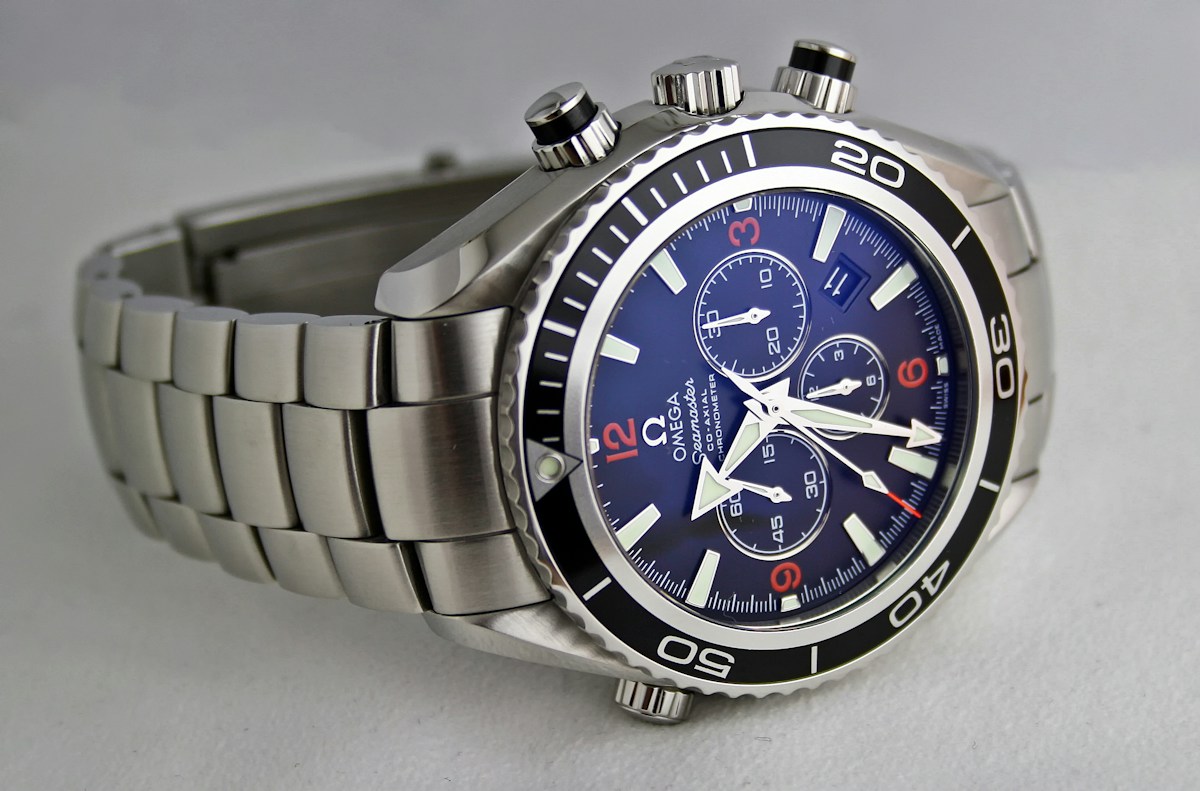
A watch tends to retain value for a few recurring reasons. Brand strength is the most obvious. Rolex, Omega, Cartier, Tudor, and Grand Seiko benefit from deep recognition, established service networks, and decades of design continuity. A watch from one of these houses enters the market with a certain built-in trust.
But brand alone is not enough. Desirability depends on the specific reference, production scale, design integrity, and condition. A Rolex Explorer has enduring appeal not simply because it says Rolex on the dial, but because its proportions, heritage, and versatility have remained compelling across generations. Likewise, the Omega Speedmaster Professional owes much of its resilience to a design language that has scarcely needed improvement.
Rarity matters, but not in the simplistic sense. Plenty of limited editions fade because they were manufactured to be collectible rather than because collectors truly wanted them. Genuine demand is more important than scarcity on paper. A well-executed standard-production watch with a loyal following can outperform a “limited” piece that never earns emotional credibility.
Then there is the practical side: serviceability, original components, and provenance. A full set helps. Unpolished cases help. Honest wear is often acceptable; careless restoration is less forgiven. Collectors value confidence, and confidence is built through details.
Blue-chip watches and the illusion of certainty
There is a reason the same few names dominate conversations about watches as investments. Blue-chip models offer liquidity, familiarity, and a large secondary market. If your goal is capital preservation within watch collecting, it is understandable to look first at pieces like the Tudor Black Bay Fifty-Eight, Omega Speedmaster, Cartier Santos, or certain Grand Seiko references.
Still, it is a mistake to confuse relative stability with certainty. Watch values move in cycles. Tastes shift. Production increases. Economic conditions tighten. Even highly sought-after pieces can soften, and anyone who entered the market at a peak has learned that “always goes up” is one of the least reliable phrases in collecting.
This is especially true when premiums become detached from the object itself. When enthusiasm turns speculative, the watch can temporarily stop being judged as a watch. History suggests that eventually, fundamentals reassert themselves. Build quality, iconography, mechanical substance, and wearability matter again.
That is why seasoned collectors often sound less excited than newcomers during booms. Experience teaches that a strong watch is not merely one with a rising chart, but one with enough intrinsic merit to remain desirable when the chart cools down.
The overlooked case for value outside the usual giants
For many collectors, the smartest “investment” is not chasing the hottest steel sports model. It is buying exceptionally good watches at sensible prices.
This is where brands like Hamilton, Seiko, Citizen, and Farer become interesting. A Hamilton Khaki Field Mechanical is unlikely to fund anyone’s retirement, but it offers historical character, dependable appeal, and broad respect at a price point where depreciation feels manageable. Seiko, particularly in its Prospex and Presage lines, continues to provide entry points into serious collecting, while select vintage and JDM references attract increasingly educated buyers.
Citizen deserves more attention than it often receives in investment discussions. The brand’s technical credibility, from Eco-Drive to high-accuracy quartz and The Citizen line, has created a base of informed admirers who care about substance over hype. That kind of appreciation can age well.
The same goes for strong independents and modern enthusiast-driven brands. Formex has earned serious respect for engineering and case technology. Baltic has built a distinct visual identity that resonates with collectors rather than chasing trends. Venezianico, Mitch Mason, and NEUTRA represent a newer generation of brands proving that compelling design and thoughtful specifications can create lasting followings. Will every microbrand become collectible? Of course not. But the best of them contribute something coherent and memorable, and that matters.
Movements, mechanics, and what collectors actually care about
A movement alone does not guarantee future value, but it shapes perception. In-house calibers can be attractive, especially when they bring meaningful technical or architectural distinction. Yet collectors are often just as happy with a robust Sellita SW200, ETA 2824, Miyota 9000 series, or Seiko’s 6R and 8L families when the watch itself is well conceived.
What matters is the total proposition. A beautifully designed watch powered by a dependable movement that can be serviced without drama may prove more enduring than a technically ambitious piece from a weaker brand with uncertain support.
There are exceptions, of course. Certain movements acquire their own aura: Omega’s co-axial calibers, Zenith’s El Primero, the manually wound Lemania-based architecture behind older Speedmasters, or Grand Seiko’s Spring Drive. These bring genuine horological intrigue, and intrigue can support long-term collectibility. But even then, context remains everything. Great mechanics need a great watch around them.
How to think like a collector, not a speculator
The healthiest approach to watch investment is to widen the definition of return. Financial return matters, certainly, but so do years of wear, connection, learning, and the avoidance of bad purchases.
A prudent collector asks different questions than a flipper. Is the price fair relative to recent sales? Has this model already enjoyed an unsustainable spike? Will I still admire this piece if the market cools? Is servicing straightforward? Does the watch have a real audience beyond social media enthusiasm?
Buy the seller as carefully as the watch. Documentation, condition reports, movement photos, and service history are not administrative nuisances; they are part of the asset. If you buy pre-owned, patience is often rewarded. If you buy new, understand where the depreciation curve is likely to be steepest.
And perhaps most importantly, collect within your means. Watches become poor investments the moment they force rushed sales, debt, or anxiety. The strongest collections tend to be built slowly, with conviction rather than urgency.
Passion first, performance second
So, are watches a good investment? Sometimes, yes. But the better question is whether they can be a rewarding store of value while also enriching your life as objects of craftsmanship and memory.
The finest collections are rarely assembled by people trying to outsmart the market at every turn. They are built by people who learn references, handle watches in person, notice finishing, appreciate movements, and understand why one dial layout sings while another merely follows fashion. Over time, that knowledge becomes its own kind of edge.
If a watch holds its value, that is gratifying. If it rises, even better. But if it becomes part of your daily rhythm, marks meaningful moments, and connects you to the long, fascinating conversation of horology, it has already paid a dividend most spreadsheets cannot capture.
That, in the end, is where the most enduring kind of watch investment lives: at the intersection of discernment and delight. And it is often in conversation with other collectors, comparing notes, stories, and hard-won instincts, that we learn to recognize the difference.