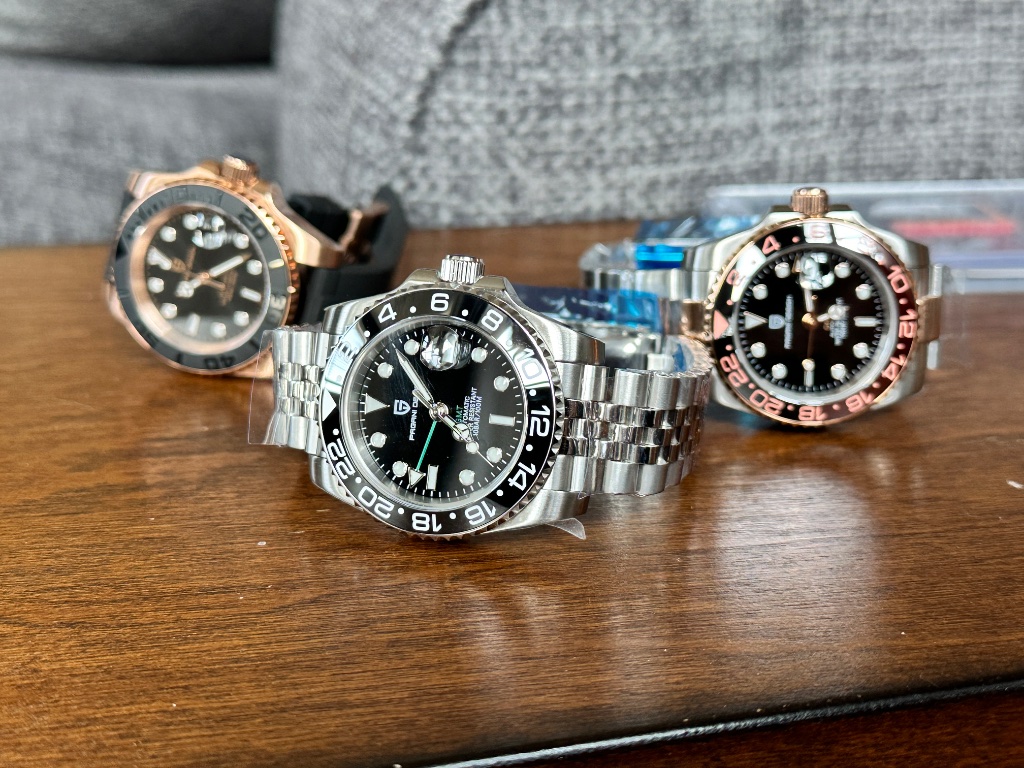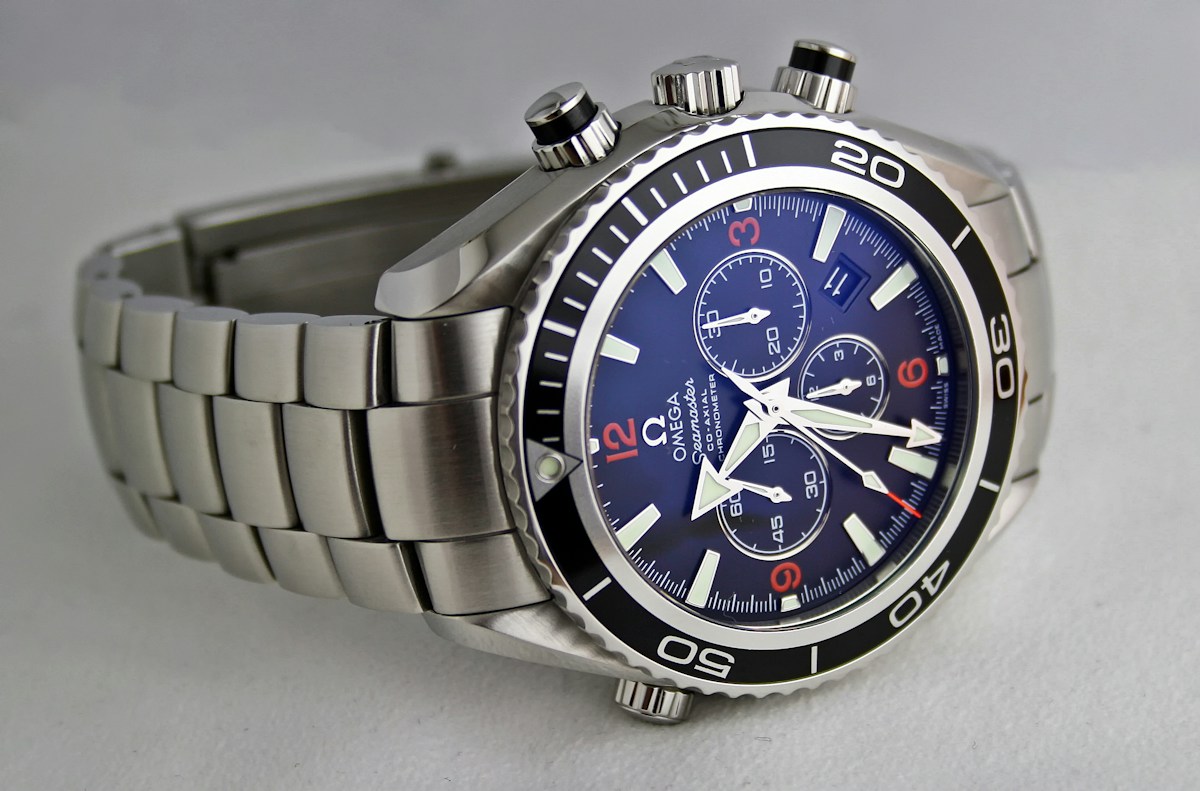

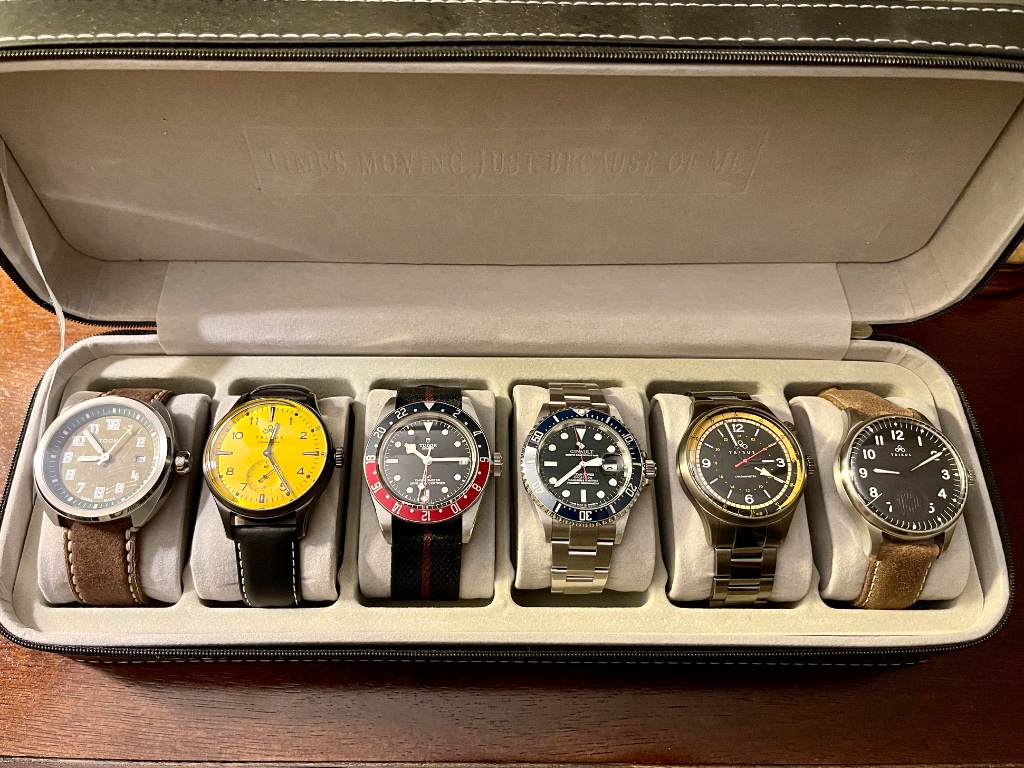

For all the predictions that smartphones and smartwatches would render traditional watches obsolete, the opposite has happened in enthusiast circles: the culture around watches feels richer, more expressive, and more democratic than it did a decade ago. The modern collector is not defined solely by price point or pedigree. He might be wearing a Hamilton Khaki Field Mechanical, a Seiko Alpinist, a Baltic Aquascaphe, or a Citizen with a beautifully finished washi dial, and still be every bit as engaged as someone comparing vintage Speedmasters or debating the finer points of a Rolex 1570.
That is the enduring appeal of watch collecting culture. It is not really about owning timekeeping devices. It is about learning to see.
More Than Timekeeping
A watch is one of the few objects we still wear every day that asks to be understood slowly. You do not simply use a good watch; you live with it. You notice how the crystal catches late afternoon light, how a brushed case flank ages, how a hand-wound movement changes your morning routine by thirty seconds. Even an accessible movement like the Seiko NH35 or Miyota 9039 can become meaningful once you understand what it does, how it beats, and why its quirks matter.
That intimacy helps explain why collecting remains culturally relevant. In a digital age built on frictionless convenience, watches preserve a kind of deliberate friction. A mechanical watch asks for attention. An automatic rewards consistency. A chronograph with a Valjoux 7750 or Sellita SW510 feels different on the wrist and through the pushers than a three-hand field watch, and those differences teach us something about design, engineering, and restraint.
For beginners, this is one of the healthiest ways to enter the hobby: not by chasing status, but by noticing experience. The collector who learns why a Hamilton wears larger than its diameter suggests, or why a Farer dial feels so alive in person, is already developing taste.
The Objects That Teach Us to Look Closely
Watches train the eye. That may sound lofty, but any seasoned enthusiast knows it is true. At first, many people buy broadly: a dive watch because it looks sporty, a dress watch because they think they should have one. Over time, attention sharpens. You begin to care about lug length more than case diameter. You notice whether a handset feels proportionate. You see the difference between printed texture and true depth on a dial.
This is where the current watch landscape is especially exciting. The old hierarchy of “entry-level” versus “serious collecting” has softened because the quality at modest price points has risen dramatically. Baltic, Formex, Farer, and Venezianico have shown that thoughtful design and satisfying finishing do not belong to legacy Swiss houses alone. A Formex Essence can offer superb case architecture and comfort. A Venezianico Nereide can introduce someone to distinct styling and strong wearability. A NEUTRA or Mitch Mason can feel personal in a way mass luxury sometimes does not.
The practical wisdom here is simple: buy the watch that keeps your attention after the honeymoon period. If you are still admiring the shape of the crown, the spacing of the numerals, or the way the bracelet articulates after three months, you are onto something real.
Brands Build Watches, but Communities Build Meaning
One of the most fascinating shifts in modern horology is that belonging no longer depends on a boutique relationship or a waiting list. Today, collectors form identity around shared sensibilities rather than just prestige. One person becomes “the Seiko person” in a friend group, known for hunting references and understanding the many lives of the 62MAS design language. Another becomes the microbrand enthusiast, championing small makers with conviction because he values originality over recognition.
That culture matters because it keeps the hobby alive at every level. Hamilton introduces many collectors to Swiss mechanical watches through honest, historically grounded pieces. Citizen continues to bridge innovation and accessibility, whether through Eco-Drive or mechanically inclined models that reward closer appreciation. Seiko remains one of the great gateways in watch collecting not because it is cheap, but because it offers depth. A collector can start with a Seiko 5 Sports and spend years discovering King Seiko, Prospex, and Grand Seiko without ever exhausting the brand’s universe.
Meanwhile, microbrands have given collectors a new kind of participation. Buying from a small company often feels less like a transaction and more like joining an ongoing conversation. You understand the inspiration, the compromises, even the evolution from one release to the next. That kind of closeness creates emotional equity, and emotional equity is the true currency of collecting.
Taste Matters More Than Status
Every healthy collecting culture eventually arrives at the same lesson: the most impressive collection is not the most expensive one, but the most coherent. Coherence does not mean sticking to one style or one brand. It means your watches say something consistent about what you value.
Maybe you are drawn to military clarity, so a Hamilton field watch, a Marathon, and a vintage-inspired NEUTRA make sense together. Maybe you love color and design play, so Farer sits naturally beside a bright-dialed Seiko and a playful summer watch. Maybe you admire engineering first, and find yourself comparing the practical virtues of an ETA 2824, a Sellita SW200, and Citizen’s reliable calibers with almost academic interest.
That is culture in the truest sense: not consumption, but discernment.
A useful rule for collectors at any level is to ask a better question than “Is this worth the money?” Ask, “Is this worth my wrist time?” Most watches that disappoint are not bad watches; they are simply watches that do not align with the wearer’s habits, wardrobe, or emotional instincts. Bracelet comfort, dial legibility, thickness, and serviceability matter more in daily life than internet hype ever will.
The Rituals That Make Collectors
Collecting is sustained by ritual as much as acquisition. Setting the time after a watch has rested for a few days. Choosing a strap that changes the entire mood of a piece. Reading about a movement before bed. Taking one watch on a trip and letting it absorb the memory of the place. These are small acts, but they are what transform ownership into attachment.
This is also why watches continue to matter culturally even among younger enthusiasts who grew up with digital convenience. A watch can mark ambition, grief, discipline, romance, or reinvention. It can be the Seiko bought after a first promotion, the Citizen inherited from a parent, the Baltic that opened the door to independent watchmaking, or the Formex that taught someone what modern refinement feels like.
The best collections, in other words, are autobiographical. They tell the story of a person learning what he loves.
Why the Hobby Endures
Watch collecting culture survives because it offers something scarce: a union of craft, self-knowledge, and conversation. It asks us to slow down, pay attention, and articulate why one object moves us more than another. That is not old-fashioned. If anything, it is increasingly valuable.
In the end, few enthusiasts stay in this world merely for specifications. They stay for the meaning that gathers around the watches, and for the people who help sharpen their eye along the way. That is where the hobby feels most alive: not in possession alone, but in shared appreciation. And if you are fortunate, that appreciation eventually becomes the kind of community where every watch has a story, and every story finds an interested listener.