
In watch collecting, there is a moment when enthusiasm matures into discernment. You stop asking only what a watch costs and start asking what it says, how it wears, and whether the people behind it truly care. That is where microbrand watches have become impossible to ignore.
Once dismissed as niche alternatives for bargain hunters, today's best microbrands are doing something far more interesting. They are making thoughtful, highly wearable watches with a sense of identity that some larger brands, for all their scale and history, occasionally struggle to preserve. For newer collectors, microbrands can be an accessible gateway into mechanical watchmaking. For seasoned enthusiasts, they can be a refreshing reminder that originality and pleasure still matter.
The shift from outsider to tastemaker
A decade ago, buying a microbrand often felt like a leap of faith. Specifications looked promising, but finishing, after-sales support, and long-term durability were harder to judge. That world has changed. The strongest names in the segment now understand proportions, manufacturing, branding, and customer experience at a far higher level.
Part of that comes down to focus. A microbrand does not need to serve every market at once. It can build one excellent field watch, one refined diver, or one playful dress piece and speak directly to a collector who knows exactly why it matters. Compare that with the broad catalogs of major players, where not every release feels equally intentional.
That is why a collector looking at a Hamilton Khaki Field, a Seiko Prospex, or a Citizen Series 8 may now also give equal consideration to a Baltic, Farer, or Formex. The question is no longer whether a microbrand is "good enough." Increasingly, it is whether the bigger brand is offering enough character to justify its advantage in scale.
What the best microbrands do especially well
The best microbrand watches rarely win by trying to be everything at once. They win through clarity.
Baltic is a fine example. The Aquascaphe did not become a modern favorite because it reinvented the dive watch. It succeeded because it understood vintage restraint: compact case sizing, clean bezel execution, and just enough retro warmth without becoming costume. The MR01 took that same confidence into dressier territory, proving that a microbrand could deliver genuine charm rather than simply another derivative sports watch.
Farer, meanwhile, built much of its reputation on color and typography. In lesser hands, that can turn gimmicky. Farer usually avoids that trap because the design language feels coherent from dial to hands to case finishing. The result is not merely cheerful; it is distinctive.
Formex represents a different strength: engineering. Watches like the Essence and Reef show how a smaller brand can obsess over comfort, case construction, and clasp quality in ways collectors immediately feel on the wrist. Venezianico has likewise gained attention by combining strong dial textures and Italian flair with solid day-to-day wearability. Brands such as Mitch Mason and NEUTRA have also found loyal audiences by producing watches that feel designed by enthusiasts rather than committees.
That may be the defining advantage of the category. The best microbrands often feel like one sharp point of view made tangible.
The movement conversation, honestly
Microbrands invite a predictable debate: is the movement good enough?
The honest answer is that it depends less on prestige and more on execution. A Seiko NH35 or Miyota 9039 is not glamorous, but both can be dependable, serviceable choices when properly regulated and sensibly housed. For a daily-wear tool watch under or around four figures, there is nothing inherently disappointing about that proposition.
Move upmarket and you will see Sellita SW200, La Joux-Perret G100, Soprod calibers, and occasionally elaborated hand-wound options. These movements tend to offer thinner profiles, smoother winding, longer power reserves, or simply a greater sense of refinement. But the movement should match the watch, not just the marketing.
Collector wisdom matters here. A transparent brand will tell you what movement is inside, why it chose it, and what level of regulation to expect. That is more reassuring than ornate language around a "custom caliber" that is, in truth, a standard base movement with a signed rotor.
For most buyers, serviceability is the real luxury. An excellent case, a well-made bracelet, strong dial work, and a movement your watchmaker can confidently maintain often make for a more satisfying ownership experience than a spec sheet designed to impress on forums.
How to buy a microbrand well
The first rule is simple: do not buy renders, buy evidence. Product photography can flatter almost anything. Real-world wrist shots, video reviews, and owner feedback will tell you far more about dial finishing, crystal distortion, case thickness, and bracelet quality.
Pay close attention to dimensions beyond diameter. Lug-to-lug length often determines whether a watch feels balanced or awkward. A 38 mm case with a sensible 46 mm lug-to-lug can be transformative, especially for collectors who have learned that comfort is more important than bravado.
Then look at the fundamentals:
- Is the crown easy to grip?
- Does the clasp offer tool-free micro-adjustment?
- Are the hands long enough?
- Is the lume applied cleanly?
- Does the brand offer spare links, spring bars, and prompt communication?
These details separate a compelling watch from a merely photogenic one.
It is also worth researching the brand itself. Has it delivered previous models on time? Does the founder respond to customers? Are warranty issues handled publicly and fairly? In microbrands, after-sales support is not a footnote; it is part of the product.
And then there is the temptation of scarcity. Limited editions can be fun, but they should not be the main reason you buy. If the watch only makes sense because it is limited to 200 pieces, it may not make sense at all. Buy the one you would still want if it were a regular production model.
Why seasoned collectors keep coming back
The most interesting thing about microbrands is not that they are affordable. It is that they remain emotionally legible.
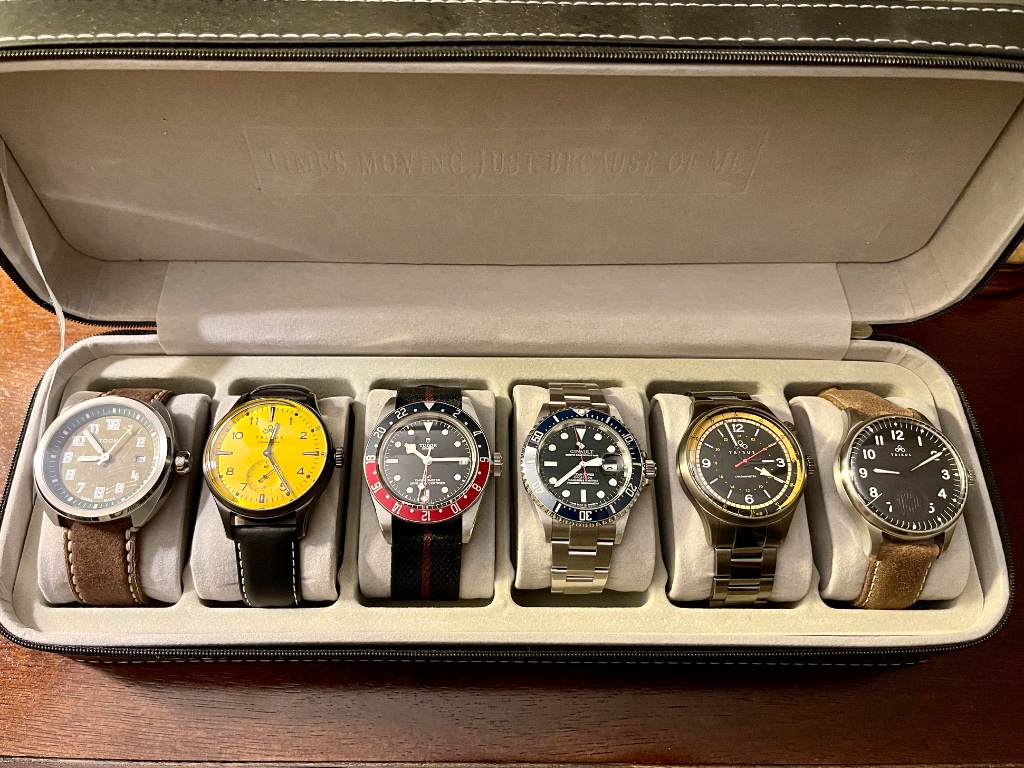
A well-built microbrand watch often tells you exactly why it exists. That clarity can be deeply appealing to collectors who already own larger names. It is not unusual to find a watch box holding a Rolex Datejust, an Omega Speedmaster, and a Baltic Aquascaphe, with each piece earning its place for different reasons. One offers legacy, another mechanical iconography, and the third a direct, uncomplicated joy.
Microbrands also keep the hobby conversational. They invite comparison, curiosity, and discovery. You can talk to the founder, follow the development of a new model, and feel the enthusiasm behind the object. In an era when luxury can sometimes feel distant, that intimacy has real value.
A category that has grown up
Not every microbrand deserves attention. Some are overdesigned, under-tested, or too dependent on borrowed aesthetics. But the category as a whole has matured. The strongest players now offer a genuine alternative: watches with character, honest mechanics, and pricing that still leaves room for delight.
For beginners, microbrand watches can be one of the smartest ways into collecting. For veterans, they can be a reminder that the hobby is still alive with ideas. And for all of us, they prove that good watchmaking is not only about heritage printed on a dial. Sometimes it is about conviction, restraint, and the thrill of finding something special before everyone else catches on.
That discovery, and the conversation that follows, is part of what keeps collecting so rewarding, especially among people who appreciate what a thoughtful watch can bring to the wrist and to the wider club around it.