


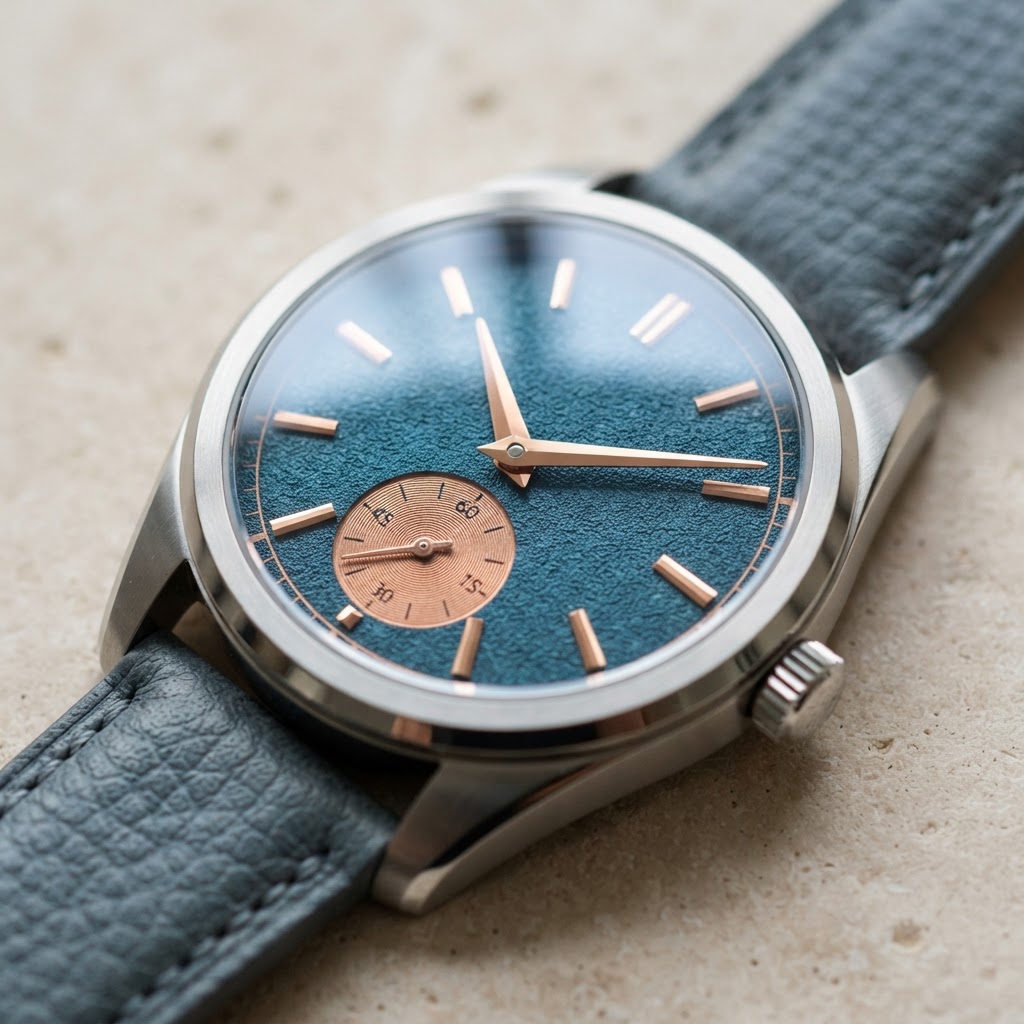
For years, the phrase microbrand watches carried a faintly apologetic tone, as if these were stepping stones on the way to something more established. That view feels increasingly outdated. In today’s watch landscape, microbrands are not simply affordable alternatives to the mainstream; they are often where some of the most thoughtful design, responsive product development, and collector-first value can be found.
For beginners, microbrands can be an accessible point of entry into mechanical watch collecting without sacrificing character. For seasoned enthusiasts, they offer something just as compelling: the thrill of discovery in a hobby where the big names are sometimes too familiar. And in an era when many heritage brands are leaning heavily on archives, microbrands often remind us that horology still has room to experiment.
A category built on passion rather than scale
What separates a microbrand from a conventional watch company is not simply size, but posture. Most microbrands begin with a founder, or a very small team, obsessed with a particular idea of what a watch should be. Sometimes that means a vintage-inflected dive watch done exactly right. Sometimes it means a field watch with cleaner proportions, sharper finishing, or more honest pricing than the market has come to expect.
Baltic is a strong example. The French brand has built a loyal following not by shouting the loudest, but by delivering watches that feel coherent. Models like the Baltic Aquascaphe and MR01 show a clear point of view, balancing vintage cues with contemporary usability. They feel designed by people who genuinely care about case proportions, dial texture, and the emotional pull of a well-judged crystal.
Farer, from Britain, approaches the category differently. Its watches often lean into color with far more confidence than larger Swiss brands dare to attempt. Yet the result rarely feels gimmicky. A Farer succeeds because beneath the playful palette, the fundamentals are serious: thoughtful handset choices, strong typography, and dependable Swiss movements.
This is the quiet strength of the best microbrands. They tend to be led by enthusiasts who understand that a watch is never only a specification sheet.
Why collectors are paying attention
The modern collector has become harder to impress. Information is abundant, and the old signals of prestige do not carry the same authority they once did. Enthusiasts now compare lug-to-lug lengths, scrutinize bracelet articulation, debate Miyota versus Sellita regulation, and discuss whether a fumé dial is tasteful or overdone. Microbrands have benefited from this more educated audience because they often respond faster and more intelligently to what collectors actually want.
Take Formex. It occupies a fascinating space between independent challenger and fully mature enthusiast brand. Watches like the Formex Essence show that a smaller company can compete not merely on price, but on execution. Chronometer-certified options, excellent case finishing, and genuinely comfortable bracelets have made Formex one of those names experienced collectors mention with real respect.
Then there is Venezianico, a brand that has steadily sharpened its identity through distinctive Italian styling and increasingly assured finishing. Or NEUTRA, which draws on vintage tool-watch language without feeling derivative. Or Mitch Mason, whose approachable, enthusiast-driven dive watches speak directly to buyers who care about daily wearability as much as story.
These brands may not have century-old archives, but many have something collectors value just as much: clarity of purpose.
Movements, myths, and what really matters
One of the biggest hurdles for new collectors entering the microbrand space is movement snobbery. The assumption often goes like this: if a watch uses a Seiko NH35, Miyota 9000-series, Sellita SW200, or Soprod caliber rather than an in-house movement, it must be less worthy.
That is a mistake.
A reliable, serviceable, well-regulated movement is often exactly what you want in a watch you intend to wear and enjoy. The Seiko NH35 has become ubiquitous for good reason: it is sturdy, familiar to watchmakers, and cost-effective. The Miyota 9015 offers a slim automatic platform with dependable performance. Sellita’s SW200 remains a strong Swiss workhorse. None of these movements is romantic in the way a haute horlogerie caliber is romantic, but that misses the point entirely.
Hamilton, while not a microbrand, offers a useful comparison. Watches like the Khaki Field Mechanical and Khaki Automatic are loved not because every component is rare or exotic, but because the total package feels honest, wearable, and well resolved. Great collecting often begins there.
When evaluating a microbrand, it is wiser to ask: Has the brand chosen the right movement for the watch? Has it regulated it well? Does the case design, dial finishing, and wearing experience justify the price? Enthusiasts sometimes become overly fixated on what sits behind the caseback while ignoring everything they interact with on the wrist.
The design freedom larger brands often lack
A large brand has committees, sales targets across global markets, and strong incentives not to alienate existing customers. A microbrand can move with more agility. It can produce a sector dial that feels niche, a titanium traveler GMT with restrained dimensions, or a compressor-style diver in a color the mainstream would consider too risky.
That freedom has enriched the watch world. Citizen and Seiko continue to do remarkable things across broad price ranges, but microbrands can pursue narrower ideas with unusual conviction. One release might be inspired by mid-century chronographs, another by integrated-bracelet sport watches, another by pared-back military references. The best among them are not copying icons so much as participating in an ongoing design conversation.
Of course, not every microbrand succeeds. Some rely too heavily on familiar templates, hoping a textured dial and a sapphire bezel will disguise a lack of originality. Others launch ambitious projects before they are operationally ready. This is part of the terrain. A collector should approach any young brand with both enthusiasm and discernment.
How to buy a microbrand watch wisely
The practical side matters. First, study the brand’s track record. Has it delivered previous releases on time? Do owners speak well of after-sales support? Is there evidence that the company improves from one generation to the next?
Second, examine proportions more carefully than rendered marketing images. Diameter alone tells very little. A 38mm watch with a long lug-to-lug may wear larger than expected, while a 40mm diver with compact geometry can feel balanced and versatile.
Third, be honest about why you are buying. If your priority is residual value, many microbrands will disappoint compared with established names. But if your goal is to own a watch with personality, thoughtful execution, and a direct connection to the enthusiast community, the value proposition can be exceptional.
Finally, trust your taste. One of the pleasures of collecting outside the obvious mainstream is that your watch box begins to reflect curiosity rather than consensus.
The real value of microbrands
Microbrands matter because they keep watch collecting alive at its most human scale. They shorten the distance between maker and wearer. They remind us that a good watch does not need massive advertising spend or inherited mythology to earn affection. It needs integrity, proportion, and a reason to exist.
For newer collectors, that can be liberating. For veterans, it can be refreshing. And for the wider hobby, it is essential. The energy, experimentation, and sincerity found in the best microbrand watches push the entire industry forward.
If anything, the smartest collectors today are no longer asking whether a microbrand is “worth it.” They are asking whether it offers a compelling idea, executed with care. Increasingly, the answer is yes.
And perhaps that is why these watches feel so at home in conversations among true enthusiasts: not as substitutes for the classics, but as evidence that the future of collecting is still being written, one thoughtful release at a time — often shared first among the kind of community that understands exactly why that matters.
