


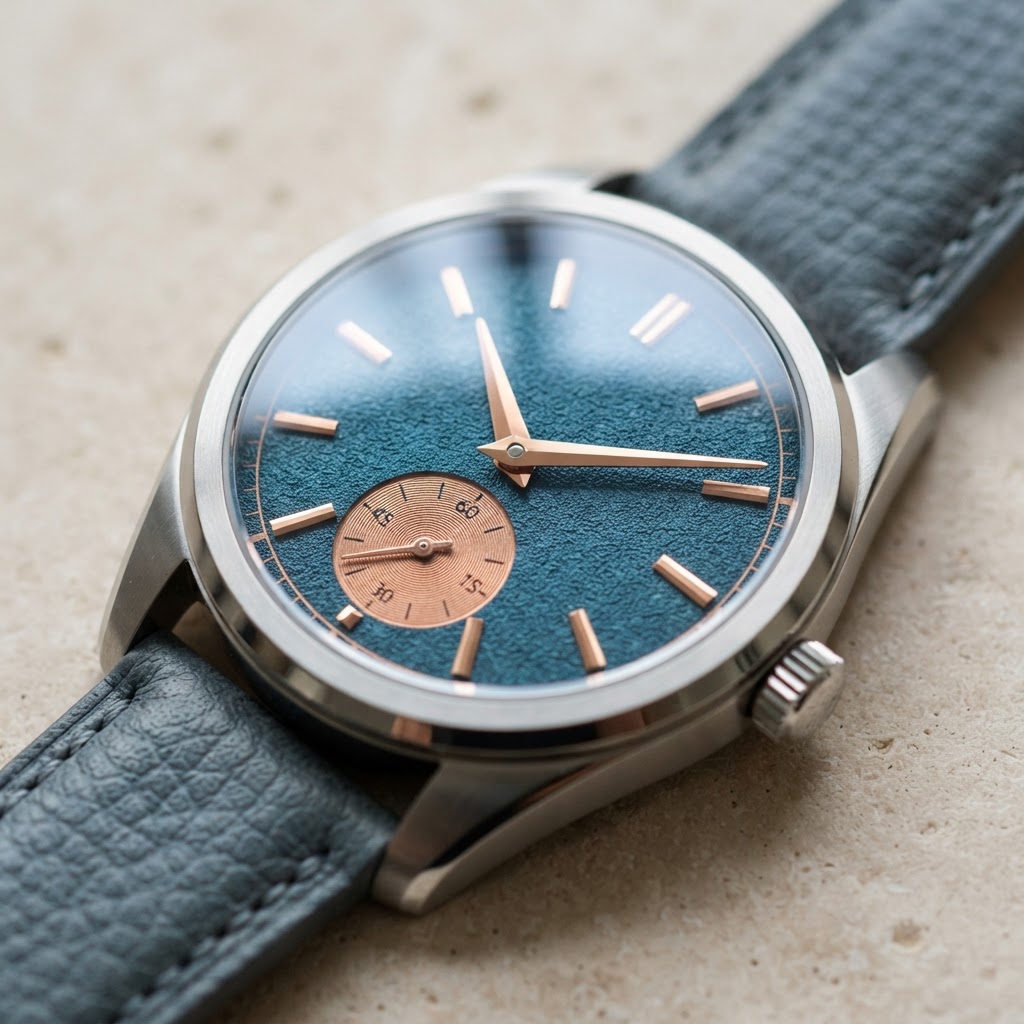
For a long time, the center of gravity in watch collecting was easy to define. You learned the big Swiss houses, perhaps developed an affection for Japanese giants like Seiko or Citizen, and slowly built your understanding around the established canon. That pathway still has enormous merit. But over the past decade, another lane has become impossible to ignore: the rise of the microbrand.
For many collectors, “microbrand” once implied compromise — a charming but rough-around-the-edges alternative to the mainstream. Today, that assumption feels badly outdated. The best microbrand watches are not merely affordable substitutes for larger names. They are often among the most inventive, enthusiast-led, and emotionally satisfying pieces you can buy.
In some ways, microbrands have become the purest expression of modern watch culture: nimble, transparent, design-driven, and deeply connected to the people who wear them.
More Than a Price Point
It is tempting to think of microbrands purely through the lens of value. Certainly, value is part of the story. A brand like Baltic can deliver vintage-inflected charm, thoughtful proportions, and mechanical credibility at prices that would have seemed improbable a generation ago. Farer brings color, typography, and a distinct British design language to the table in a way that feels fresh rather than forced. Formex, though often operating at the premium edge of the independent-accessible market, has built a reputation on case engineering and wearability that can surprise collectors accustomed to much larger players.
But reducing microbrands to “good for the money” misses what makes them exciting. The real appeal is creative freedom. Without layers of corporate oversight or decades of legacy constraints, these brands can take risks. They can produce a compressor-style diver with unusual lume plots, a sector dial with bolder color contrasts, or a field watch that feels historically informed without becoming derivative.
That freedom is precisely why so many collectors find themselves drawn in. A microbrand often feels like a point of view, not just a product.
The Best Ones Know Their Identity
What separates a serious microbrand from a forgettable one is not simply the movement inside the case. Enthusiasts tend to fixate on specifications — and yes, specifications matter. A Miyota 9000-series caliber, a Sellita SW200, or a Seiko NH35 all tell you something about reliability, serviceability, and cost structure. But identity matters more.
Consider Venezianico, which has worked to build a recognizable Italian visual language rather than chasing generic dive-watch trends. Or Mitch Mason, whose approachable tool watches have earned attention because they feel designed by people who actually spend time thinking about what enthusiasts enjoy wearing day to day. NEUTRA, too, has developed a coherent aesthetic rooted in vintage motorsport and mid-century utility, creating watches that feel intentional rather than assembled from familiar ingredients.
The strongest microbrands understand that collectors can tell when a watch has been willed into existence by passion rather than by market analysis alone. They offer not just a spec sheet, but a sensibility.
Why Collectors Keep Coming Back
One of the great pleasures of collecting microbrand watches is the sense of discovery. With established brands, much of the joy lies in learning the references, histories, and technical milestones that already exist. With microbrands, collectors often get to participate in the story while it is still being written.
That can be deeply rewarding. You might buy an early Baltic Aquascaphe, a Farer GMT, or a Formex Essence and feel that you are supporting a brand at a meaningful stage in its evolution. You begin to notice how later releases refine handset choices, case dimensions, bracelet tolerances, and clasp design. In other words, you are not only collecting watches — you are watching a brand mature in real time.
There is also a refreshing accessibility to the relationship. Founders often speak directly to customers, answer questions publicly, and explain design choices with unusual candor. In an era when many luxury brands still prefer mystique to dialogue, that openness can be a compelling alternative.
The Practical Wisdom of Buying Well
For newer collectors, microbrands can be an intelligent way to sharpen taste without overextending financially. A thoughtfully chosen microbrand teaches many of the same lessons as more expensive purchases: how a watch wears on the wrist, how dial texture changes in light, how lug-to-lug matters more than case diameter, and how much finishing you truly value.
This is where collector discipline matters. Buy the watch, not the hype. Limited runs can create urgency, but urgency is not the same thing as long-term affection. Before purchasing, look beyond renderings. Search for real-world photography, owner impressions, and any discussion of after-sales support. A handsome dial means less if the clasp is frustrating or communication disappears after delivery.
Movement choice should be understood in context. There is nothing inherently wrong with a Seiko NH35 in an affordable everyday watch; its ubiquity is part of its strength. Likewise, a Miyota 9039 can be an excellent choice in a slim, no-date sports watch. What matters is whether the price, finishing, and overall execution feel coherent. An honest, well-built watch with a humble movement is often more satisfying than an overpromised one with a “Swiss automatic” label doing all the marketing work.
For seasoned collectors, microbrands offer another kind of value: they can rekindle surprise. Even someone who owns Hamilton field watches, Seiko divers, or vintage-inspired Citizen reissues may find genuine delight in a newer independent piece that approaches familiar genres from a different angle.
Microbrands and the Modern Collector’s Taste
The growth of microbrands also says something important about how collecting has changed. Enthusiasts today are often less concerned with inherited status hierarchies and more interested in authenticity, design integrity, and daily enjoyment. That is healthy for the hobby.
A well-rounded collection no longer needs to follow a predictable script. A Hamilton Khaki Field can sit comfortably beside a Baltic MR01. A Citizen Promaster can share box space with a Farer chronograph or a Formex Reef. The old distinction between “serious” brands and “fun” brands feels increasingly irrelevant when the watch on your wrist is thoughtfully made and genuinely loved.
Microbrands have helped democratize connoisseurship. They invite collectors to care about case architecture, handset length, crystal profile, bezel action, and typography — the intimate details that make horology so absorbing. In doing so, they have elevated the conversation, not lowered the bar.
A Category Worth Taking Seriously
Not every microbrand release will endure, and not every young company will survive. That is simply the nature of a crowded, passionate, entrepreneurial corner of watchmaking. But the category as a whole has already proved its significance.
Microbrand watches matter because they expand the collector’s imagination. They remind us that great watch enthusiasm is not confined to heritage alone. It can come from a small team with a strong idea, a sharp eye, and enough conviction to make something they themselves would be proud to wear.
For some collectors, a microbrand will be the gateway into mechanical watches. For others, it will be the unexpected piece that brings freshness back to a mature collection. In both cases, the appeal is the same: sincerity, character, and the thrill of finding something that feels personal.
And perhaps that is the finest thing about this corner of the hobby. The best microbrands do not simply sell watches — they create conversations. Among collectors, around watch rolls and winders, and in communities where enthusiasm is shared as generously as knowledge, that spirit feels very much at home.
