


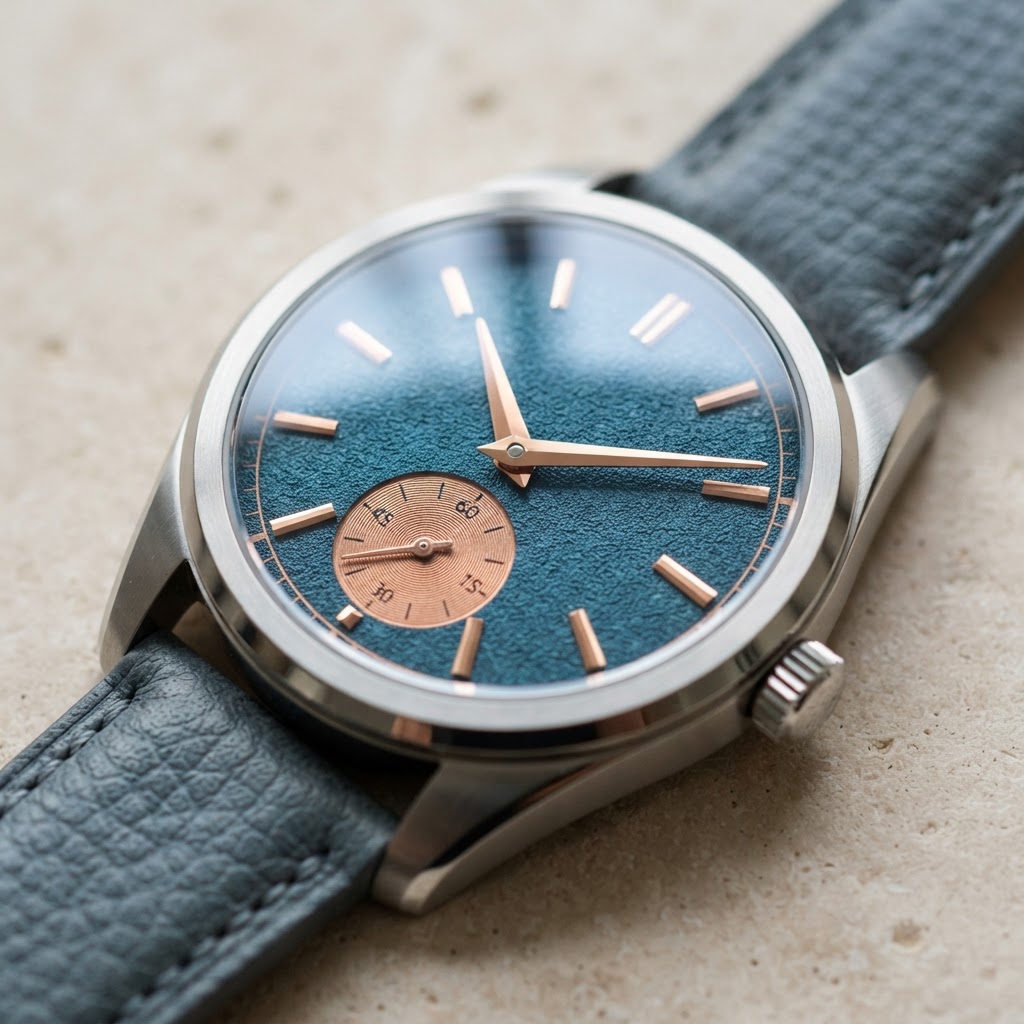
If you have spent any time around modern collectors, you have felt the shift. The conversation no longer begins and ends with the familiar pillars of Switzerland, Germany, or Japan. Increasingly, some of the most animated discussions in watch circles are about smaller makers: brands built by enthusiasts, often launched with a clear point of view, and willing to take risks that larger companies rarely can.
That is the real appeal of microbrand watches. They are not simply "affordable alternatives" to mainstream names. At their best, they are deeply personal expressions of taste, engineering priorities, and collector culture. A Baltic Aquascaphe does not exist to imitate heritage dive watches; it exists because there are people who still care about proportion, texture, and restraint. A Farer Lander is not trying to out-Hamilton Hamilton. It is trying to prove that color, whimsy, and seriousness can coexist on the wrist.
For newer enthusiasts, microbrands can be a gateway into thoughtful collecting. For seasoned aficionados, they can be a welcome reminder that this hobby still has room for surprise.
The new center of gravity in enthusiast watchmaking
The rise of microbrands says something important about where watch enthusiasm lives today. It lives online, in small communities, in direct conversations between founders and buyers, and in a market where a brand no longer needs a century of history to earn respect.
That does not mean heritage is irrelevant. A Hamilton Khaki Field or a Seiko Prospex still carries the weight of established identity, industrial capability, and long-term support. But the modern collector is also willing to ask a more interesting question: is the watch itself compelling?
When the answer is yes, smaller brands can thrive. Baltic built a following by understanding vintage proportion better than many legacy companies. Formex gained credibility not through nostalgia, but through case engineering, comfort, and surprising refinement. Venezianico has shown that ambitious finishing and strong visual identity can exist well below the price tiers once required for that kind of polish.
In other words, microbrands have moved from the margins into the center of enthusiast conversation because they are making watches that deserve the attention.
Design without committee
One of the great pleasures of microbrand collecting is seeing what happens when a watch is designed with conviction rather than mass-market caution. Large brands often have to please distributors, regional sales teams, and broad customer segments. Microbrands can be more focused. Sometimes that produces a miss. More often, it produces character.
Consider the crisp mid-century restraint of the Baltic MR01, the playful confidence of Farer’s colorful dial work, or the muscular, modern diving language of the Mitch Mason Maelstrom. NEUTRA, with pieces like the Rivanera, has built an identity around clean Italian-inflected minimalism without feeling sterile. These are watches that tend to say something clearly.
That clarity matters. Collectors respond to watches with a point of view. Even when a microbrand borrows familiar cues, the best examples do not feel like copies. They feel curated. Lug shape, handset length, crystal profile, bezel action, typography, and surface finishing all start to reveal a founder’s taste. For enthusiasts who already own a Citizen or Seiko workhorse, that extra layer of personality can be exactly what makes a new purchase interesting.
Movements, value, and what you are really paying for
The most common criticism of microbrands is also the easiest to misunderstand. Yes, many rely on familiar third-party calibers such as the Seiko NH35, Miyota 9015 or 9039, Sellita SW200-1, Soprod P024, or increasingly the La Joux-Perret G100. But movement choice alone does not determine value.
A good collector learns to ask better questions. How well is the movement regulated? Is the case thoughtfully machined? Does the bracelet have genuine articulation, solid end links, and a usable clasp? Is the lume evenly applied? Are the proportions wearable in real life, not just on a spec sheet? A watch with a Miyota 9039 and excellent execution can be far more satisfying than a poorly resolved watch carrying a more prestigious name.
This is where microbrands often shine. Without the burden of expensive retail networks or giant marketing budgets, they can put more of the price into tangible quality. That is why a Formex Essence can feel so mature on the wrist, or why a Venezianico Nereide can surprise collectors who expected far less finishing for the money.
Pragmatically, there is comfort in familiar movements too. A Sellita or Miyota is not romantic in the way an in-house caliber might be, but it is serviceable, known, and usually easier to maintain over time. For many collectors, that is not a compromise. It is sensible horology.
The risks are real, and that is part of being wise
None of this means microbrands are automatically good buys. The category includes serious watchmakers, but it also includes rushed projects, derivative design, and brands that underestimate after-sales support.
This is where experience matters. Before buying, look beyond product renders and launch excitement. Read long-term owner impressions. Study how the brand handles criticism. See whether the founder communicates clearly about delays, defects, and warranty issues. If a bracelet clasp feels flimsy or a crown tube has recurring problems, the enthusiast community usually uncovers it quickly.
It is also worth being honest about resale. Most microbrands do not hold value like a coveted Rolex, nor should you expect them to. Buy them because the watch intrigues you, not because you hope scarcity alone will create demand later. Limited production can be appealing, but artificial hype is rarely the same thing as enduring desirability.
The best microbrand purchases are usually the ones made with calm confidence rather than launch-day adrenaline.
How to buy like a collector, not just a shopper
For beginners, microbrands can be an excellent education. You learn quickly that dimensions on paper matter less than geometry on the wrist. A 39mm case with a sensible lug-to-lug can wear beautifully, while a 40mm watch with excessive thickness can feel clumsy. You start to notice crown action, bezel play, anti-reflective coating, and the emotional difference between a dial that is merely busy and one that is genuinely alive.
For more advanced collectors, the opportunity is slightly different. Microbrands can sharpen your eye. They force you to think about what you value most: originality, finishing, movement architecture, wearability, or emotional spark. They can also refresh a collection that has become too predictable. A watch box containing a vintage-inspired Baltic, a colorful Farer, and a dependable Seiko often says something more personal than one built purely from obvious status choices.
The smartest approach is to buy across categories with intention. Let a Hamilton anchor your everyday practicality. Let a Citizen or Seiko provide proven reliability. Then leave room for a smaller maker that surprises you. That balance often leads to a collection with more soul.
Why microbrands belong in a mature collection
A mature collection is not defined by price, country of origin, or logo prestige. It is defined by discernment. The collector who can appreciate a beautifully executed microbrand alongside an established Swiss or Japanese piece is usually seeing watches more clearly than the person who buys only by hierarchy.
Microbrands matter because they keep the hobby honest. They reward curiosity. They invite direct engagement with the people making the product. And every so often, they produce a watch that reminds even seasoned enthusiasts why they fell in love with horology in the first place.
That may be the greatest compliment we can give this corner of the industry. In a world of increasingly polished luxury narratives, microbrands still feel like watchmaking with its sleeves rolled up. And around any good collector table, including the kind we love to gather around at The Keeper Box, those are often the watches that start the most memorable conversations.
