

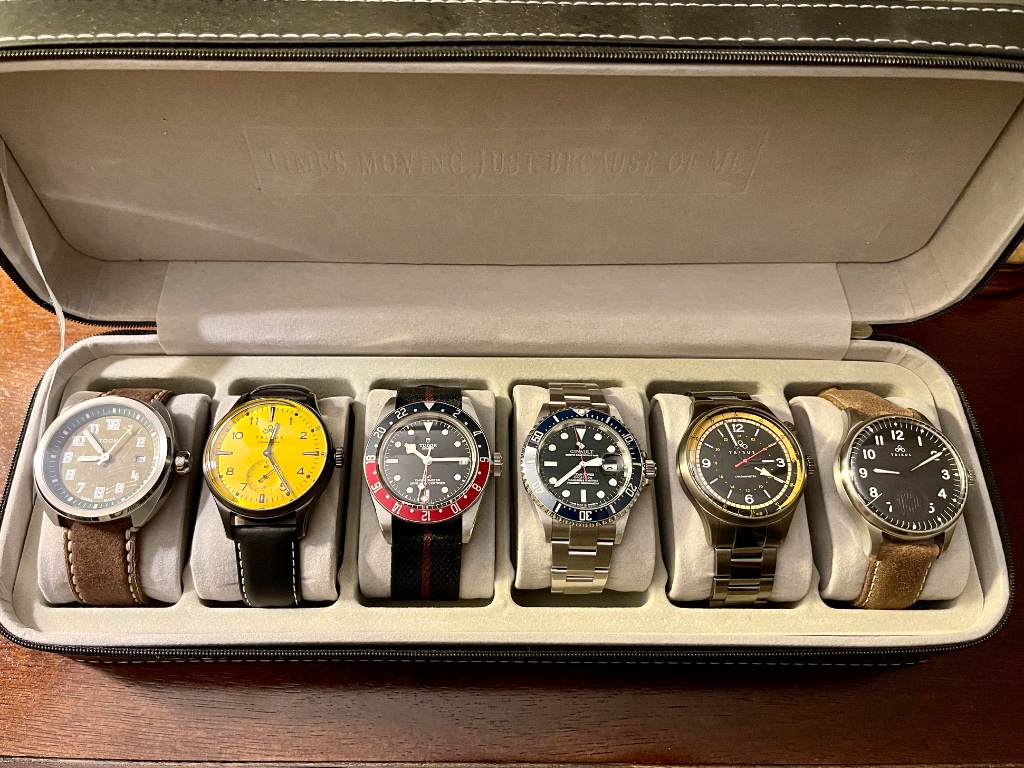
Collecting is not the same as owning
Most people own a watch. Some people collect them. The difference is intentionality. Owning a watch means having something that tells the time. Collecting watches means deliberately seeking out, acquiring, studying, and appreciating watches as objects with their own history, mechanics, design language, and cultural significance.
Collectors are not necessarily wealthy. They are curious. What unites them is an interest in the craft and culture surrounding watches, not the price tags attached to them.
Emotional drivers
Many collectors describe an emotional connection to their watches. A watch might be tied to a memory — a gift for a milestone, a purchase to mark an achievement, or an inherited piece that carries family history. Watches, unlike most personal technology, are often kept for decades and passed between generations.
There is also an emotional quality to the act of collecting itself. The anticipation of a new acquisition, the satisfaction of finding an uncommon piece, and the quiet pleasure of wearing something you've chosen carefully all contribute to the appeal.
Mechanical fascination
Mechanical watches are engineering in miniature. A mechanical movement can contain hundreds of components, hand-assembled and regulated to measure time with precision. For many collectors, the movement is the primary point of interest. Complications — additional functions beyond basic timekeeping, such as chronographs, moon phases, or power reserve indicators — add layers of mechanical ingenuity.
This mechanical fascination extends to appreciating different approaches to the same problem. A Swiss automatic movement operates on different principles than a Japanese quartz movement, and both differ from a hand-wound German calibre. Understanding these differences deepens the collecting experience.
Aesthetic appreciation
Watches are among the few functional objects that are also designed to be visually beautiful at close inspection. Dial textures, hand shapes, case finishing, crystal types, and strap materials all contribute to a watch's visual identity. Many collectors are drawn to specific aesthetic traditions — the clean minimalism of Bauhaus-influenced design, the rugged functionality of tool watches, or the ornate decoration of haute horlogerie.
Aesthetic preferences often evolve over time. A collector who begins with bold, large-cased sport watches may gradually develop an appreciation for smaller, more restrained designs. This evolution is part of what makes collecting an ongoing process rather than a destination.
Watches as personal expression
In a world of ubiquitous smartphones, wearing a wristwatch is a deliberate choice. The watch a person selects communicates something about their interests, values, and attention to detail. This is not about displaying wealth or status. A thoughtfully chosen microbrand diver expresses as much personality as a well-known luxury piece — sometimes more, because it signals independent taste rather than conventional aspiration.
For more on the role of microbrands in collecting, see Microbrand Watches Explained.
The social dimension
Watch collecting is inherently social. Collectors share knowledge, debate preferences, trade pieces, and attend events together. Online forums and communities — including platforms like The Keeper Box Watch Club — provide spaces for this exchange. The social dimension of collecting enriches the experience by exposing collectors to perspectives, brands, and ideas they wouldn't encounter alone.
People collect watches because watches reward attention. The more you look, the more you see. The more you wear, the more you understand. And the more you share, the more you discover.